

Views: 0 Author: Site Editor Publish Time: 2026-05-13 Origin: Site


What happens when fiber, cellular service, or ordinary antennas cannot reach far enough? In many industries, stable long-distance communication is essential for safety, data transfer, and daily operations. A Parabolic Antenna, also called a Parabolic Dish Antenna, focuses radio signals into a narrow, high-gain beam. It is widely used in satellite communication, telecom backhaul, maritime connectivity, radar, industrial IoT, and outdoor wireless networks.
In industrial communication, distance, signal stability, and interference control often matter more than broad coverage. A Parabolic Antenna is valuable because its curved reflector focuses radio frequency energy into a narrow path instead of spreading it in all directions. This makes it especially useful for satellite links, remote industrial facilities, offshore platforms, outdoor WLAN systems, and other sites where weak signals can interrupt data transfer, monitoring, or safety operations.
The main reason industries choose parabolic antennas is their high gain. By concentrating signal energy at the focal point, the antenna improves both transmission strength and reception sensitivity. This allows communication systems to maintain stable links over long distances, even when the signal source is far away or the environment introduces heavy path loss.
Industrial Scenario | Why High Gain Matters |
Satellite communication | Helps receive weak signals from distant satellites |
Offshore platforms | Supports long-range links where terrestrial networks are unavailable |
Remote mining or energy sites | Reduces dependence on wired infrastructure |
Rural telecom stations | Extends backhaul coverage across difficult terrain |
A parabolic antenna sends and receives signals through a focused beam. This directional behavior helps reject unwanted signals arriving from other angles, which is important in crowded radio environments. In telecom networks, industrial plants, ports, and defense-related systems, reducing interference can improve link reliability and protect bandwidth for mission-critical data.
Key advantages include:
● Cleaner signal reception in noisy environments
● Lower risk of cross-link interference between nearby systems
● More efficient use of available radio spectrum
● Better performance for fixed point-to-point communication
In many industrial projects, installing fiber is too costly, slow, or physically difficult. Mountains, deserts, temporary worksites, mining regions, and disaster recovery zones may not support fast cable deployment. In these cases, a Parabolic Dish Antenna can create a dependable wireless bridge between sites, helping teams transmit operational data, video feeds, control signals, and emergency communications without waiting for permanent wired infrastructure.
Satellite and aerospace communication systems depend on highly focused, long-distance signal paths. A Parabolic Antenna is well suited to these applications because its reflector concentrates radio waves toward a focal point, improving signal strength when communicating with satellites, spacecraft, or moving platforms. In these environments, even small losses in alignment or gain can affect data quality, so antenna performance is closely tied to installation stability, tracking accuracy, and operating frequency.
Satellite ground stations use parabolic antennas to transmit and receive signals between Earth-based terminals and orbiting satellites. These systems support broadband access, television broadcasting, enterprise data networks, telemetry, and command links. Because satellite signals travel long distances and may arrive at relatively low power levels, the antenna must collect and focus as much usable energy as possible.
Ground Station Use Case | Role of the Parabolic Antenna |
Broadband connectivity | Maintains stable satellite links for remote users and enterprise networks |
Broadcasting | Supports distribution of television and media signals over wide regions |
Telemetry | Receives operational data from satellites and spacecraft systems |
Enterprise data links | Provides dedicated connectivity where terrestrial infrastructure is limited |
For consistent performance, the antenna must be accurately pointed toward the satellite. Fixed ground stations usually require rigid mounting structures, careful alignment, and protection against wind or vibration, since even slight movement can reduce link quality.
Large parabolic antennas are essential for deep-space communication because spacecraft and probes send extremely weak signals across vast distances. Their high gain allows receiving systems to detect faint transmissions that would be difficult or impossible to capture with lower-gain antennas. This makes them important for mission telemetry, scientific data return, spacecraft health monitoring, and long-range command communication.
In scientific observation, parabolic antennas also collect radio waves from distant astronomical objects. Their ability to focus weak radio signals helps researchers study planets, stars, galaxies, and other sources of natural radio emissions. The larger and more accurate the reflector surface, the better the system can support sensitive measurement and long-distance reception.
Aircraft and specialized mobile platforms use parabolic antenna systems to maintain satellite-based communication while in motion. These links can support passenger broadband, navigation data, mission communication, remote sensing, and real-time operational updates. Unlike fixed ground stations, mobile systems must compensate for changing direction, speed, vibration, and platform movement.
Common requirements for mobile satellite antenna systems include:
● Automatic tracking to maintain satellite alignment
● Stabilized mounting to handle motion and vibration
● Compact design for limited installation space
● Reliable performance during changing weather and flight conditions
Telecom and industrial networks often need to move large volumes of data across places where cable installation is slow, costly, or physically impractical. A Parabolic Dish Antenna provides a focused wireless path that can connect distant sites with high signal strength and low interference. This makes it useful for telecom backhaul, industrial IoT gateways, smart infrastructure, and temporary networks that must be deployed quickly without depending on buried fiber or fixed terrestrial coverage.
In line-of-sight microwave communication, two parabolic dish antennas are aimed directly at each other to form a stable point-to-point link. This setup is widely used to connect remote facilities, utility substations, telecom towers, and large industrial campuses. Compared with trenching cables through mountains, deserts, private land, or protected areas, microwave links can often be installed faster and with less civil engineering work.
Application Area | Practical Network Role |
Remote industrial sites | Connects operations centers with isolated production or monitoring areas |
Utility stations | Carries control, monitoring, and maintenance data between distributed assets |
Telecom towers | Links access sites to aggregation points when fiber is unavailable |
Industrial campuses | Bridges buildings, yards, warehouses, and process areas across large sites |
For long-distance outdoor wireless transmission, models such as GL-DY5158V28 are relevant because a narrow beam and high-gain 5GHz design can help support point-to-point and point-to-multipoint network links in rural, campus, or industrial environments.
Telecom operators use parabolic dish systems to carry traffic from cellular base stations back to the core network. This is especially important in rural regions, highway corridors, mountain areas, and developing locations where fiber rollout may lag behind coverage demand. For 4G and 5G sites, directional microwave backhaul can support voice, video, and high-speed mobile data while keeping deployment flexible.
Higher-frequency links can offer greater capacity, but they also require more careful planning. Engineers must consider path clearance, tower stability, antenna alignment, rain fade, wind load, and future network growth before choosing the antenna size and frequency band.
Industrial IoT systems rely on sensors, cameras, gateways, controllers, and monitoring platforms spread across large areas. Parabolic antennas help aggregate this data by creating high-capacity wireless links between edge devices and central control rooms. In agriculture, they can support field monitoring and equipment data. In mining and oil and gas, they can connect remote production zones, safety systems, and inspection points. Water utilities, ports, logistics yards, and smart city systems also use directional wireless links to connect assets that are too dispersed for simple local networking.
For outdoor network deployment and video surveillance transmission, 24dBi Dual Polarized Parabolic Antenna fits scenarios that need dual polarization, stable directional links, and 5.1–6.4GHz wireless backhaul capacity across industrial campuses or distributed monitoring points.
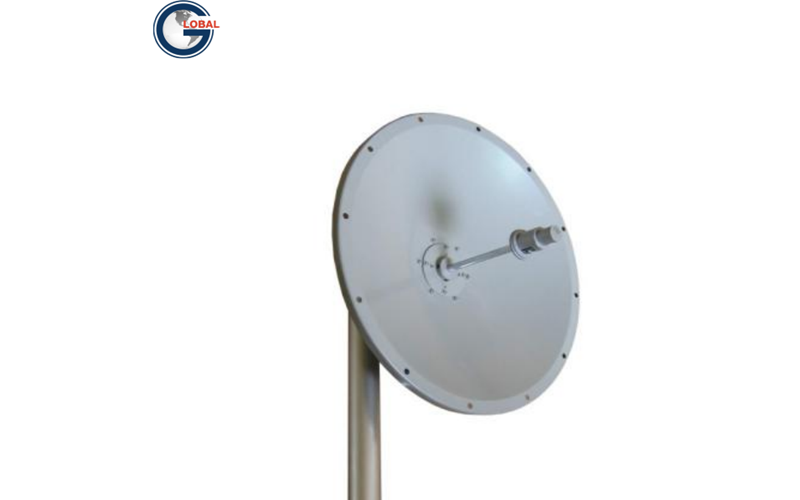
When existing infrastructure is unavailable, damaged, or not yet installed, parabolic antenna systems can help establish communication quickly. Common deployment needs include:
● Restoring connectivity after storms, earthquakes, or network outages
● Supporting field command centers and rescue coordination
● Providing temporary broadband for construction and exploration sites
● Linking mobile operation units, cameras, and remote monitoring equipment
Marine and offshore operations often take place far beyond the reach of terrestrial networks, making satellite-based communication essential. A Parabolic Dish Antenna is well suited to these environments because it can focus signal energy toward a satellite or remote receiving point, helping vessels and offshore facilities maintain dependable long-range links even when operating across open water.
Maritime VSAT systems use parabolic dish antennas to provide satellite connectivity for ships traveling outside cellular or coastal network coverage. These antennas support both operational and crew-related communication needs, allowing vessels to exchange data with shore-based control centers, logistics teams, and emergency services.
Shipboard Use Case | Practical Communication Need |
Navigation updates | Receives route, positioning, and chart-related information |
Weather data | Helps crews monitor storms, sea conditions, and route risks |
Fleet management | Sends vessel status, location, and performance data to operators |
Cargo tracking | Supports real-time visibility for goods in transit |
Crew communication | Provides internet, voice, and welfare connectivity during long voyages |
Emergency alerts | Enables distress communication when outside terrestrial coverage |
Offshore oil, gas, wind, and research platforms require continuous communication for safe and efficient operation. These sites often depend on parabolic antennas to transmit production data, maintenance information, remote-control signals, safety alerts, and video or sensor feeds. A stable long-range link allows engineers, operators, and support teams onshore to monitor equipment conditions and respond quickly when abnormal events occur.
In offshore wind farms or ocean research stations, communication demands may include equipment diagnostics, environmental measurements, security monitoring, and coordination between vessels and fixed platforms. Because these locations are isolated, antenna reliability directly affects operational awareness and response speed.
Marine and offshore environments place heavy stress on antenna systems. Salt spray can accelerate corrosion, strong winds can disturb alignment, and vessel motion can interrupt satellite pointing. For this reason, practical deployments often require:
● Corrosion-resistant materials and protective coatings
● Stable mounting structures for wind and vibration
● Tracking systems for vessels affected by pitch, roll, and yaw
● Weather-resistant construction for long-term outdoor exposure
Beyond communication networks, a Parabolic Antenna is also widely used in sensing and detection systems. Its ability to form a narrow, concentrated beam makes it valuable when systems need to identify objects, measure movement, or collect reflected signals from a specific direction. In radar, weather observation, and security-related infrastructure, this focused beam helps improve detection accuracy while reducing unwanted signal noise from the surrounding environment.
Radar systems use parabolic antennas to transmit focused radio waves and receive the reflected signals from objects. Because the beam is narrow, the system can better determine where a target is located and how it is moving. This is important for air traffic control, aircraft tracking, perimeter monitoring, and industrial sensing applications where accuracy affects safety and operational decisions.
Radar Application | Practical Function |
Air traffic control | Supports aircraft position and movement detection |
Aircraft tracking | Helps monitor flight paths and target direction |
Perimeter monitoring | Detects movement around restricted or sensitive areas |
Industrial sensing | Supports object detection, distance measurement, or process monitoring |
Weather radar systems also benefit from the focused beam pattern of parabolic antennas. By sending radio signals into the atmosphere and analyzing the returned reflections, these systems can help detect precipitation, storm movement, and changing atmospheric conditions. This information supports operational planning for airports, ports, utilities, transportation networks, and infrastructure managers that must respond to severe weather risks.
In defense, security, and critical infrastructure environments, parabolic antennas are used where long-range reach, directivity, and signal reliability are essential. Their focused radiation pattern can support secure communication links, surveillance systems, target tracking, and early warning networks. The narrow beam also helps reduce exposure to interference, which is important when systems must operate reliably in crowded or contested radio environments.
Selecting a Parabolic Dish Antenna for industrial use is not only about choosing the highest gain model. The best antenna depends on the operating frequency, required link distance, available mounting space, environmental exposure, and how the antenna will connect with the rest of the communication system. Important factors include frequency range, gain, polarization, reflector size, mounting configuration, material durability, and environmental performance.
Operating frequency has a direct effect on antenna design and link performance. Lower frequencies usually require larger reflectors to achieve strong gain, while higher frequencies can support compact antennas and wider bandwidth. However, high-frequency links may be more sensitive to rain, snow, obstruction, and installation error. For this reason, engineers need to match the antenna to the required data rate, transmission range, and local weather conditions.
Selection Factor | Why It Matters in Industrial Deployment |
Frequency range | Determines supported communication bands and affects antenna size |
Gain | Influences signal strength, link distance, and power efficiency |
Link distance | Helps define reflector size and required pointing accuracy |
Weather exposure | Affects reliability, especially at higher frequencies |
Data capacity | Guides the choice of bandwidth and operating band |
For outdoor WLAN and WiFi systems, GL-DY5158VH23 represents a compact 5GHz parabolic dish option where dual polarization, focused beam control, and stable short-to-medium outdoor links are important.
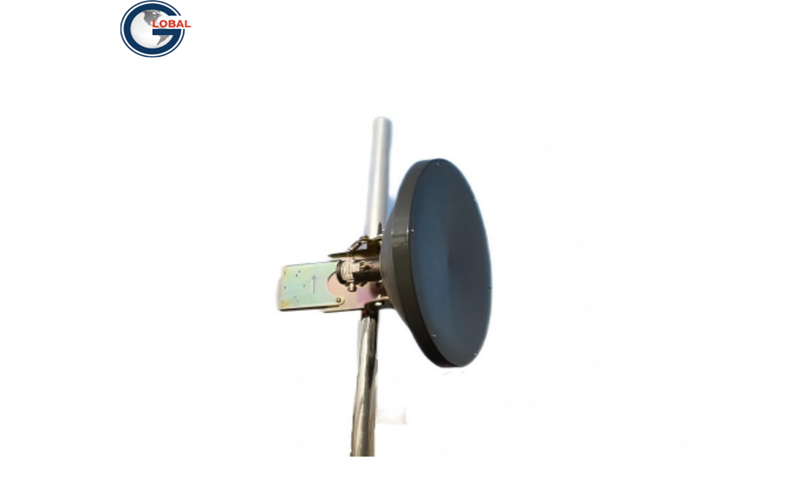
Dish size strongly influences gain and beamwidth. A larger dish can provide stronger directional performance, but it also creates a narrower beam that must be aligned more precisely. This is useful for long-distance fixed links, yet it can make installation and maintenance more demanding.
Fixed installations, such as ground stations or microwave towers, can often use rigid mounts once the antenna is accurately pointed. Moving platforms, including ships, aircraft, and vehicles, usually need stabilized or motorized tracking systems to maintain alignment during motion.
A successful deployment also depends on whether the antenna fits the existing communication system and physical site. Before installation, project teams should check:
● Compatibility with radios, modems, and feed systems
● Required polarization and connector types
● Mounting strength, available space, and wind loading
● Access for inspection, cleaning, and maintenance
● Exposure to salt spray, vibration, temperature change, or industrial contamination
Parabolic Antenna technology remains essential for industries that need high gain, focused transmission, long-range reach, and strong interference control. It supports satellite communication, telecom backhaul, industrial IoT, maritime links, radar, weather monitoring, security systems, and outdoor wireless networks. Zhengzhou LEHENG Electronic Technology Co., Ltd. provides parabolic antenna solutions that can support stable industrial communication where link distance, frequency, installation environment, and system compatibility must be considered together.
A: A Parabolic Antenna supports long-range links, satellite communication, radar, telecom backhaul, and industrial IoT data transfer.
A: A Parabolic Dish Antenna is useful when fiber deployment is too costly, slow, or impractical across remote terrain.
A: Parabolic Antenna performance depends on alignment accuracy, frequency, weather exposure, mounting stability, and link distance.
A: Directional antennas reduce interference and improve signal focus in crowded industrial radio environments.


 External GPS Antenna
  Ceramic antenna
  Internal GPS Antenna
  Surveying Antenna
 Magnet Antenna
  Patch Antenna
  Rubber Antenna
  Screw Antenna
  Spring Antenna
  Other Indoor Coverage Antenna&outdoor Wlan Antenna
 2.4G Antenna
  5.8G Antenna

 Outdoor Yagi TV Antenna


 Ceiling mount antenna
  Wall mount panel antenna
 Fiberglass Antenna
  Panel Antenna
  Parabolic Antenna
  Yagi Antenna


