

Views: 0 Author: Site Editor Publish Time: 2026-03-26 Origin: Site


Connectivity issues have always been a challenge for people living in rural or remote areas. Stable broadband, readily available in the cities, has become a luxury in the countryside. Poor signals, slow internet speeds and erratic connections - these problems repeatedly plague many homes, farms and small businesses. But today we have good news for you: with the right antenna, it can all be effectively solved.
Whether you need to work from home, study online, or want to remotely monitor your farm, this guide will give you a comprehensive understanding of how to enhance your rural internet experience with antennas.
Before we delve into antenna selection, it is necessary to understand the main reasons for poor signal in rural areas.
●Distance from base stations: The number of mobile base stations in rural areas is small and coverage is limited. Distance is often the main reason for signal attenuation
●Terrain barrier: Hills, forests, valleys and other natural terrain can severely block signal transmission
●Building structure: Older houses have thicker walls and metal roofs that block signals
●Lack of fibre optic resources: Many remote areas do not have broadband fibre access at all
Under these constraints, the antenna becomes a crucial device for connecting to the outside world.

According to the usage scenario and technology type, rural Internet antennas are mainly divided into the following categories:
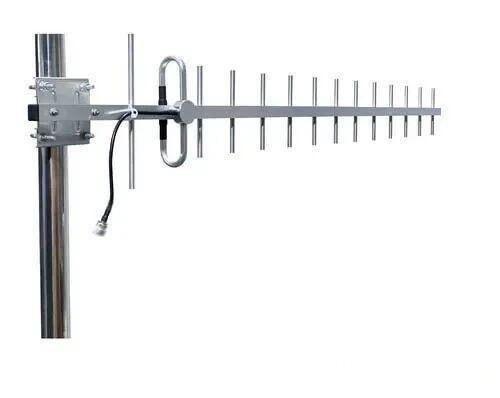
Yagi antennas are the most common and cost-effective rural signal enhancement solution.
Features:
· Directional reception, pointing in the direction of the base station
· High gain, usually between 10dBi and 20dBi
· The installation is relatively simple
· Scenarios suitable for known base station locations
Applicable scenarios: If there is a clear mobile base station or wireless network signal source near your home, the Yagi antenna is the first choice.
The flat antenna features a flat design, with a wider reception range than Yagi and a relatively beautiful appearance.
Features:
· Fan coverage, the angle is usually 60-120 degrees
· Medium gain, 8dBi-15dBi
· Small wind resistance, more stable installation
· Suitable for scenarios where the direction of the base station is uncertain
Applicable scenarios: When you are unsure of the exact location of the base station or need to receive signals in multiple directions simultaneously, a flat-panel antenna is more suitable.
The omnidirectional antenna receives signals 360 degrees, and the installation is the simplest, but the gain is relatively low.
Features:
· comprehensive coverage
· Lower gain, usually at 3dBi-8dBi
· No need for alignment
· Suitable for areas with strong signal
Applicable scenarios: If the signal at your location is not too bad and you just want to improve it slightly, an omnidirectional antenna is sufficient.
This antenna has an extremely high gain and can receive signals over very long distances, but it is bulky and requires high installation.
Features:
· Ultra-high gain, up to 24dBi-30dBi
· Very directional
· Large size, requires firm installation
· Suitable for ultra-long distance reception
Scenario: When the base station is more than 10 kilometers away and the ordinary antenna cannot meet the demand, the grid antenna is the ultimate solution.
When selecting an antenna, you need to consider the following key factors:
Before buying an antenna, it is recommended to test it with a mobile phone or mobile router.
· Test signal strength in different outdoor locations
· Confirm the general direction of the base station (you can test the app through the network signal)
· Understand the network usage of your neighbors
Utility recommendations: OpenSignal, CellMapper, Network Cell Info Lite
According to the signal evaluation results, select the following table:
signal condition | base station distance | recommended antenna | expected effect |
Good outdoor signal, poor indoor signal | < 5km | Yagi antenna | Significant improvement |
Outdoor signal is normal | 3-8Km | High Gain Yagi or Plate | noticeable improvement |
Poor outdoor signal | 5-15Km | Grid parabolic antenna | Substantial increase |
The signal comes and goes | > 10km | Grid Parabolic + Signal Amplifier | Basically stable |
When selecting an antenna, the following parameters need to be taken into account:
· Gain: unit dBi, the higher the value, the stronger the receiving ability
· Frequency Range: Must match the network band you are using (4G LTE or 5G)
· Standing wave ratio (VSWR): the closer to 1 the better, generally no more than 1.5
· Impedance: usually 50 ohms, to match the device
· Waterproof grade: outdoor use requires at least IP65 or more
The antenna itself is just one part of the system. You will also need:
· Low-loss feeder: from the antenna to the connection line of indoor equipment, the longer the distance, the greater the loss. It is recommended to choose a feeder of more than 1/2 inch
· Arresters: Outdoor antennas must take lightning protection measures
· Mounting bracket: choose the appropriate holding rod or wall bracket according to the house structure
· CPE equipment: If using a 4G/5G network, a CPE router that supports an external antenna is required
Buying the antenna back is just the first step. Proper installation and debugging are necessary to maximize its effectiveness.
1. Install as high as possible: the higher the antenna, the less signal occlusion. The roof, balcony, and second floor exterior walls are all ideal locations
2. Avoid occlusions: Avoid large trees, buildings, and metal objects in front of the antenna
3. Vertical polarization is the main one: most mobile signals are vertically polarized, and the antenna should be installed vertically
4. Keep the feeder the shortest possible: the signal is attenuated in the cable, and the distance from the antenna to the device is shortened as much as possible
1. Roughly align the antenna according to the known orientation of the base station
2. Fine adjustment: check the signal strength (RSRP, SINR and other parameters) through the CPE background, and fine-tune the antenna angle
3. Fixed: After finding the best angle, firmly fix the antenna
Debugging tips: You can ask a friend to check the signal value indoors in real time. You can slowly rotate the antenna outdoors, pause for 10-15 seconds after each rotation, and wait for the signal to stabilize. Find the direction with the highest value and fix it.
Requirements: Meet family members for online classes, watching videos, and video calls
Recommended solution: Yagi antenna + 4G/5G CPE router
Budget reference: 800-1500 RMB
Expected network speed: 20-100Mbps (depending on base station coverage)
Requirements: Support camera return, remote device control, stable office network
Recommended solution: grid parabolic antenna + enterprise CPE + UPS power supply
Budget reference: 2000-4000 RMB
Expected network speed: 50-150Mbps (stable signal)
Requirements: To meet the needs of multiple guests at the same time, with a large number of aircraft
Recommended solution: high-gain flat-panel antenna + 4G/5G industrial router + multi-AP networking
Budget reference: 3000-6000R MB
Expected network speed: 100-300Mbps (to ensure sufficient base station capacity)
Q1: Can antennas solve all network problems?
A: It can solve the signal reception problem, but if the base station itself has insufficient bandwidth and too many users, the antenna cannot break through the base station capacity limit.
Q2: Are 5G antennas and 4G antennas common?
A: Some antenna frequency ranges cover 4G and 5G common frequency bands, but it is recommended to choose a dedicated antenna according to the actual network standard used.
Q3: Does the antenna require regular maintenance?
A: Outdoor antennas are generally more durable. It is recommended to check whether the connector is loose, whether the feeder is aging, and whether the installation bracket is firm every six months.
Q4: Is it difficult to install it yourself?
A: If you have basic hands-on ability, Yagi and flat-panel antennas can be installed by yourself. Please ask professionals to operate the grid antenna and installation suggestions that need to be climbed.
The improvement of rural Internet does not have to wait for fiber to enter the home. A suitable antenna system can often solve most signal problems at a lower cost. Hopefully this guide will help you find the most suitable solution.
If you are looking for high-quality rural Internet antenna solutions, please contact us. We provide professional product selection advice and one-stop procurement services to help you easily achieve stable and high-speed rural network connectivity.
Explore our full range of antennas or contact us for OEM/ODM solutions and bulk pricing.
Professional Communication Products
ZHENGZHOU LEHENG ELECTRONIC TECHNOLOGY CO.,LTD
Tel:86-371-60911368
Email:info@global-antenna.com
Website:https://www.asialeren.com


 External GPS Antenna
  Ceramic antenna
  Internal GPS Antenna
  Surveying Antenna
 Magnet Antenna
  Patch Antenna
  Rubber Antenna
  Screw Antenna
  Spring Antenna
  Other Indoor Coverage Antenna&outdoor Wlan Antenna
 2.4G Antenna
  5.8G Antenna

 Outdoor Yagi TV Antenna


 Ceiling mount antenna
  Wall mount panel antenna
 Fiberglass Antenna
  Panel Antenna
  Parabolic Antenna
  Yagi Antenna


