

Views: 0 Author: Site Editor Publish Time: 2026-05-11 Origin: Site


Why do many long-distance communication systems still rely on a dish-shaped antenna? A Parabolic Antenna can focus radio waves into a narrow, powerful beam. This makes signal transmission and reception stronger, cleaner, and more reliable. You will learn how a Parabolic Dish Antenna improves gain, range, directivity, interference control, and application flexibility.
A major advantage of a Parabolic Antenna is its ability to produce high signal gain. Instead of allowing radio energy to spread widely in many directions, the antenna’s curved reflector gathers and concentrates electromagnetic waves into a focused path. This makes the signal stronger where it matters most: toward the intended receiver or from the intended source. In practical terms, higher gain means better link performance, longer usable distance, and improved reception in situations where weak signals would otherwise be difficult to capture. This is why parabolic antennas are widely used in satellite communication, microwave links, radar systems, outdoor WLAN systems, and scientific observation.
The strength of a Parabolic Antenna begins with its geometry. The dish-shaped reflector is designed so that incoming parallel radio waves are reflected toward a focal point, where the feed antenna is placed. When the antenna transmits, the process works in reverse: the feed sends radio waves toward the reflector, and the curved surface redirects them outward as a narrow, concentrated beam.
This focusing effect gives the antenna a clear performance advantage over antennas that radiate more broadly. A broad-radiation antenna may cover a wider area, but much of its energy is not directed toward the target. A parabolic reflector uses its surface area to collect or project more energy in a specific direction, which increases effective signal strength without simply relying on more transmitter power.
Antenna Behavior | Practical Effect |
Focuses radio waves toward a focal point | Improves received signal strength |
Sends energy in a narrow beam | Extends communication distance |
Limits broad signal spreading | Reduces wasted transmission energy |
Uses a larger reflector surface | Captures weaker incoming signals more effectively |
High gain is valuable because many communication systems need signals to remain usable across long distances or through challenging conditions. In satellite communication, the signal may travel between Earth and orbiting satellites, making strong directional gain essential for maintaining a stable link. In microwave communication, high gain supports point-to-point connections where two fixed antennas must exchange data efficiently over distance.
Radar systems also benefit from high gain because they need concentrated energy to detect objects accurately. A stronger directed beam can improve detection range and help the system focus on a specific area rather than wasting energy across unnecessary directions. In outdoor wireless networking, models such as 28dBi 5GHz Dish show how high-gain parabolic designs can support long-distance WLAN and Wi-Fi links when directional signal strength is a key requirement.
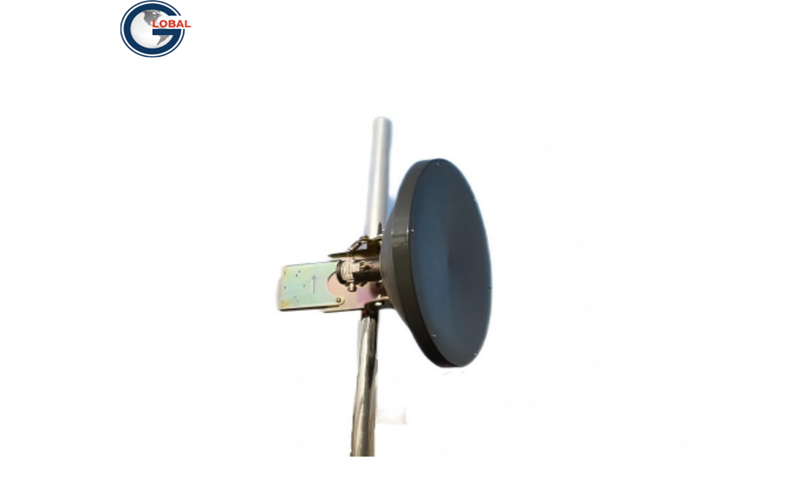
High gain is especially important when the incoming signal is faint. A Parabolic Dish Antenna can collect weak radio waves across its reflector surface and focus them onto the feed, making the received signal easier to process. This advantage is useful for satellite reception, remote communication sites, radio astronomy, and deep-space signal monitoring.
In scientific observation, the ability to receive weak signals can determine whether distant radio sources are detectable at all. In everyday applications such as satellite TV or satellite internet, the same principle helps provide more stable reception when the signal source is far away or when environmental conditions reduce signal strength.
Another major advantage of a Parabolic Antenna is its ability to support longer transmission and reception distances. Because the reflector concentrates radio waves into a narrow path, more of the available signal energy is directed toward the intended location instead of spreading into surrounding space. This helps reduce signal loss over distance and makes the antenna especially valuable in systems where the transmitter and receiver are far apart, such as satellite links, microwave communication, radar, and fixed wireless networks.
Radio signals naturally weaken as they travel. A parabolic antenna helps address this problem by shaping the signal into a focused beam. When transmitting, the feed sends energy toward the reflector, and the dish redirects it outward in a controlled direction. When receiving, the dish collects incoming waves across its surface and focuses them onto the feed. In both cases, the antenna improves how much useful energy reaches the communication path.
This focused-energy design is especially important when the system cannot rely on nearby towers, repeaters, or short cable runs. Instead of increasing power in every direction, a parabolic antenna improves range by making better use of the signal already available.
Range Challenge | How a Parabolic Antenna Helps |
Signal weakens over distance | Concentrates energy into a narrower beam |
Receiver is far from the source | Improves usable signal strength at the target |
Communication path must stay stable | Reduces unnecessary signal dispersion |
Link depends on a fixed direction | Supports accurate long-distance alignment |
Long-range performance is one reason parabolic antennas are common in satellite TV, satellite internet, wireless backhaul, and fixed communication links. In satellite systems, signals must travel between ground equipment and satellites positioned far above Earth. A broad antenna pattern would waste too much energy, while a focused dish can aim directly toward the satellite and maintain a stronger connection.
Point-to-point communication has similar requirements. Two fixed locations, such as buildings, towers, or remote facilities, often need a stable wireless link without laying physical cable. A Parabolic Dish Antenna can direct the signal along a defined path, making it suitable for microwave links, network backhaul, and private data connections.
Parabolic antennas are also useful where wired networks are unavailable or expensive to build. In rural sites, offshore facilities, temporary stations, mountain areas, and emergency response locations, communication often depends on reaching a distant signal source. A high-gain directional antenna can help establish a more dependable link when local infrastructure is limited.
In these environments, the main value is practical reach. By focusing radio waves toward a known target, parabolic antennas help extend connectivity beyond the range of many smaller or less directional antenna options.
A key advantage of a Parabolic Antenna is stronger directivity. Unlike antennas that radiate or receive signals across a wide area, a parabolic design concentrates radio energy into a controlled beam. This makes it especially effective when the signal source or destination is already known, such as a satellite, ground station, radar target, or fixed wireless receiver. Strong directivity does not only improve signal strength; it also gives the system better control over where the signal goes and where it is received from.
A Parabolic Dish Antenna sends and receives signals mainly along its main beam. Because the beamwidth is narrow, the antenna can focus communication toward a specific direction instead of spreading energy broadly. This is useful in fixed links where both ends of the communication path remain in known positions.
For example, a satellite dish must aim toward a specific satellite rather than receive signals equally from all directions. A point-to-point microwave link also depends on a focused path between two locations. In these cases, narrow beamwidth helps the system maintain a stronger and more controlled connection.
Directivity Feature | Communication Benefit |
Narrow main beam | Targets a specific signal path |
Limited off-axis reception | Reduces pickup from unwanted directions |
Focused transmission | Sends more useful energy toward the receiver |
Stable directional pattern | Supports fixed links and precision systems |
Precise directionality allows parabolic antennas to lock onto known signal targets more effectively. In satellite communication, accurate aiming helps the antenna maintain alignment with a satellite’s position. In radar systems, the same directional control helps focus energy toward a defined area, making it easier to detect or track objects.
This ability is also valuable for communication towers, receiving stations, and wireless backhaul links. When the antenna can be carefully pointed at the intended target, the system gains better signal stability and avoids unnecessary exposure to unrelated signals from surrounding directions.
Reduced signal spread improves communication efficiency. Since more energy is directed along the intended path, less power is wasted in directions that do not contribute to the connection. This makes a parabolic antenna especially useful where long-distance performance, stable reception, or controlled transmission is important.
In practical use, this focused pattern helps maintain stronger links without depending only on higher transmitter power. The antenna’s shape itself becomes part of the performance advantage, guiding radio waves toward the path where they can deliver the most value.
Another important advantage of a Parabolic Antenna is its ability to improve signal quality by limiting interference. Because its beam is highly focused, the antenna is less likely to collect signals from directions outside the intended path. This makes it useful in communication environments where multiple wireless systems, nearby transmitters, reflected signals, or background noise may affect performance. Instead of simply increasing signal power, a parabolic antenna improves quality by helping the system focus on the wanted signal and reject much of the unwanted energy around it.
A parabolic antenna has a narrow receiving pattern, which means it mainly responds to signals arriving from the direction it is aimed at. Signals coming from the side or rear are usually much weaker at the feed point, so they have less influence on the final received signal. This directional filtering is one reason parabolic antennas are preferred in satellite links, point-to-point communication, radar, and fixed wireless systems.
In crowded electromagnetic environments, this advantage becomes especially valuable. A less directional antenna may receive many surrounding signals at once, while a parabolic dish can concentrate on a specific source. This helps reduce interference from nearby equipment, off-axis transmitters, and unintended signal reflections.
Signal Quality Challenge | How a Parabolic Antenna Helps |
Nearby wireless interference | Limits reception from non-target directions |
Weak desired signal | Focuses useful energy toward the feed |
Background radio noise | Improves the strength of the intended signal relative to noise |
Reflected or scattered signals | Reduces the impact of signals outside the main beam |
Signal-to-noise ratio is important because communication systems must separate useful information from unwanted noise. A parabolic antenna improves this ratio in two ways: it strengthens the desired signal through focused reception, and it reduces unwanted signal pickup through its narrow beam pattern. The result is clearer communication, fewer signal errors, and better overall stability.
This advantage is especially important when signals travel long distances or arrive at low power levels. In satellite reception or scientific observation, even a small improvement in usable signal quality can make the difference between a stable connection and an unreliable one.
Better signal quality directly supports systems that depend on accurate data transfer. Video broadcasting needs stable reception to avoid picture breakup. Satellite internet requires clean links to maintain usable speeds and reduce connection drops. Telemetry systems rely on accurate signal delivery because the data may be used for monitoring, navigation, or control. Radar systems also benefit from cleaner signals because interference can make detection and tracking less accurate.
A further advantage of a Parabolic Antenna is its flexibility across demanding communication systems. Its value is not limited to one use case because the same focusing principle can support transmission, reception, different frequency bands, and different installation scales. This makes parabolic antennas practical for satellite communication, microwave links, radar systems, radio astronomy, and fixed wireless networks where focused signal performance is required.
Parabolic antennas can work effectively in both directions. When used for transmission, the feed antenna sends radio waves toward the reflector, and the curved dish redirects them into a narrow beam. When used for reception, incoming radio waves strike the reflector and are concentrated toward the feed. This shared operating principle makes the antenna useful in systems that must both send and receive signals, such as satellite internet terminals, radar equipment, and two-way microwave communication links.
This dual function also makes the design efficient from a system-planning perspective. Engineers can use the same basic antenna concept for uplink, downlink, detection, tracking, or data exchange, depending on the feed, frequency, and installation requirements.
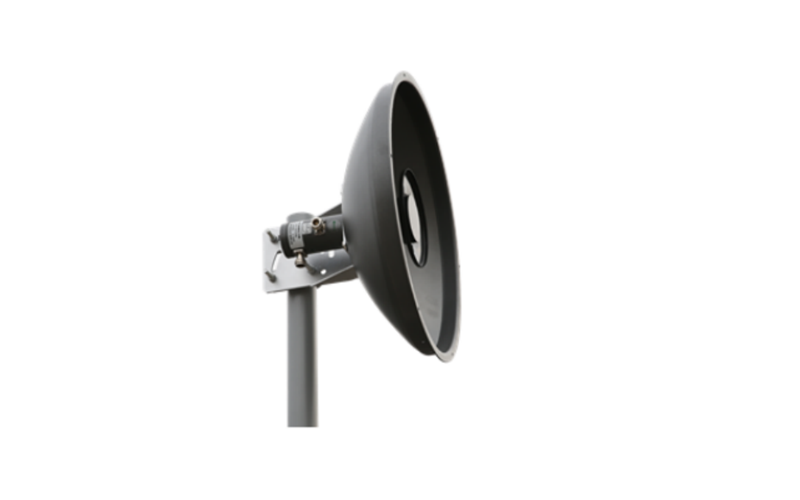
The performance of a parabolic antenna can be adjusted by changing its physical and electrical design. Reflector diameter affects gain and beamwidth, while the feed design influences frequency range, polarization, and radiation pattern. This adaptability allows the antenna to serve different technical needs without changing the core concept. For example, a 24dBi Dual-Polarized Dish reflects how dual polarization can support higher-capacity outdoor wireless links in suitable point-to-point or backhaul environments.
Adjustable Factor | Why It Matters |
Reflector size | Controls gain and beam concentration |
Feed design | Matches frequency and system layout |
Polarization setup | Supports different signal formats |
Mounting structure | Helps align the antenna for fixed or tracking use |
The same advantage can be scaled from compact Parabolic Dish Antenna installations to large professional systems. A small dish may support satellite TV or fixed internet access, while a larger antenna may serve ground stations, radar platforms, or scientific observation facilities. In each case, the purpose remains consistent: focus electromagnetic energy more effectively than broad-pattern antennas, allowing the system to achieve stronger, more controlled communication performance.
A Parabolic Antenna offers higher gain, longer range, stronger directivity, lower interference, better signal quality, and flexible use. It is ideal for focused and reliable communication over distance. Zhengzhou LEHENG Electronic Technology Co., Ltd. provides parabolic antenna solutions that help users improve signal performance, system stability, and long-distance connection efficiency.
A: A Parabolic Antenna provides high gain by focusing radio waves into a narrow beam.
A: A Parabolic Dish Antenna improves range and signal stability in fixed directional communication.
A: Yes. A Parabolic Antenna limits reception from unwanted directions, improving signal quality.
A: Parabolic Antenna systems are used in satellite, radar, microwave, and point-to-point links.


 External GPS Antenna
  Ceramic antenna
  Internal GPS Antenna
  Surveying Antenna
 Magnet Antenna
  Patch Antenna
  Rubber Antenna
  Screw Antenna
  Spring Antenna
  Other Indoor Coverage Antenna&outdoor Wlan Antenna
 2.4G Antenna
  5.8G Antenna

 Outdoor Yagi TV Antenna


 Ceiling mount antenna
  Wall mount panel antenna
 Fiberglass Antenna
  Panel Antenna
  Parabolic Antenna
  Yagi Antenna


