

Views: 0 Author: Site Editor Publish Time: 2026-01-09 Origin: Site


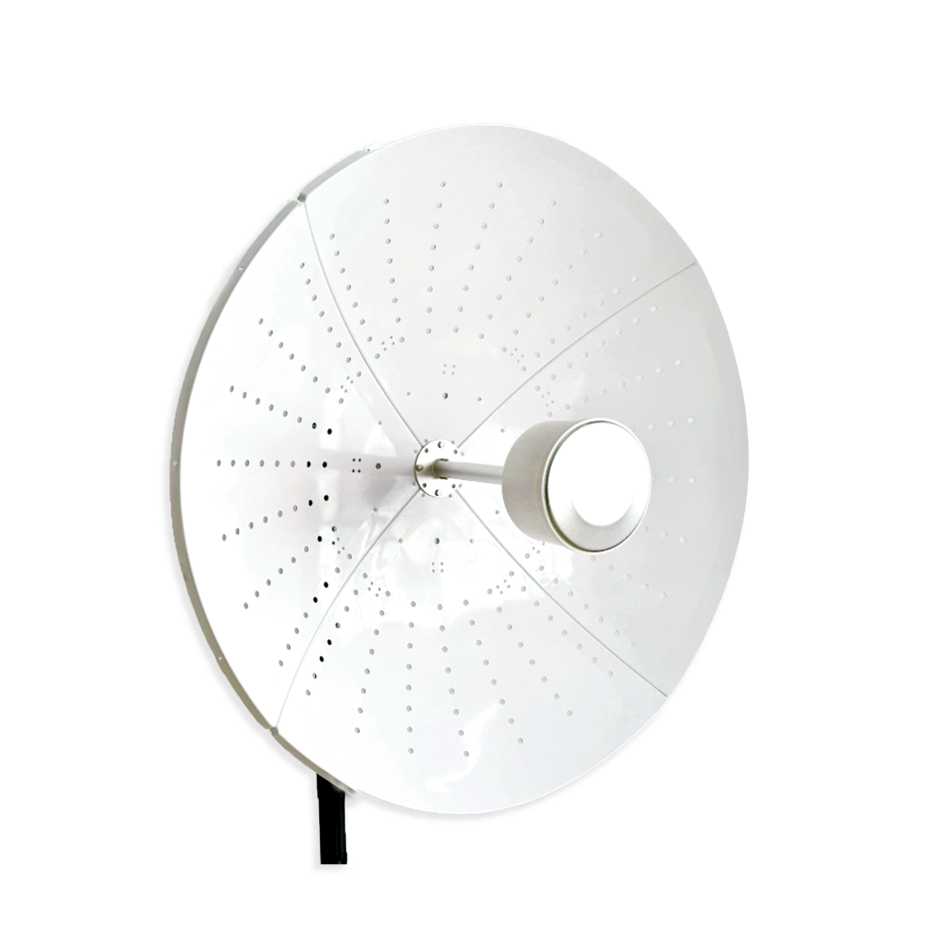
You use a parabolic antenna to focus signals for clear talk. This antenna has a curved dish that gathers and sends electromagnetic waves to one spot. You see parabolic dish antennas in satellite TV, radar, and wireless networks. Engineers use them for strong and exact signals. These antennas help connect devices and support modern technology.
Parabolic antennas help focus signals for better communication. Their curved dish shape collects and sends signals to one spot.
High gain and directionality make parabolic antennas great for satellite TV, radar, and wireless networks. They can pick up weak signals from far away.
The dish must be lined up the right way. Even a small mistake can make the signal much weaker.
There are different types of parabolic antennas for different jobs. Pick the right type based on how much gain and direction you need.
Parabolic antennas work well for long-distance communication. They help cut down noise and interference for a steady connection.

You use a parabolic dish antenna to send signals far. The dish has a special curved shape called a paraboloid. This curve helps focus signals at one spot. If you want strong and clear signals, you pick a parabolic dish antenna. You see these antennas in satellite TV, radio telescopes, and radar systems. The parabolic dish antenna gives you high gain. This means it can catch weak signals from far away. It also has good directionality. The antenna only sends or gets signals in one direction.
If you want to talk to satellites or get signals from space, you need a parabolic dish antenna. This antenna helps you get the best signal.
Zhengzhou LEHENG Electronic Technology Co., Ltd. makes advanced parabolic dish antennas. Their products work well in many areas.
A parabolic dish antenna has a few main parts. Each part helps focus and send signals.
Reflector: The big curved dish is the reflector. It is made of metal or other materials that carry electricity. The dish is shaped like a paraboloid. This shape lets the dish collect signals and bounce them to one spot called the focus.
Feed Device: The feed device sits at the focus of the dish. It sends or gets signals. Sometimes, you see a small antenna or horn here.
Support Structure: The dish and feed device need support. Arms or rods hold the feed device in place. The whole antenna sits on a mount so you can point it where you want.
Here is a simple table to show the main parts:
Part | Function |
|---|---|
Reflector | Collects and focuses signals |
Feed Device | Sends or receives signals at the focus |
Support Structure | Holds everything in place and allows movement |
You use a parabolic dish antenna for strong signals. It blocks noise from other directions. The design helps you get good performance for satellite TV, radar, and wireless networks. Zhengzhou LEHENG Electronic Technology Co., Ltd. makes great parabolic dish antennas for many uses. You can trust their antennas for home or work.

When you use a parabolic antenna, you take advantage of its special shape. The dish looks like a paraboloid, which means it curves in a way that can focus energy. When a signal hits the surface of the dish, the dish reflects it toward a single point called the focus. You place the feed device at this focus. The feed device collects the signal or sends it out from this spot.
Think of the dish like a mirror for radio waves. It gathers weak signals from a wide area and bounces them to one small point. This is the main working principle of a parabolic antenna.
If you want to send a signal, the feed device shoots it toward the dish. The dish then reflects the signal in a straight, narrow beam. This focused beam travels far and stays strong. You get clear communication over long distances.
You notice that a parabolic antenna does not pick up signals from every direction. It only listens or talks in one direction. This is called directionality. You can point the dish at a satellite or tower and block out unwanted noise from other places.
The dish also gives you something called gain. Gain means the antenna can make weak signals stronger. The bigger the dish, the higher the gain. You can see this in the table below:
Dish Size (mm) | Typical Gain (dBi) |
|---|---|
600 | 15 |
1200 | 20 |
1500 | 22-24 |
1800 | 26-28 |
With high gain, you can send and receive signals over long distances. You get better performance for things like satellite TV, radar, and wireless networks. You must aim the dish carefully. Even a small change in direction can make the signal weak.
Tip: Always check the alignment of your parabolic antenna. Good alignment means you get the best signal and the highest gain.
You now understand how the dish shape, focus, and directionality work together. These features help you get strong, clear signals for many uses.
There are a few main types of parabolic antennas. Each type looks different and works best for certain jobs. Let’s look at the three most common types you might use.
The prime focus parabolic antenna has a classic dish shape. The feed device sits in the middle, above the dish. The dish gathers signals and sends them to this spot. You often use this type for satellite ground stations or radio telescopes. This design gives you strong gain and good directionality. Sometimes, the feed device blocks a little bit of the signal. But you still get great performance for most uses.
Tip: If you want to get signals from space or faraway satellites, pick a prime focus antenna.
You see offset parabolic dish antennas in many homes for satellite TV. The feed device sits off to the side, not in front of the dish. This lets the dish collect more signal with no blockage. The signal goes straight to the feed device. The offset design also helps keep rain or snow off the feed device. You use this antenna for satellite TV, VSAT, or small communication systems.
Type | Feed Position | Common Use | Gain |
|---|---|---|---|
Prime Focus | Center | Ground stations, radio telescopes | High |
Offset | Side | Satellite TV, VSAT | Medium-High |
Grid parabolic antennas have a mesh-like reflector. The grid design makes the antenna lighter and less affected by wind. You use this type for long-range wireless links, Wi-Fi, or 5G networks. Zhengzhou LEHENG makes grid antennas like the φ1800mm 26dBi Gain Grid Antenna and the 600*900mm 20dBi Gain Grid Antenna. These antennas give you high gain and strong directionality. You can also find mobile grid antennas for places that change.
Note: Grid parabolic antennas work well outside. You get good performance even when it is windy.
Each type of parabolic antenna does a different job. You pick the one that fits your needs for gain, direction, and where you want to use it.
Parabolic antennas work very well. The dish shape helps collect weak signals from far away. It focuses these signals at one spot. This design gives the antenna high gain. High gain means weak signals become much stronger. You can use this antenna to reach satellites or towers far away. This helps you get clear signals even from far places. The dish is also efficient. It does not waste much energy. You can send and get signals with less loss.
Tip: Pick a high-gain antenna if you want to connect far away. You will get the best results.
A parabolic antenna has great directional performance. You can point the dish at your target. It blocks signals from other directions. This helps you avoid noise and interference. The beam is narrow and focuses only on what you want. Your connection becomes stable and reliable. You can use this for satellite TV, radar, or wireless networks. Strong directionality lets you use many antennas close together. They will not cause problems.
Here is a quick look at the benefits:
Feature | Benefit |
|---|---|
High Direction | Less interference |
Focused Signal | Stronger, clearer connection |
Narrow Beam | Better privacy and security |
You should think about some things before using a parabolic antenna. The dish needs careful aiming. Even a small mistake can make the signal weak. Put the antenna where it can see the sky clearly. Trees or buildings can block the signal. The dish can be big, so you need enough space. You may need special mounts or stands to keep it steady outside.
Note: Always check the alignment and location before you set up your parabolic antenna. Good setup gives you the best performance.
Parabolic antennas help you talk to satellites. They send and get signals over long distances. You see them on rooftops for satellite TV. Big ground stations use large dishes to talk to satellites in space. The dish focuses the signal so you get clear TV and fast internet. You must point the antenna right at the satellite. If you make a small mistake, the signal gets weak. You should check the alignment often to keep your connection strong.
Tip: Put your parabolic antenna where nothing blocks the sky. Trees or buildings can stop the signal.
Parabolic antennas are used in broadcasting and radar systems. TV stations use them to send signals to many homes. Radio stations use them for long-distance communication. Radar systems use parabolic dishes to track planes and ships. The dish sends a strong beam that travels far. You get better accuracy with a parabolic antenna for radar. You need to set up the antenna in a steady place. Wind or movement can change the direction and hurt the signal.
Application | Example Use | Key Benefit |
|---|---|---|
Broadcasting | Satellite TV, radio | Wide coverage |
Radar | Air traffic control | Precise tracking |
Parabolic antennas are used in science and industry. Radio telescopes use huge dishes to study signals from space. Scientists use them to learn about stars and planets. Weather stations use parabolic antennas to track storms and measure rain. Wireless networks use grid parabolic antennas for long-distance links. You need to put these antennas in open areas. Good alignment helps you get accurate data.
Radio telescopes
Weather monitoring
Wireless network bridges
Note: Always check the position and alignment of your parabolic antenna. Good setup gives you the best results for science, industry, and communication.
Parabolic antennas help you get strong signals from far away.
You must align the dish carefully for the best performance.
You use these antennas for TV, radar, science, and wireless networks.
You use a parabolic antenna to make signals clear and strong. The dish shape helps you collect signals from far away. It also lets you send signals over long distances. You get high gain and good directionality. This means the antenna works well for satellite TV, radar, and science.
Parabolic antennas let you connect to satellites and networks.
You must point the dish the right way for best results.
If you want advanced antenna solutions, Zhengzhou LEHENG offers trusted products for many uses.
A parabolic antenna helps you send signals far away. It also lets you get signals from far places. People use it for satellite TV, radar, and wireless networks.
You need to point the dish at the signal source. Use a signal meter or an app to find the best spot. Even small moves can change the signal a lot.
A bigger dish gives you more gain. You can get weak signals from farther away. Pick a large antenna if you want better results in hard places.
It is best to use a parabolic antenna outside. Walls and things inside block signals. Put the dish in an open space for the best signal.
A grid parabolic antenna is good for long wireless links. The grid makes it lighter and less bothered by wind. It works well for outdoor Wi-Fi and 5G.


 External GPS Antenna
  Ceramic antenna
  Internal GPS Antenna
  Surveying Antenna
 Magnet Antenna
  Patch Antenna
  Rubber Antenna
  Screw Antenna
  Spring Antenna
  Other Indoor Coverage Antenna&outdoor Wlan Antenna
 2.4G Antenna
  5.8G Antenna

 Outdoor Yagi TV Antenna


 Ceiling mount antenna
  Wall mount panel antenna
 Fiberglass Antenna
  Panel Antenna
  Parabolic Antenna
  Yagi Antenna


