

Views: 0 Author: Site Editor Publish Time: 2026-04-17 Origin: Site


Unveiling the Power of Antenna Gain: What You Need to Know
In everyday life, whether choosing a home Wi-Fi router or a vehicle-mounted communication device, you’ve probably come across the term "high-gain antenna" more than once. Marketers love to claim: "The higher the antenna gain, the stronger its ability to penetrate walls and cover wider areas!" Naturally, many consumers associate "high gain" with "better signal," sometimes opting for routers with numerous long antennas, hoping for better performance
But what exactly is antenna gain? Is it truly a magical solution that amplifies weak wireless signals? Let’s dive into the science of antenna gain and uncover the physics behind this technical term.
1. Debunking the Myth: Antennas Aren't Amplifiers
The first thing we need to clear up is a common misconception: antennas do not generate energy. They are not amplifiers capable of increasing total energy.
According to the fundamental law of energy conservation, the amount of electrical power fed into the antenna by a transmitter is the same as the power radiated as electromagnetic waves (with some loss due to material and circuit inefficiencies). So, if no energy is actually created, where does the term "gain" come from?
The "gain" refers to the ability of the antenna to redistribute energy in a particular direction. Rather than creating energy, antennas focus the radiated energy, directing it more efficiently toward specific areas. This concentrated energy results in a stronger signal in that direction—this is the essence of "gain."
2. Antenna Gain Explained: A Simple Light Bulb Analogy
To better understand this abstract concept, let's use a common light source analogy.
Imagine you are holding a bare incandescent light bulb in a dark room. The bulb emits 10 watts of light that spreads evenly in all directions. While the light can illuminate the immediate area, its intensity diminishes rapidly as you move farther away. This type of light emission is akin to the ideal "isotropic radiator," a theoretical model of an antenna emitting uniform radiation in all directions.
Now, imagine modifying this light bulb by adding a reflector and lens, turning it into a flashlight. The flashlight still emits the same 10 watts of power, but the light is now concentrated in one direction. The beam of light becomes significantly stronger in the front, potentially illuminating objects far beyond the reach of the original bulb.
In this analogy:
◆The bare light bulb represents an antenna with zero gain (an isotropic radiator).
◆The flashlight represents a high-gain antenna focused in a specific direction.
Thus, antenna gain can be defined as the ratio of the power density in a particular direction by a real antenna, compared to the power density from an ideal isotropic radiator.
3. Measuring Antenna Gain: dBi vs. dBd
In antenna design, the gain is typically measured in decibels (dB). The most common units are dBi and dBd:
◆dBi (Decibels relative to isotropic): This measures the gain relative to an isotropic radiator (the "bare light bulb"). It is the most commonly used unit, with typical antenna gains like 5 dBi or 7 dBi.
◆dBd (Decibels relative to dipole): A dipole antenna, which is a basic antenna design, has a natural gain of about 2.15 dBi. A dBd value is typically smaller than the dBi value by about 2.15 dB.
For example, a 10 dBi antenna provides a signal intensity 10 times greater than an isotropic radiator in its main radiation direction.
4. The Trade-off of High Gain: The "Balloon Squeeze Effect"
While higher gain antennas extend coverage, there's a limit to how much gain you can achieve without consequences. This is where the "balloon squeeze effect" comes into play.
Imagine the total energy radiated by the antenna as the air inside a balloon. When you increase the signal's range (higher gain), it’s like squeezing the balloon horizontally: the coverage becomes longer, but narrower vertically.
For instance, a common household router with omnidirectional antennas has a low gain, resulting in even coverage in all directions. However, as you increase gain, the beam becomes narrower, focusing more energy in the primary direction and reducing coverage in others.
5. Choosing the Right Antenna for Your Needs
It’s easy to think that a higher gain is always better, but it’s important to match the antenna’s characteristics with your needs. High-gain antennas are ideal for applications requiring long-range communication in a specific direction, such as point-to-point links. On the other hand, low-gain antennas are better suited for environments where even coverage is necessary, like Wi-Fi routers or mobile networks.
Key Takeaways:
◆Antenna gain refers to the concentration of energy in a specific direction, not the creation of more energy.
◆dBi and dBd are the two common units of measurement for antenna gain.
◆High-gain antennas provide better performance in specific directions but may reduce overall coverage.
By understanding the science behind antenna gain, you can make better decisions for your communication needs, whether you’re setting up a Wi-Fi network or selecting an antenna for industrial use.
Professional Communication Products
ZHENGZHOU LEHENG ELECTRONIC TECHNOLOGY CO.,LTD
Tel:86-371-60911368
Email:info@global-antenna.com
Website:https://www.asialeren.com


 External GPS Antenna
  Ceramic antenna
  Internal GPS Antenna
  Surveying Antenna
 Magnet Antenna
  Patch Antenna
  Rubber Antenna
  Screw Antenna
  Spring Antenna
  Other Indoor Coverage Antenna&outdoor Wlan Antenna
 2.4G Antenna
  5.8G Antenna

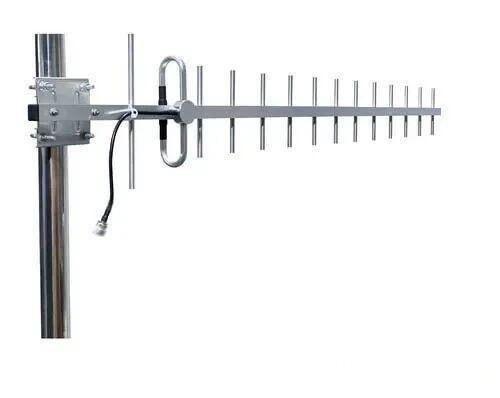 Outdoor Yagi TV Antenna


 Ceiling mount antenna
  Wall mount panel antenna
 Fiberglass Antenna
  Panel Antenna
  Parabolic Antenna
  Yagi Antenna


