

Views: 0 Author: Site Editor Publish Time: 2026-04-21 Origin: Site


When you use your smartphone every day to make calls, watch videos, navigate, or send messages, there is one critical component most people never notice — the mobile phone antenna.
It is hidden inside the device, yet it determines whether your phone can stay connected to the world. Without an antenna, even the most advanced smartphone would simply be a beautiful piece of glass and metal.
Over the past 40 years, mobile phone antennas have gone through an incredible technological revolution — from long external antennas to fully integrated hidden antennas, and now advanced multi-antenna systems for 5G connectivity.
Today, let’s explore the history of mobile phone antennas and see where future wireless technology is heading.
The core function of a phone antenna is to transmit and receive wireless signals.
It connects your smartphone to cellular base stations, WiFi routers, Bluetooth devices, GPS satellites, and more.
Simply put:
No antenna = No phone calls
No antenna = No mobile internet
No antenna = No GPS navigation
As wireless communication standards continue to evolve, antennas must also improve to support more frequency bands, faster speeds, and smaller device sizes.

Early mobile phones were easily recognized by the long antenna on top.
These antennas were typically quarter-wave straight conductors, operating around 900MHz, with lengths of 15–20 cm.
Simple structure
Stable signal performance
Higher gain
Low manufacturing cost
Large size
Easy to damage
Poor portability
Bulky appearance
This was one reason why early mobile phones were large and heavy.

As mobile phones became more popular, users wanted lighter, smaller, and more stylish products.
Engineers solved this by winding the conductor into a spring shape, creating the Helical Antenna.
This design allowed a longer conductor within a smaller physical space, improving efficiency.
Smaller size
Better communication performance
More durable
Still externally mounted
Limited industrial design freedom
Many classic Nokia and Motorola phones used this design.

As flip phones and slim devices became popular, external antennas were no longer ideal.
This led to the rise of the PIFA (Planar Inverted-F Antenna).
It could be mounted directly inside the phone on the PCB, enabling fully internal antenna designs.
Fully internal structure
Multi-band capable
Cost-effective
Suitable for mass production
Requires internal PCB space
More complex tuning process
This technology helped create the sleek mobile phones we know today.

As smartphones became thinner, internal space became extremely valuable.
LDS (Laser Direct Structuring) technology allows engineers to directly “draw” antenna patterns onto curved plastic components.
Flexible 3D design
High precision
Space-saving
Ideal for complex compact devices
Smartphones
Smartwatches
TWS earbuds
IoT devices
LDS technology remains widely used today.

In the 5G era, one or two antennas are no longer enough.
Modern 5G smartphones often contain 10 to 17+ antennas, supporting:
4G / 5G networks
WiFi 6 / WiFi 7
Bluetooth
GPS / GNSS
NFC
They also use advanced technologies:
Multiple antennas transmit and receive data simultaneously for faster speeds.
Signals are intelligently directed toward users for stronger connections.
Higher speed
Lower latency
Better multi-device performance
Higher cost
More power consumption
Extremely complex engineering
The next generation of antennas will become even more invisible and intelligent, such as:
Under-display antennas
Glass back-cover antennas
AI dynamic tuning antennas
Satellite communication antennas
6G millimeter-wave arrays
Future smartphones may hide antennas completely while delivering even stronger wireless performance.
If you are a brand owner, distributor, or OEM buyer, understanding antenna technology trends is critical because antennas directly affect:
Signal quality
Product appearance
Frequency compatibility
Certification success rate
User satisfaction
Return rates
Choosing the right antenna supplier means stronger product competitiveness in the market.
As a professional communication antenna manufacturer, we offer:
4G / 5G Antennas
WiFi Antennas
GPS / GNSS Antennas
MIMO Antennas
Vehicle Antennas
Custom Internal Antennas
OEM / ODM Services
If you are developing wireless devices, feel free to contact us for professional antenna solutions.
Professional Communication Products
ZHENGZHOU LEHENG ELECTRONIC TECHNOLOGY CO.,LTD
Tel:86-371-60911368
Email:info@global-antenna.com
Website:https://www.asialeren.com


 External GPS Antenna
  Ceramic antenna
  Internal GPS Antenna
  Surveying Antenna
 Magnet Antenna
  Patch Antenna
  Rubber Antenna
  Screw Antenna
  Spring Antenna
  Other Indoor Coverage Antenna&outdoor Wlan Antenna
 2.4G Antenna
  5.8G Antenna

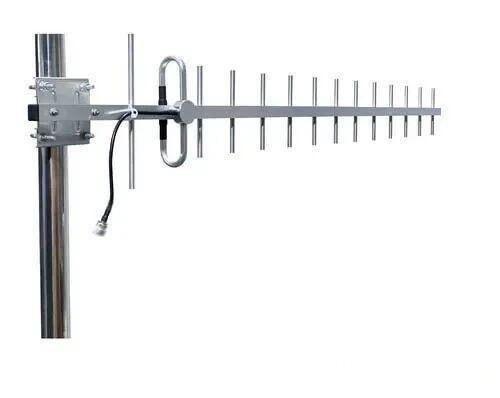 Outdoor Yagi TV Antenna


 Ceiling mount antenna
  Wall mount panel antenna
 Fiberglass Antenna
  Panel Antenna
  Parabolic Antenna
  Yagi Antenna


