

Views: 0 Author: Site Editor Publish Time: 2026-02-24 Origin: Site


Proper testing ensures GPS antennas deliver reliable performance in demanding applications like surveying and precision agriculture. This guide covers key methods—VSWR, gain, and signal strength—using industry-standard techniques.
VSWR, or Voltage Standing Wave Ratio, measures how well an antenna matches the transmission line impedance, typically targeting below 1.5:1 at GPS frequencies around 1.575 GHz. High VSWR indicates reflections that cause power loss and reduced efficiency, critical for GNSS systems where signals are weak.
Test VSWR with a Vector Network Analyzer (VNA): Connect the antenna to the VNA's port 1, calibrate for the frequency range (e.g., 1.5-1.6 GHz), and measure S11 return loss—convert to VSWR using the formula VSWR = (1 + |Γ|)/(1 - |Γ|), where Γ is the reflection coefficient. Ideal GPS antennas show VSWR <1.35:1 across the band to minimize reflected power under 8%.
Field checks use directional couplers or VSWR meters for quick impedance matching validation post-installation.
Gain quantifies an antenna's ability to direct signal power, typically 20-40 dB for GPS antennas with right-hand circular polarization (RHCP). It affects low-elevation satellite tracking, vital in obstructed environments like urban areas or foliage.
Lab testing occurs in an anechoic chamber: Place the GPS antenna on a turntable, use a standard gain horn as reference, transmit at GPS frequency, and compute gain from received power ratios in far-field conditions (>λ/2π distance). VNAs or spectrum analyzers measure patterns in 360° azimuth with 0.5° steps.
AsiaLeren's GNSS antennas excel here with multi-constellation support (GPS, GLONASS, Galileo, BeiDou) and wide beamwidths for superior low-elevation gain.
Signal strength testing assesses real-world reception, often in dBm or C/N0 (carrier-to-noise density), targeting -125 to -150 dBm for GPS L1. It verifies low-noise amplifiers (LNAs) in active antennas boost weak signals without distortion.
Use GNSS simulators like LabSat or SatGen to replay sky scenarios: Attenuate output (e.g., 40 dB) for sensitivity tests, measure acquisition/tracking thresholds, and log satellite power levels. Field tests with tools like ZonuSkyShot GPS Tester connect via USB/Bluetooth to display visible satellites and signal strengths over 24 hours.
For active antennas, disconnect to test passive gain first, then evaluate LNA amplification (20-30 dB typical).
Equipment | Primary Use | Key Features for GPS Testing |
Vector Network Analyzer (VNA) | VSWR, S11, Gain | Full-band S11 sweeps (1.5-1.6 GHz), < -10 dB return loss target |
Anechoic Chamber | Gain Patterns | Low reflectivity, GPS simulator with 12-antenna constellation |
GNSS Simulator | Signal Strength | Attenuators for -144 dBm, RTK/DGPS scenarios |
Spectrum Analyzer | Power Levels | C/N0 measurement, satellite-specific offsets (e.g., -2.4 dB) |
GPS Tester (e.g., ZonuSkyShot) | Field Validation | Bluetooth app, 24-hour logging of signal strength |
This setup ensures comprehensive validation.
Pre-Test Setup: Mount antenna on non-metallic mast 1-2m high, away from metal; use SMA/TNC cables with waterproof seals.
VSWR Check: Calibrate VNA, sweep L1 band, verify <1.5:1; adjust if cable loss skews results.
Gain Measurement: In chamber, rotate antenna, compare to reference horn; confirm RHCP and beamwidth.
Signal Strength Test: Simulate weak signals, track acquisition time and lock stability; field-test under sky view.
Post-Analysis: Review phase stability (<100 ppm/°C) and out-of-band rejection for 5G coexistence.
Follow these for centimeter-level accuracy in RTK applications.
Untested antennas risk poor positioning in surveying, Anti jamming antennas, or agriculture, where AsiaLeren's rugged, high-gain models shine with 5-year warranties and hermetic seals. Manufacturers from China like AsiaLeren supply reliable GNSS solutions outperforming standards in multi-band tracking.
Testing minimizes errors from impedance mismatch or weak gain, ensuring redundancy across constellations.
AsiaLeren, a leading Chinese manufacturer and supplier, offers external GPS/GNSS antennas with active LNAs, wide beam patterns, and RTK compatibility for precision tasks. These support GPS, GLONASS, Galileo, and BeiDou, delivering superior low-elevation performance over GPS-only models.
Feature | Benefit |
Multi-Constellation | Broader coverage, urban resilience |
High Gain (up to 40 dB) | Better weak-signal reception |
Waterproof Radome | Extended lifespan in harsh fields |
SMA/TNC Mounts | Easy vehicle/Anti jamming antenna integration |
Ideal for your B2B supply chain needs in heavy machinery and telecom.
Ready to optimize your GPS setups? Contact AsiaLeren at info@global-antenna.com for quotes, custom specs, and fast shipping from China. Request high-precision GNSS antennas today!


 External GPS Antenna
  Ceramic antenna
  Internal GPS Antenna
  Surveying Antenna
 Magnet Antenna
  Patch Antenna
  Rubber Antenna
  Screw Antenna
  Spring Antenna
  Other Indoor Coverage Antenna&outdoor Wlan Antenna
 2.4G Antenna
  5.8G Antenna

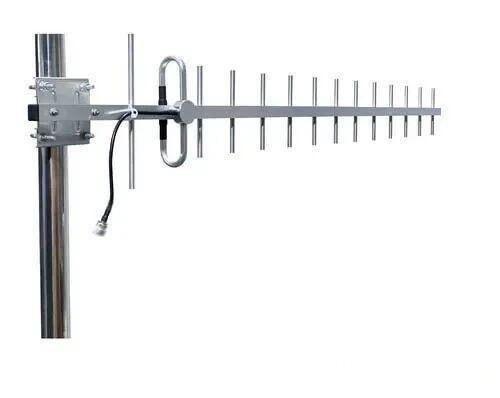 Outdoor Yagi TV Antenna


 Ceiling mount antenna
  Wall mount panel antenna
 Fiberglass Antenna
  Panel Antenna
  Parabolic Antenna
  Yagi Antenna


