

Views: 0 Author: Site Editor Publish Time: 2026-05-04 Origin: Site


Why do some antennas work better over long distances? A Yagi Antenna solves this by focusing signal energy in one direction. This makes it useful for TV reception, wireless links, cellular improvement, amateur radio, satellite communication, and emergency use. In this article, you will learn where it works best and what affects its performance.
A Yagi Antenna is often selected when signal strength needs to be improved in one clear direction rather than spread evenly around an area. Its directional design helps concentrate radio frequency energy toward a target source, which makes it practical for applications where distance, weak reception, or interference are the main challenges. This is why it is commonly used for rural TV reception, outdoor wireless links, amateur radio, cellular signal improvement, and temporary field communication.
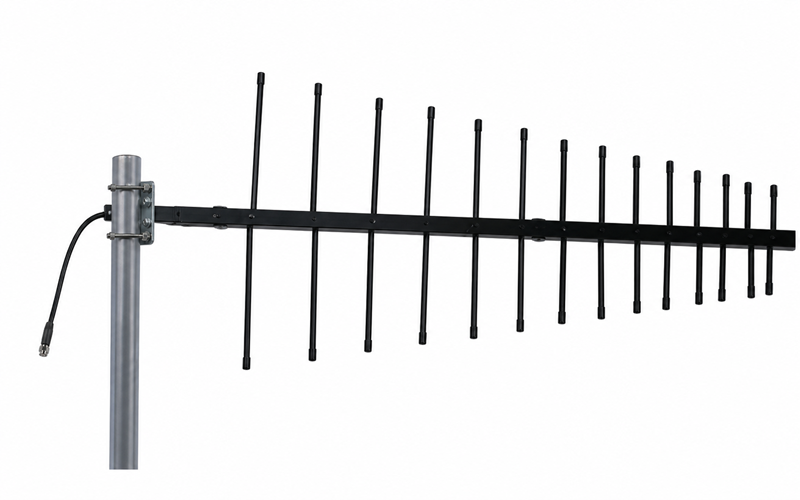
One of the main reasons users choose a Yagi Antenna is its ability to deliver higher gain than many basic antenna designs. Higher gain means the antenna can focus more energy in the desired direction, helping transmit signals farther or receive weak signals more effectively from distant sources. For example, a household far from a broadcast tower may use a Yagi antenna to improve over-the-air TV reception, while an outdoor Wi-Fi link may rely on it to connect two fixed points across a wider distance.
Application Scenario | Why High Gain Matters |
Rural TV reception | Helps capture weak signals from distant broadcast towers |
Outdoor wireless links | Extends coverage between fixed locations |
Amateur radio | Supports long-distance communication with clearer reception |
Remote sites | Improves communication where standard antennas may be insufficient |
A Yagi antenna does not receive signals equally from every direction. Instead, its beam is concentrated toward the front of the antenna, while signals from the sides or rear are reduced. This directional behavior is useful when a user wants to focus on one signal source and limit unwanted noise from surrounding areas. In crowded RF environments, this can improve communication stability because the antenna is less likely to pick up competing signals, reflections, or interference from unrelated transmitters.
A typical Yagi antenna uses a straightforward structure made up of a driven element, a reflector, and one or more directors. This simple arrangement gives the antenna its directional performance without requiring a complex powered system. Because of this, Yagi antennas are often lightweight, cost-effective, and relatively easy to install on rooftops, towers, poles, or portable field masts. Their practical design also makes them suitable for both permanent installations and temporary setups where reliable directional performance is needed.
For many households, broadcasting reception is one of the most practical and familiar applications of a Yagi Antenna. Because it is directional, it can be aimed toward a known signal source instead of receiving equally from every direction. This makes it especially useful in locations where broadcast signals are weak, inconsistent, or blocked by distance and surrounding obstacles.
Yagi antennas are widely used for over-the-air television reception, particularly in rural, suburban, and fringe coverage areas. A homeowner can mount the antenna outdoors and point it toward the nearest broadcast tower to receive stronger OTA TV signals. Compared with many indoor antennas, a properly positioned Yagi antenna is more effective at capturing distant signals because its forward gain is concentrated in the direction of the tower.
This is useful for homes located far from city centers, where television signals may lose strength before reaching the receiver. It can also help in suburban areas where buildings, trees, or uneven terrain weaken the signal path. In these situations, the antenna’s direction and mounting location often determine whether the viewer receives stable channels or experiences dropouts.
A Yagi Antenna can also improve FM and radio reception when the listener wants to focus on a particular station. By pointing the antenna toward the desired transmitter, users may receive a cleaner and more stable signal while reducing unwanted broadcasts or electrical noise from other directions. This is especially helpful when stations operate on nearby frequencies or when the listening location is far from the broadcast source.
Correct installation is essential because even a high-gain antenna can perform poorly if it is placed or aligned incorrectly. For home use, the goal is to give the antenna the clearest possible signal path toward the broadcast tower.
Installation Factor | How It Affects Reception |
Mounting height | A higher position can reduce blockage from nearby objects |
Line of sight | Fewer obstacles usually mean a cleaner signal path |
Antenna direction | Accurate aiming helps maximize received signal strength |
Cable quality | Low-loss cable helps preserve the signal before it reaches the TV or radio |
Nearby obstructions | Trees, buildings, hills, and metal surfaces can weaken or reflect signals |
For best results, users should avoid placing the antenna behind thick walls, close to large metal objects, or in low areas surrounded by obstacles. Outdoor rooftop or pole mounting usually provides better performance than indoor placement when broadcast signals are weak.
In wireless and cellular communication, a Yagi Antenna is mainly used when a signal needs to travel farther in one specific direction or when weak reception must be improved from a known source. Unlike an omnidirectional antenna that spreads energy broadly, a Yagi antenna concentrates its performance along a narrower path. This makes it useful for fixed wireless links, UHF signal transmission, cellular signal enhancement, industrial communication, and remote monitoring systems where stable directional coverage matters more than wide-area broadcasting.
One of the most practical wireless uses of a Yagi antenna is creating point-to-point links between two fixed locations. For example, it may be used to connect a main building to a warehouse, a farmhouse to an outdoor office, or two network points across a large property. Because the antenna focuses the signal in one direction, it can extend wireless coverage farther than standard router antennas, especially in outdoor environments.
This application works best when both ends of the link are relatively fixed and can be aligned toward each other. A Yagi antenna is not ideal for covering many moving users in all directions, but it can be very effective when the goal is to create a stable bridge between two known points. For lower UHF directional communication, GL500Z12 Yagi Antenna can be considered where the project requires focused signal coverage within its supported frequency range.
Wireless Use Case | How a Yagi Antenna Helps |
Building-to-building wireless link | Focuses the signal between two fixed structures |
Farm or rural network extension | Extends connectivity across open outdoor areas |
Warehouse data links | Improves directional coverage between network zones |
Outdoor access points | Sends signal toward a specific remote location |
A Yagi antenna is also widely used to improve cellular reception in places where mobile signals are weak or inconsistent. In this setup, the antenna is usually mounted outdoors, such as on a roof, pole, or exterior wall, and aimed toward the nearest cellular tower. When properly aligned, it can help strengthen 4G or 5G reception before the signal is passed into a booster or connected system.
This is especially useful for rural homes, cabins, remote offices, farms, construction sites, and industrial locations where the nearest tower may be far away. In these cases, the antenna’s directionality is valuable because it focuses on the tower instead of collecting weak signals and noise from every side.
Yagi antennas can also support industrial wireless systems that depend on reliable signal focus. In RFID applications, a directional antenna can help improve read range and reduce unwanted reads from outside the target area. In IoT and sensor networks, it can help connect devices across yards, utility sites, storage areas, or remote equipment locations.
Common examples include asset tracking in warehouses, sensor communication in logistics yards, remote monitoring at utility stations, and outdoor equipment status reporting. For higher UHF directional applications, High-Gain UHF Yagi Antenna may fit projects that require stable outdoor reception or transmission within its operating band.
When choosing a Yagi antenna for wireless or cellular communication, the most important factor is frequency compatibility. The antenna must match the operating band of the system, whether it is Wi-Fi, cellular, RFID, UHF communication, or another wireless technology. Gain level and beamwidth should also match the distance and alignment requirements. Higher gain can support longer links, but it usually requires more accurate aiming.
Polarization should match the connected system, while outdoor installations need weather-resistant materials and secure mounting. Cable loss is another key concern because a poor-quality or overly long cable can reduce the signal improvement gained from the antenna itself. For installations that need polarization flexibility, Dual-Polarization Yagi Antenna is relevant because its configuration can support different signal environments.
A Yagi Antenna is widely used in amateur radio and satellite communication because both applications often depend on reaching a specific signal source rather than covering every direction. Its directional gain helps operators improve communication range, reduce background noise, and use available transmitter power more efficiently. This makes it especially valuable for long-distance contacts, portable field operations, and low-Earth orbit satellite links where signal strength can change quickly.
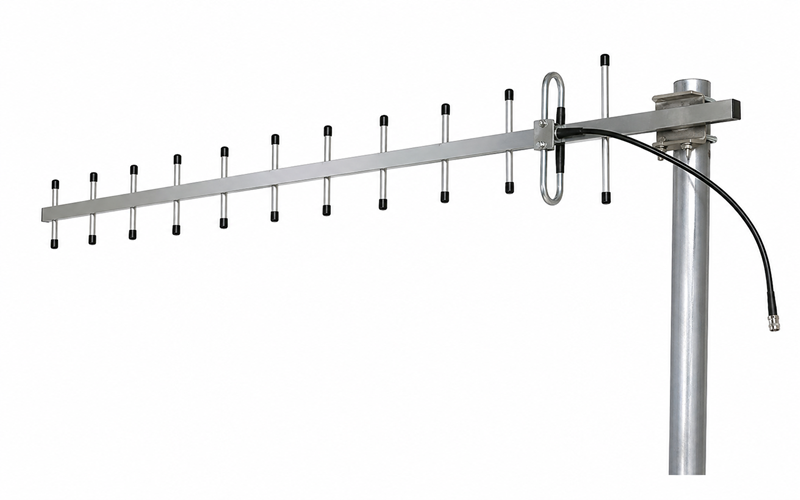
Ham radio operators often choose Yagi antennas for DX operation, where the goal is to communicate with stations across long distances. By concentrating the transmitted or received signal in one direction, the antenna can help improve signal clarity while reducing unwanted noise from other angles. This is useful during radio contests, weak-signal work, and contacts with distant operators where every improvement in gain can make communication more reliable.
Amateur Radio Scenario | Role of the Yagi Antenna |
DX communication | Focuses energy toward distant stations |
Radio contests | Improves signal strength in a chosen direction |
Weak-signal operation | Helps receive faint signals more clearly |
Fixed station setup | Provides directional control for planned contacts |
Yagi antennas are also practical for portable field use because many models are lightweight enough to transport, assemble, and aim in temporary locations. Amateur radio groups may use them during outdoor events, field days, temporary communication exercises, or emergency support operations. In these cases, the antenna must offer enough gain to improve range without becoming too heavy or difficult to align.
For portable setups, the most important balance is between size, gain, and aiming accuracy. A compact Yagi antenna may be easier to carry and mount, while a longer model may offer stronger directional performance. Operators often choose the design based on how far the signal must travel and how quickly the station needs to be deployed.
Yagi antennas are commonly used for communication with low-Earth orbit satellites because they can provide focused uplink and downlink performance. Since LEO satellites move across the sky quickly, operators may need to adjust the antenna’s direction during a pass. Accurate pointing helps maintain the signal as the satellite rises, reaches its strongest position, and then moves out of range.
Beyond everyday reception and wireless networking, a Yagi Antenna is also used in more specialized communication environments where signals must be directed accurately toward a target area or receiving point. Its focused radiation pattern makes it useful for temporary emergency links, monitoring systems, and remote sites that need reliable communication without overly complex infrastructure. These applications often value directionality, durability, and practical deployment more than wide-area signal coverage.
In disaster response situations, normal communication infrastructure may be damaged, overloaded, or unavailable. Portable Yagi antennas can help rescue teams and field coordinators establish temporary communication links between command posts, mobile units, and remote response areas. Because the antenna can focus signal energy in a chosen direction, it is useful when teams need to reach a specific repeater, base station, or temporary network point.
This type of setup is especially practical when responders need equipment that can be transported, mounted quickly, and adjusted in the field. A Yagi antenna may be installed on a portable mast, vehicle, or temporary pole to improve communication range during rescue coordination or infrastructure recovery.
Yagi antennas can also support systems that depend on focused signal transmission or reception. In radar-related and monitoring applications, the antenna’s narrow directional pattern helps concentrate signals toward an area of interest, making it easier to detect, observe, or track activity within a defined direction.
Specialized Use | Why Directionality Matters |
Weather monitoring | Helps focus reception toward a specific signal path |
Tracking systems | Supports more controlled signal observation |
Directional surveillance | Limits reception to a targeted area |
Technical monitoring | Reduces unwanted signals outside the intended direction |
Remote facilities often need dependable communication over distance, especially when cable networks or dense wireless coverage are not available. Yagi antennas can support links for utility stations, farms, weather stations, isolated sensors, and outdoor monitoring points. Since the antenna itself is passive, it does not require power to operate, which can be helpful in low-power or off-grid systems where every device must be selected carefully. In band-specific outdoor systems, GL750Z8VB Yagi Antenna can be evaluated for directional links that match its supported frequency range.
A Yagi Antenna can perform very well in directional communication, but its results depend heavily on whether it is matched, aimed, and installed correctly. In real-world use, weak performance is not always caused by the antenna itself. It may come from using the wrong frequency model, aiming the antenna inaccurately, mounting it too low, or losing signal through poor cabling and loose connections. Understanding these practical factors helps users get the expected benefit from the antenna’s directional gain.
A Yagi antenna must be designed for the correct frequency band. An antenna made for VHF or UHF television will not automatically work well for Wi-Fi, cellular, or amateur radio bands. Each application uses different operating frequencies, so the antenna elements must be sized and spaced to match the intended system.
Application | Typical Compatibility Concern |
VHF/UHF television | Must match local broadcast frequency bands |
Wi-Fi links | Must support the correct wireless band, such as 2.4 GHz or 5 GHz |
Cellular signal systems | Must match the carrier band used by the nearby tower |
Amateur radio | Must be designed for the operator’s selected radio band |
Gain and beamwidth are closely connected. A higher-gain Yagi antenna can support longer-distance communication, but it usually has a narrower beam. This means the signal is more concentrated, but the antenna must be aimed more carefully. For a distant broadcast tower, wireless bridge, cell tower, or radio contact, even a small alignment error can reduce performance.
Lower-gain models may be easier to aim because their beam is wider, but they may not provide enough signal improvement for long distances. The right choice depends on how far the signal must travel and how precisely the antenna can be positioned.
Installation quality has a major impact on performance. A Yagi antenna should be mounted securely and placed where it has the clearest possible path toward the signal source. Higher mounting positions often reduce blockage from trees, buildings, terrain, and nearby structures.
Key installation details include:
● Use a stable mast, pole, or bracket that can handle wind and outdoor exposure.
● Choose weather-resistant materials for outdoor installations.
● Use quality coaxial cable to reduce signal loss between the antenna and equipment.
● Keep connectors tight, clean, and protected from moisture.
● Inspect the antenna periodically for damage, corrosion, loose hardware, or cable wear.
The Yagi Antenna remains valuable because it improves signal strength in a clear direction. It supports TV reception, radio, wireless extension, cellular improvement, amateur radio, satellite links, monitoring, and emergency communication. Zhengzhou LEHENG Electronic Technology Co., Ltd. provides directional antenna options that help users match frequency range, gain level, polarization, connector type, and outdoor installation needs.
A: A Yagi Antenna is used for directional signal transmission or reception over longer distances.
A: Yes. A Yagi Antenna can improve 4G or 5G reception when aimed at a compatible tower.
A: Yagi antennas support point-to-point links, RFID, IoT monitoring, and remote communication systems.
A: Frequency match, gain, beamwidth, alignment, mounting height, and cable quality affect performance.


 External GPS Antenna
  Ceramic antenna
  Internal GPS Antenna
  Surveying Antenna
 Magnet Antenna
  Patch Antenna
  Rubber Antenna
  Screw Antenna
  Spring Antenna
  Other Indoor Coverage Antenna&outdoor Wlan Antenna
 2.4G Antenna
  5.8G Antenna

 Outdoor Yagi TV Antenna


 Ceiling mount antenna
  Wall mount panel antenna
 Fiberglass Antenna
  Panel Antenna
  Parabolic Antenna
  Yagi Antenna


