


Weak signals can turn simple tasks into daily frustration. TV channels freeze, calls drop, Wi-Fi slows down, and radio communication becomes unclear. A Yagi Antenna helps by focusing signal reception and transmission toward one specific source. In this guide, you will learn its key benefits, best uses, ideal conditions, and setup factors that improve performance.
One of the most important benefits of a Yagi Antenna is its high gain, which allows it to receive or transmit signals more effectively over longer distances. In weak-signal areas, the main problem is often not that a signal is completely absent, but that it becomes too weak by the time it reaches the user’s location. A Yagi Antenna helps by concentrating its reception pattern toward the signal source, making it more capable of capturing distant or low-strength signals from broadcast towers, cell towers, access points, repeaters, or radio stations.
This advantage is especially valuable in rural homes, farms, remote buildings, warehouses, RVs, and fringe reception areas where standard antennas may struggle. For example, a home far from a TV broadcast tower may experience missing channels or unstable reception, while a remote office may have poor cellular service because the nearest tower is several miles away. In these cases, a properly selected and aimed Yagi Antenna can help turn a weak, unreliable signal into a more usable connection.
For communication projects, gain value is also an important selection factor. A product such as a 12 dBi Yagi Antenna can be suitable when engineers need focused directional performance for specific frequency bands, outdoor signal reception, or fixed wireless communication links.
Weak-Signal Situation | How a Yagi Antenna Helps |
Rural or remote home | Reaches toward distant towers more effectively |
Warehouse or large facility | Improves reception from a known outdoor signal direction |
RV or temporary site | Helps target a specific tower or signal source |
Fringe TV reception area | Captures weaker over-the-air broadcast signals |
Farm or outbuilding | Supports longer-range wireless or cellular connections |
A Yagi Antenna does not receive or transmit equally in every direction. Instead, it focuses energy in one main direction, which is why it is often compared to a flashlight beam rather than a room light. A room light spreads brightness everywhere, but a flashlight sends light toward a specific target. In the same way, a Yagi Antenna directs signal energy toward the tower, access point, or communication endpoint that matters most.
This directional focus is useful when the signal source is known and fixed. Instead of wasting energy in directions where no useful signal exists, the antenna concentrates performance where it is needed. That can lead to stronger reception, more stable transmission, and fewer signal drops. For users dealing with unreliable TV, cellular, Wi-Fi, or radio performance, this focused design is often the reason a Yagi Antenna performs better than a more general-purpose antenna.
Weak signal is not always the only problem. In many locations, users also deal with interference from nearby towers, wireless devices, buildings, or competing radio-frequency signals. Another major benefit of a Yagi Antenna is its narrower reception pattern, which helps reduce unwanted signals from the sides and rear. By paying more attention to the intended direction and less attention to surrounding noise, it can help create a cleaner and more reliable connection.
This matters in suburban areas with multiple broadcast towers, commercial locations with many wireless systems, or rural properties where the desired tower is far away but background noise still affects performance. A stronger signal is useful, but a cleaner signal can be just as important. The Yagi Antenna’s ability to focus on the desired source while rejecting unnecessary interference makes it especially valuable for users who need dependable performance, not just higher signal strength.
A Yagi Antenna is widely used for over-the-air TV and radio reception because it can focus on distant broadcast towers more effectively than many basic antennas. When a home is located far from a TV or radio transmitter, the incoming signal may be too weak for an indoor antenna to capture consistently. This often leads to missing channels, pixelated images, audio dropouts, or unstable reception during poor weather or changing environmental conditions.
In these situations, a Yagi Antenna can be installed outdoors and aimed toward the broadcast tower. Its directional gain helps pull in weaker signals from a specific direction, which is especially useful in rural, suburban, or fringe reception areas. For readers, the practical benefit is simple: clearer channels, fewer interruptions, and a better chance of receiving stations that may otherwise be unavailable with a small indoor antenna or a low-gain outdoor model.
Application | Best-Fit Scenario | Main User Benefit |
Over-the-air TV | Homes far from broadcast towers | Clearer channels and fewer signal dropouts |
Radio reception | Weak FM or communication signals | Better reception from a known direction |
Cellular boosting | Rural homes, offices, RVs, farms, warehouses | Stronger indoor coverage when paired with a booster |
Wireless bridge | Two fixed buildings or outdoor locations | More stable long-distance connectivity |
Amateur radio | Long-distance or directional communication | Improved reach and better signal control |
A Yagi Antenna is also useful for improving cellular reception, especially in rural or remote locations where the nearest cell tower may be several miles away. In this setup, the antenna is usually mounted outdoors on a roof, pole, or mast and aimed toward the strongest available tower. Because it focuses reception in that direction, it can collect a better outdoor signal than a general-purpose antenna in many fixed-location installations.
This type of antenna is often connected to a cellular signal booster, which then redistributes the improved signal indoors. The setup can help homes, offices, RVs, warehouses, farms, and remote facilities reduce dropped calls, improve data reliability, and support more consistent mobile connectivity. However, it is important to clarify that a Yagi Antenna does not create a signal from nothing. It works best when there is at least some usable outdoor signal for the antenna to capture and deliver to the booster system.
For long-distance Wi-Fi or wireless bridge connections, Yagi antennas are valuable because they support focused communication between two fixed points. Instead of spreading wireless energy broadly, the antenna directs it toward a specific receiving location. This makes it useful for connecting two buildings, extending internet service to an outbuilding, linking a farm structure to a main office, or creating a data connection between fixed outdoor access points.
The key benefit is dependable long-distance connectivity. In a point-to-point setup, both ends of the link usually remain in place, so the directional nature of a Yagi Antenna becomes an advantage rather than a limitation. When properly aligned, it can help reduce wasted signal energy and improve link stability, especially compared with antennas that broadcast in a wider pattern.
Amateur radio users and specialized communication operators often choose a Yagi Antenna when they need better reach, cleaner reception, and more control over signal direction. For long-distance contacts, emergency communication, or fixed radio links, the ability to aim the antenna toward a target area can make communication more effective. This is particularly useful when the operator wants to prioritize a distant signal while reducing unwanted reception from other directions.
In these applications, the Yagi Antenna’s value is not only about signal strength. Its directional control gives users a more intentional way to manage communication, whether they are trying to reach a specific station, improve reception quality, or work in an environment where competing signals may interfere with performance.
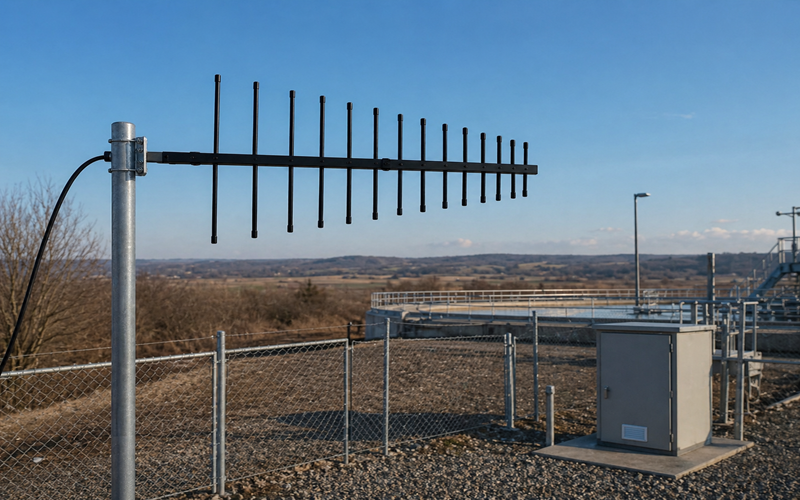
A Yagi Antenna performs well in fixed-direction setups because its main parts are arranged to guide signal energy forward. Instead of relying on a single element to receive or transmit in a broad pattern, it uses multiple elements that work together to create a stronger signal in one target direction. This is why the antenna is often used when the tower, access point, repeater, or radio source stays in a known location.
Yagi Antenna Part | Main Function |
Driven element | Connects to the transmitter or receiver and handles the active signal |
Reflector | Sits behind the driven element and helps redirect signal energy forward |
Directors | Sit in front and help shape the signal into a more focused beam |
This structure gives the Yagi Antenna its practical advantage: more of the signal is aimed where it is useful. For users, that can mean better reception from a distant tower, more stable transmission between two fixed points, or improved performance in a weak-signal location.
Another reason Yagi antennas perform well in fixed-direction setups is their narrow beamwidth. Beamwidth refers to how wide the antenna’s main reception or transmission pattern is. A narrower pattern allows the antenna to focus more precisely on one signal source instead of collecting signals from every direction.
This matters when the source is fixed, such as a TV broadcast tower, cellular tower, wireless bridge endpoint, or radio station. By targeting that source more directly, the antenna can make better use of available signal energy and reduce unnecessary reception from other directions. The same benefit also explains why aiming is so important. If the antenna is pointed away from the source, performance can drop because the strongest part of its reception pattern is no longer aligned with the signal.
Yagi antennas usually have a straightforward physical design: metal elements mounted along a central boom. This simple construction helps keep them practical for many outdoor applications. They can often be made lightweight, durable, and easier to mount on rooftops, poles, masts, or other elevated locations.
For many users, the value is that a Yagi Antenna can provide strong directional performance without requiring a more complex or expensive antenna system. Its design is simple, but the result is highly useful: focused gain, outdoor durability, and efficient long-range performance for fixed-direction signal needs. For project buyers, simple structure can also make specification, installation planning, and maintenance easier across multiple deployment sites.
A Yagi Antenna is usually a strong choice when the signal source is fixed, known, and located in one general direction. This could be a TV broadcast tower, a cellular tower, a wireless access point, a repeater, or another radio communication endpoint. Because the antenna is directional, it performs best when it can be aimed clearly toward that source rather than trying to receive signals from every direction at once.
Before choosing one, users should think about the real conditions around the installation site. A Yagi Antenna is often a good fit when long-range reception or transmission is the priority, outdoor mounting is possible, and there is a relatively clear path between the antenna and the signal source. It is also a smart option when interference from other directions is a problem, since its focused pattern can help reduce unwanted signals.
Situation | Is a Yagi Antenna a Good Fit? | Why It Matters |
Signal comes from one known tower | Yes | Directional focus can improve reception |
Long-distance signal improvement is needed | Yes | High gain supports better range |
Outdoor mounting is available | Yes | Clearer placement usually improves performance |
Signals come from several directions | Not always | A directional antenna may miss some sources |
Heavy obstacles block the signal path | Limited | Buildings, hills, or trees can weaken results |
Frequency band is unknown | Risky | The antenna must match the intended signal type |
A Yagi Antenna is not automatically the best option for every weak-signal problem. It is best for focused, long-distance, tower-specific signal improvement. If the user knows where the signal is coming from and wants to strengthen that one connection, the directional design is a major advantage.
An omnidirectional antenna may be better when signals arrive from multiple directions or when broad coverage matters more than distance. For example, if several nearby towers surround a building, or if the user does not know which direction provides the best signal, an omnidirectional antenna may offer more flexibility. The decision should be based on the signal environment, not just on which antenna has higher gain on paper.
The main limitation of a Yagi Antenna is that it must be aimed accurately. Since it focuses on one direction, poor alignment can reduce performance significantly. Users should identify the correct tower, access point, or broadcast source before installation instead of guessing and hoping for the best result.
Physical obstructions can also limit performance. Buildings, hills, dense trees, walls, and poor line of sight may weaken the signal before it reaches the antenna. Frequency compatibility is another key factor. Yagi antennas are usually designed for specific frequency ranges, so an antenna intended for one application may not work well for another. A Yagi Antenna can improve weak but usable signals, but it may not solve the problem if there is almost no outdoor signal available to capture.
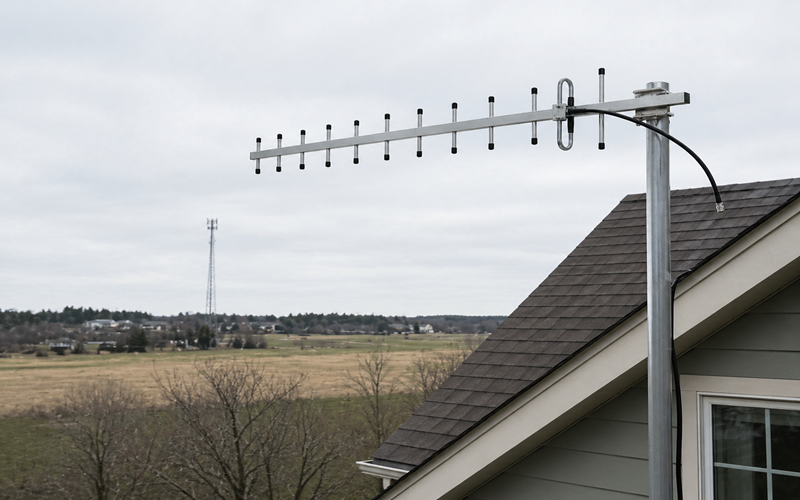
To get the expected gain from a Yagi Antenna, accurate aiming is essential. Unlike an antenna that receives signals broadly from every direction, a Yagi Antenna works through a focused beam. That design is what gives it strong long-range performance, but it also means the antenna must be pointed toward the correct signal source to deliver the best result.
Before installation, users should identify the location of the target source, such as a cell tower, TV broadcast tower, wireless access point, repeater, or radio station. Guessing the direction may lead to weak or inconsistent performance. Even small adjustments can make a noticeable difference because the strongest part of the antenna’s reception pattern is concentrated in a specific direction.
A Yagi Antenna usually performs best when installed outdoors in a clear and elevated position. Rooftops, poles, masts, and other raised mounting points can help reduce signal blockage and improve the antenna’s ability to “see” the source. This is especially important in rural homes, farms, warehouses, RV sites, and remote facilities where the signal may already be weak before it reaches the property.
Setup Factor | Why It Matters |
Clear line of sight | Reduces blockage from buildings, trees, and terrain |
Elevated mounting position | Helps the antenna receive a stronger, less obstructed signal |
Stable mounting hardware | Keeps the antenna aligned after wind or weather changes |
Outdoor placement | Gives the antenna better access to distant signal sources |
A Yagi Antenna must match the frequency range of the application it is intended for. An antenna designed for TV reception, cellular bands, Wi-Fi, or amateur radio will not automatically perform well across all other uses. If the frequency range is wrong, the antenna may deliver poor results or fail to improve the signal at all.
This makes frequency compatibility an important buying and setup factor. Users should confirm the target signal type before choosing a model, especially when the goal is reliable performance for cellular boosting, long-distance Wi-Fi, radio communication, or over-the-air TV reception. Technical factors such as impedance, VSWR, connector type, and polarization may also matter in antenna selection, especially when the antenna must work with existing RF equipment.
A Yagi Antenna offers higher gain, focused direction, longer range, cleaner reception, and reduced interference. It works best when the signal source is fixed, known, and reachable. Proper aiming, mounting, and frequency matching improve results. Zhengzhou LEHENG Electronic Technology Co., Ltd. provides antenna solutions for directional wireless communication needs, including projects where stable outdoor signal performance and frequency-specific selection are important.
A: A Yagi Antenna provides high directional gain for stronger long-range signal reception.
A: A Yagi Antenna suits fixed-point links, remote sites, warehouses, and weak-signal areas.
A: A Yagi Antenna is better for one known signal direction; omnidirectional antennas suit wider coverage.
A: A Yagi Antenna needs accurate aiming, clear line of sight, and correct frequency matching.


 External GPS Antenna
  Ceramic antenna
  Internal GPS Antenna
  Surveying Antenna
 Magnet Antenna
  Patch Antenna
  Rubber Antenna
  Screw Antenna
  Spring Antenna
  Other Indoor Coverage Antenna&outdoor Wlan Antenna
 2.4G Antenna
  5.8G Antenna

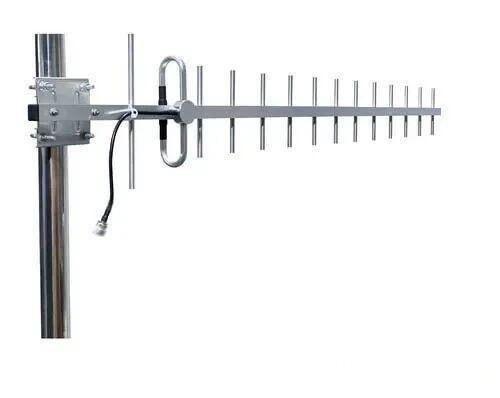 Outdoor Yagi TV Antenna


 Ceiling mount antenna
  Wall mount panel antenna
 Fiberglass Antenna
  Panel Antenna
  Parabolic Antenna
  Yagi Antenna


