

Views: 0 Author: Site Editor Publish Time: 2026-08-13 Origin: Site


Unlike legacy 4G LTE systems, 5G relies heavily on complex MIMO architectures and broader frequency spectrums, making antenna selection far more technical. Choosing the wrong antenna, whether due to mismatched frequency bands, inadequate stream counts, poor port isolation, or excessive cable loss, can severely compromise your network capabilities.
This guide breaks down the four most critical factors to evaluate when selecting a 5G MIMO antenna to ensure maximum performance, stability, and long-term deployment success.
Check your router's technical specification sheet to confirm its cellular port layout. Enterprise 5G routers usually feature multiple ports (such as MAIN1, MAIN2, DIV1, and DIV2, or CELL1 through CELL4), and a 4x4 MIMO router requires a matching 4x4 MIMO antenna to utilize all spatial streams. Pairing a router with a lower-spec antenna caps data throughput and restricts overall system performance.
4×4 MIMO antennas are preferred for high-throughput and high-capacity 5G applications, including:
· Industrial 5G routers and edge gateways
· Fixed Wireless Access (FWA) CPEs
· Public safety and emergency communication systems
· High-bandwidth enterprise network connections
2×2 MIMO antennas are suitable for applications with moderate data requirements, where cost, power consumption, or compact design are important considerations:
· IoT monitoring systems
· Smart metering
· SCADA data acquisition
· 5G RedCap (Reduced Capability) devices
A true 4x4 MIMO antenna contains four distinct cellular elements, but lower-cost designs often cut corners by limiting Ports 3 and 4 to higher frequencies while leaving only Ports 1 and 2 for low-band coverage. If a carrier deploys 5G on low-frequency bands for extended range or wall penetration, an asymmetrical antenna leaves only two ports operational and forces your gateway to downgrade from 4x4 MIMO to 2x2 MIMO speeds. When reviewing datasheets, verify that all four antenna cables explicitly support the full 617 to 6000 MHz spectrum to prevent port-level band restriction.
Selecting an MIMO antenna requires cross-referencing its supported frequency bands against the specific cellular networks deployed in your region. Standard public 5G connections rely heavily on mid-and-low bands such as n1, n3, n28, n41, n77, and n78, while private enterprise networks, ports, and smart factories increasingly operate on band n48 (CBRS). Because regional operators use vastly different frequency combinations across global markets, confirming explicit support for both commercial 5G bands and private CBRS frequencies ensures seamless network operation wherever your hardware is deployed.
Modern 5G routers boost network speeds by using Carrier Aggregation to bind multiple distinct frequency channels together simultaneously. Using an ultra-wideband antenna allows the connected gateway to dynamically combine a long-range low band with a high-capacity mid band without experiencing performance bottlenecks across individual MIMO channels. Investing in a true wideband design maximizes operational flexibility for industrial deployments, allowing hardware to adapt to operator network updates and changing site conditions without replacing rooftop antennas.
For reliable multi-band 5G deployments, Asialeren provides high-quality MIMO Antenna Solutions featuring wideband coverage, consistent multi-port performance, and robust designs.
Radiation efficiency measures the percentage of RF power supplied to the antenna that converts into transmitted radio waves rather than dissipating as heat. In a 4x4 MIMO array, maintaining balanced efficiency across all four internal elements is important to protect overall performance. If radiation efficiency drops noticeably on low bands (typically below 50–60%) or mid-to-high bands (typically below 60–70%) on any port, that specific MIMO stream will experience weaker sensitivity, increasing the risk of packet errors and reducing total throughput.
Port-to-port isolation measures internal RF crosstalk between co-located antenna elements inside the housing. Because lower frequencies (617–960 MHz) have longer physical wavelengths, housing four low-band elements in a compact enclosure presents significant isolation challenges. If low-band isolation degrades significantly (often below 10–12 dB), the router’s modem struggles to separate overlapping multi-stream signals, which can cause the system to downgrade from 4x4 spatial multiplexing to 2x2 or single-stream operation under poor signal conditions.
Envelope Correlation Coefficient (ECC) evaluates the statistical independence of the signal pathways received by each internal element in a MIMO array. For effective 4x4 MIMO spatial multiplexing, each antenna element should ideally capture distinct, low-correlation signal waves. Selecting a MIMO antenna that maintains an ECC rating generally below 0.3 (and typically under 0.5) across operating frequencies promotes better channel independence, helping the router process parallel data streams more reliably.
Voltage Standing Wave Ratio (VSWR) measures how effectively RF energy transfers into the air rather than reflecting back toward the modem, with values under 2.0:1 generally considered a reliable baseline for enterprise hardware. For a multi-port MIMO setup, VSWR consistency across all cables helps maintain signal balance. Significant disparities—such as two cables operating at a favorable 1.5:1 ratio while the other two sit at 2.5:1—can create uneven signal levels across modem ports, complicating multi-stream processing and impacting peak performance.
While gain indicates signal concentration in a specific direction, spatial symmetry across internal elements is often more impactful in a MIMO setup than raw dBi numbers. If individual MIMO elements exhibit noticeably asymmetrical radiation patterns or mismatched gain levels, spatial streams arrive at the gateway with uneven signal quality. Choosing an antenna array with balanced radiation patterns and aligned gain characteristics helps ensure all four channels contribute comparable signal performance for optimal 4x4 MIMO operation.
High-frequency 5G signals experience higher attenuation over distance, making low-loss cabling and connector integrity key factors in maintaining overall system performance. In a 4x4 MIMO deployment, using high-loss or long cable runs (such as standard RG58 exceeding 3 meters) can absorb a substantial portion of RF power before it reaches the router. Specifying low-loss cables (such as LMR-200 or LMR-400 equivalents) and weather-sealed connectors (e.g., N-Type or SMA) helps minimize signal attenuation and maintain balanced signal delivery across all four MIMO paths.
RF Specification | Pass Criteria (Enterprise Grade) | Fail / Red Flag | Why It Matters for MIMO |
Port Isolation | >12 dB (Low Band), >18 dB (Mid/High) | <10 dB | Prevents channels from interfering with each other. |
ECC Value | < 0.3 across all bands | > 0.5 | Guarantees spatial streams stay independent. |
Radiation Efficiency | > 60% (Low Band), > 70% (Mid/High) | < 50% | Ensures signal energy turns into data speed, not heat. |
VSWR | < 2.0:1 across all 4 ports | > 2.5:1 or imbalanced | Prevents signal reflection back into the modem. |
Cable Choice | LMR-200 (<5m) / LMR-400 (>5m) | RG58 > 2 meters | Prevents high-frequency 5G signal loss inside the cable. |
Asialeren’s MIMO Antenna Solutions are engineered to meet key RF requirements, including high efficiency, strong isolation, low ECC, and stable VSWR performance for reliable 5G deployments.
A 4x4 MIMO antenna requires four separate cables running out of a single enclosure. Preventing water ingress at the cable outlet is more demanding than on a single-cable antenna. Outdoor models must use an IP67-rated waterproof seal around all four cable outlets. If rainwater or humidity seeps along any of the four cable jackets into the casing, it can cause signal interference or electrical short-circuits across all internal channels.
In vehicles, trains, and mobile machinery, equipment experiences constant shaking. A 4x4 MIMO system relies on four tight cable connections at the router. If vehicle vibration loosens even one connector, the router immediately loses that channel and slows down from 4x4 MIMO to 2x2 MIMO speeds. Industrial-grade MIMO antennas use certified anti-vibration strain relief fittings to keep all four cable connectors securely fastened during heavy movement.
Outdoor rooftop antennas face direct sunlight and high heat. When four internal antenna channels operate simultaneously inside a small sealed enclosure, heat builds up quickly. Choosing an antenna housing made of UV-resistant industrial plastic (such as ASA) with a wide working temperature range (-40°C to +85°C) prevents the plastic from cracking under sunlight and keeps the internal antenna elements operating stably without signal degradation.
Antennas mounted on public infrastructure, buses, or outdoor cabinets face physical impacts and vandalism risks. A vandal-proof dome antenna with an IK10 impact rating uses a low-profile, reinforced design secured by a bottom bolt. This allows all four antenna cables to run directly through the mounting surface into the building or vehicle, hiding the wiring from weather exposure and physical tampering.
Requirement | 4x4 MIMO Practical Challenge | Target Standard | Why It Matters |
Waterproofing | Water seeping into the 4-cable outlet | IP67 Rating | Prevents moisture from damaging internal antenna channels. |
Vibration | Vibration loosening any 1 of the 4 cable connectors | Anti-vibration certified | Keeps all 4 ports connected to maintain full 4x4 speed on vehicles. |
Sunlight & Heat | Heat building up inside from 4 elements under direct sunlight | -40°C to +85°C, UV-resistant ASA | Prevents plastic cracking and maintains stable signal output in hot climates. |
Impact Protection | Exposed cables or housing damaged by impacts | IK10 Vandal-Proof | Protects the antenna housing and hides cables inside the mounting wall. |
Before finalizing your procurement, use this comprehensive checklist to verify that your selected antenna meets all essential performance, hardware, and environmental standards for 5G 4x4 MIMO deployment.
Evaluation Category | Key Checkpoints | Selection Target / Benchmark |
System Architecture | Router Port Compatibility | Matches router MIMO capability (e.g., True 4x4 MIMO setup). |
Band Coverage | Full Spectrum Support | 617 – 6000 MHz across ALL 4 ports (No port restrictions). |
Network Compatibility | Supports local 5G bands (n1, n28, n41, n77, n78) & Private 5G (n48/CBRS). | |
RF Performance | Isolation & ECC | Isolation > 12 dB (Low) / > 18 dB (Mid/High); ECC < 0.3. |
Efficiency & VSWR | Efficiency > 60–70%; VSWR < 2.0:1 (balanced across ports). | |
Cable & Connectors | Attenuation & Strain Relief | Low-loss cables (LMR-200/400); Weatherproof & anti-vibration connectors. |
Physical Environment | Ingress & Impact Protection | IP67 Rating (factory-molded multi-cable seal); IK10 Vandal-proof. |
Thermal & Material | -40°C to +85°C operating range; UV-stabilized ASA housing. |
Yes, but the antenna will only operate with two active MIMO streams, leaving two antenna elements unused. To achieve the expected network performance, the antenna configuration should match the router’s MIMO capability. Using a lower-order antenna on a higher-order router may limit available spatial streams and reduce overall throughput.
Proper spacing is important to reduce mutual coupling and interference between antenna elements. When installing separate MIMO antennas on the same rooftop, vehicle, or mounting structure, maintain sufficient physical separation based on the lowest operating frequency. For low-band 5G frequencies (617–960 MHz), a spacing of approximately 30–50 cm (12–20 inches) between antenna housings is commonly recommended to maintain stable RF performance.
The choice depends on the deployment environment. Omnidirectional MIMO antennas are suitable for mobile applications such as vehicles, buses, and marine systems, where signal sources change direction frequently. Directional panel antennas are better for fixed installations, such as rural CPEs, remote offices, or industrial sites, where the antenna can be aimed toward a specific cellular tower to improve signal strength and coverage distance.
A 4×4 MIMO system may reduce available streams under certain conditions, including:
· Poor cable or connector connections: A damaged cable or loose connector can cause the router to lose one or more antenna paths.
· Incomplete frequency support: Some low-cost MIMO antennas do not provide identical frequency coverage across all ports, limiting available MIMO performance on certain bands.
· Weak signal or high interference environments: The modem may automatically reduce MIMO streams to maintain a more stable connection under challenging RF conditions.
No. Most enterprise 5G 4×4 MIMO antennas are passive antennas and do not require external power. They work by transmitting and receiving RF signals directly through the router’s cellular modem connections. Active components are more commonly used in integrated GPS/GNSS modules or specialized signal amplification systems rather than standard passive cellular MIMO antennas.
By considering factors such as MIMO stream compatibility, wideband support, port isolation, ECC, VSWR, environmental protection, and mechanical durability, you can maximize network performance and achieve more reliable long-term 5G connectivity.
For industrial, outdoor, and private 5G network applications, Asialeren provides high-quality 5G MIMO Antenna Solutions designed with wideband coverage, stable RF performance, and rugged construction to meet demanding deployment requirements.


 External GPS Antenna
  Ceramic antenna
  Internal GPS Antenna
  Surveying Antenna
 Magnet Antenna
  Patch Antenna
  Rubber Antenna
  Screw Antenna
  Spring Antenna
  Other Indoor Coverage Antenna&outdoor Wlan Antenna
 2.4G Antenna
  5.8G Antenna

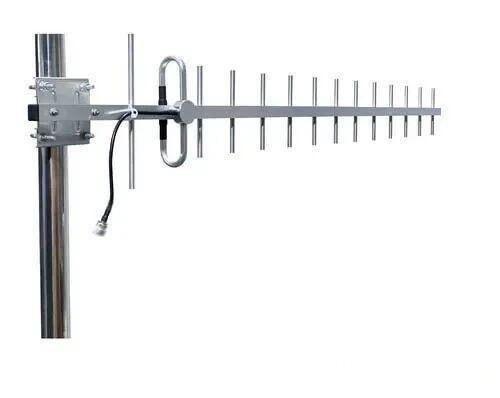 Outdoor Yagi TV Antenna


 Ceiling mount antenna
  Wall mount panel antenna
 Fiberglass Antenna
  Panel Antenna
  Parabolic Antenna
  Yagi Antenna


