


Definition of UHF Antenna
Definition: Equipment used to receive and transmit UHF signals from 300 MHz to 3 GHz,It is a key component of TV broadcasting, wireless communication, mobile phone, GPS and other technologies.
What is UHF?
Definition: Abbreviation for "ultra-high frequency", which refers to the electromagnetic wave range with a frequency between 300 MHz and 3 GHz.
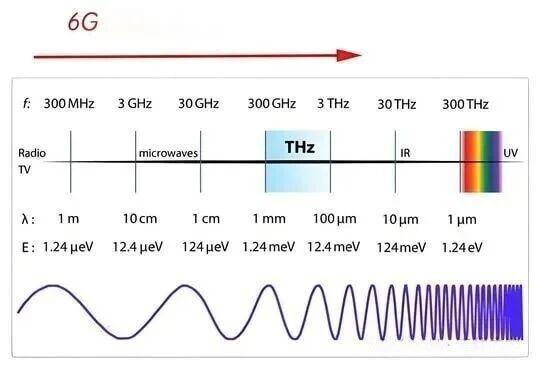
Applications: TV broadcasting, mobile communication, satellite communication, radar system, etc.
Main characteristics of UHF antenna
1. Compact design: shorter wavelength, smaller than low frequency antenna, suitable for portable devices.
2. that efficiency of the urban environment is high: the signal has strong capability of penetrate buildings and obstacle.
3. Wide range of applications: covering public security communications, television broadcasting, LTE networks, radar and other fields.
4. Fast data transmission: High-frequency features support high-speed data transmission and adapt to mobile Internet and real-time video streaming.
5. Strong reliability of challenging scenarios: long-distance stable connection, outstanding anti-interference ability, suitable for key scenarios.
What is the UHF antenna used for?
1. TV: Receive UHF wireless TV signals.
2. Radio: signal transmission and reception of walkie-talkies and other equipment.
3. Wireless communication: short distance data transmission of Wi-Fi, Bluetooth and wireless router.
4. Mobile communication: reliable communication guarantee for mobile phone and cellular network.
5. Satellite communication: signal transmission and reception of satellite TV and satellite Internet services.
6. RFID: tag data reading and writing in inventory tracking, access control and asset management.
7. Public safety and emergency services: wide-area communications for police, fire, ambulance.
8. Aviation and space: communication between aircraft, air traffic control and ground stations.
Other critical uses and characteristics of UHF antennas
1. Military and emergency communications: reliable point-to-point communications, suitable for national defense operations and tactical coordination.
2. Mobile network: support the equipment connection of GSM and UMTS mobile networks.
3. Equipment design: The length is matched with the short wave length, which is suitable for compact and portable equipment.
4. Public safety equipment and LTE applications: common in public safety radios, LTE equipment, and emergency two-way communication tools.
How does the UHF antenna work?
Core work logic
1. Receiving signals: capturing radio waves containing electric and magnetic fields sent by UHF transmitters.
2. Capture signal: Through the specific arrangement of conductive elements (wire/metal rod) in the UHF frequency resonance, efficient capture of radio waves.
3. Converting signals: Inducing current in conductive elements to convert electrical waves into electrical signals representing information.
4. Sending signals: Electrical signals are fed into an antenna, causing conductive elements to generate electric and magnetic fields that radiate information in the form of radio waves.
5. Directivity: The radiation pattern is determined by the antenna design and is divided into omnidirectional radiation and directional radiation.
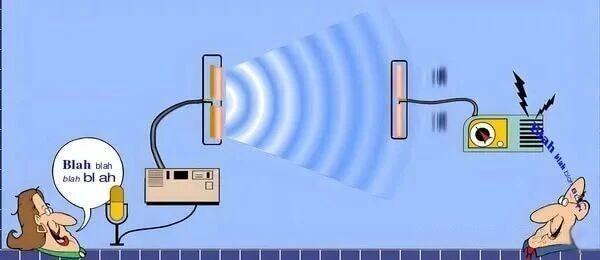
Key influencing factors
Design related: impedance matching, polarization, gain, etc., all optimized for UHF signal transmission and reception.
Morphological differences: shape and size vary with application scenarios and requirements.
How does a half-wave dipole antenna work and what are its advantages?
Basic structure
Composition: two conductive elements (metal bars/wires) placed end to end, horizontally or vertically.
Size: Each element is about a quarter wavelength, and the total length is about half the wavelength of the design frequency.
Working principle
1. Reception: resonates at the design frequency, intercepts radio waves and generates a small current representing the signal.
2. Transmission: The electrical signal is distributed between the two elements, generating an oscillating electromagnetic field that radiates outward.
Core advantages
1. The design is simple and efficient, balancing performance and installation difficulty.
2. that efficiency is high than that of a quarter-wave antenna, and the signal receiving and transmit capability is stronger.
3. It has a wide range of applications and can adapt to a variety of frequencies by adjusting the length of the elements.
4. The radiation pattern is predictable with maximum sensitivity perpendicular to the length of the antenna, suitable for broadcast and point-to-point communications.
What are the advantages of UHF antennas?
1. Wide coverage: Compared with VHF antenna, the wavelength is longer, which is suitable for long-distance communication and broadcasting.
2. Less interference: In cities and densely populated areas, there is less interference from obstacles such as buildings and trees.
3. Better signal quality: Provide clearer audio and video signals to improve the use experience.
4. Large channel capacity: UHF frequency band can accommodate more TV channels and radio stations, with more choices.
5. Compact size: smaller than VHF antenna, easy to install and inconspicuous.
6. Compatible with digital signals: capture and decode digital TV signals efficiently and adapt to digital broadcasting.
Type of UHF antenna
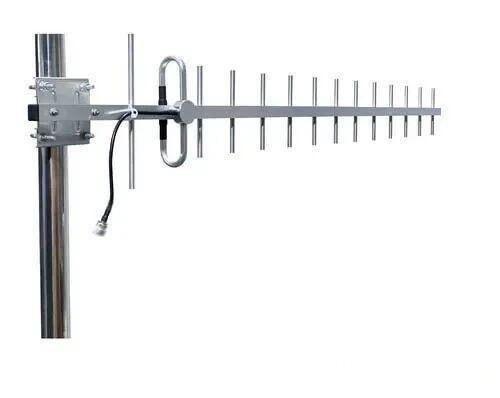
1.Yagi Antenna : Directional antenna with multiple parallel elements, often used for TV reception, suitable for areas with weak signals.
2. log-periodic antenna: broadband antenna, contain multiple dipole elements of different length, suitable for television, radio, wireless communication.
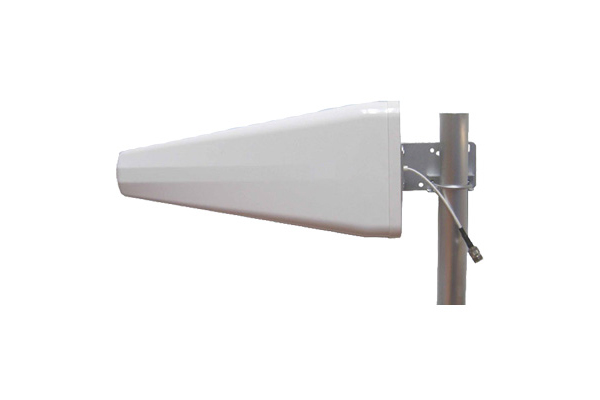
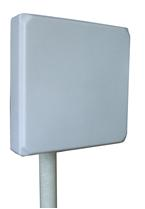
3. Panel antenna: flat rectangular/square, suitable for Wi-Fi router, signal amplifier, RFID, Internet of Things, etc.
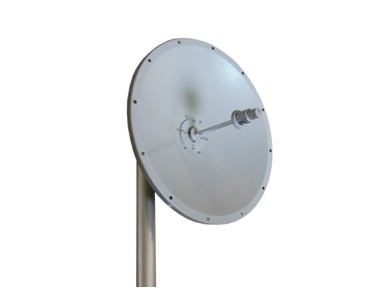
4. Parabolic antenna: including parabolic reflector dish and feed horn.Adapt long range communications (backhaul, CCTV, point-to-point communications).
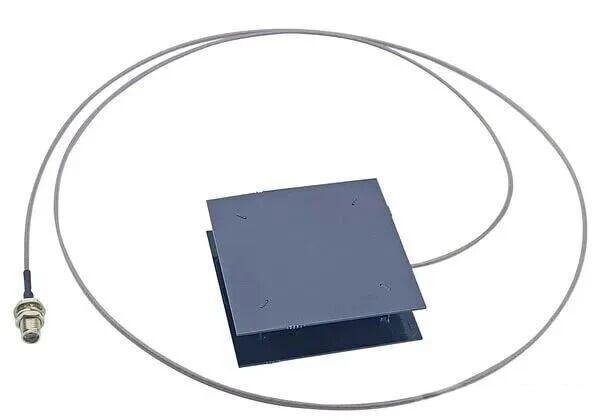
5. Quadrifilar Helix Antenna (QHA): Four helical wires are wound around a central axis to radiate and receive circularly polarized electromagnetic waves.
Example of dedicated UHF antenna
1. Marine UHF antenna: resistant to salt water corrosion, installed at the height of the mast, suitable for maritime communication.
2. Naval shipborne antenna: reinforced design for military use, corrosion resistance, integrated grounding, suitable for the electromagnetic environment of the ship.
3. UHF dipole antenna: omnidirectional coverage, suitable for emergency response vehicles, base stations and portable communication equipment.
Folded dipole antenna: what is it and why was it chosen?
Core structure
Composition: A single conductor (metal/wire) is folded on itself with two ends closely adjacent.
Advantages: Balanced signal, wide impedance range, suitable for UHF/VHF TV applications.
Advantages
1. Easy to build: budget-friendly materials for DIY and quick fixes.
2. Strong durability: simple structure, good environmental adaptability and long service life.
3. Excellent impedance matching: natural matching of 300 ohm double-lead cable to reduce signal loss.
4. Flexible installation: compact and unobtrusive, suitable for narrow indoor or outdoor mast tops.
5. stable performance: that television receive effect is good, and the audio and video signals across the frequency range are stable.
Loop Antenna: Overview and Common Uses
1.Core structure
Form: loop/coil wire in closed configurations such as round, square, etc.
Directionality: receive/transmit signals in all directions, not limited to a single direction.
2.Common use
TV reception: adapt to indoor settings or multiple signal source areas.
Other applications: AM radio, shortwave listening, RFID, wireless communication, adapting to space-limited scenarios.
What is the difference between VHF and UHF antennas?
Contrast dimension | VHF antenna | UHF antenna |
Frequency range | 30-300 MHz | 300-3000 MHz |
Signal propagation | Long propagation distance and strong ability to penetrate obstacles | It is easy to be absorbed/reflected and has good adaptability to urban environment. |
Antenna size | Larger in size | Compact size |
Gain level | The gain is high | The gain is relatively low |
Main application | TV broadcasting, FM radio, amateur radio, maritime VHF radio | Mobile phone signal, Wi-Fi, Bluetooth, satellite communication, urban TV broadcasting |
Dual-band/multi-band antenna: can receive VHF and UHF signals simultaneously.
What are the best indoor and outdoor UHF antennas?
(I) Best indoor UHF antenna
1. Mohu Leaf Metro: Compact and easy to install, range up to 25 miles, wall/window mount.
2. Winegard FlatWave Amped FL5500a: Stylish design with amplifier range up to 50 miles.
3. ClearStream Eclipse: Strong reception, 35-mile range, flexible installation (wall/window/behind TV).
(II) Best Outdoor UHF Antenna
1. Channel Master CM-4228HD: Long distance reception, range up to 80 miles, multi-directional reception mode.
2. Antennas Direct DB8e: Excellent performance with a range of up to 70 miles and a bow-tie design for enhanced signal capture.
3. RCA ANT751E: Compact and easy to install, with a range of up to 70 miles, suitable for roof/attic installation.
Sum up
Core Values: UHF antennas are key to the performance of UHF dependent devices.It adapts to multiple scenarios such as home entertainment, mobile communication, amateur radio and so on.
Choice significance: The right UHF antenna can significantly improve the experience and performance of the device.
Professional Communication Products
ZHENGZHOU LEHENG ELECTRONIC TECHNOLOGY CO.,LTD
Tel:86-371-60911368
Email:info@global-antenna.com
Website:https://www.asialeren.com


 External GPS Antenna
  Ceramic antenna
  Internal GPS Antenna
  Surveying Antenna
 Magnet Antenna
  Patch Antenna
  Rubber Antenna
  Screw Antenna
  Spring Antenna
  Other Indoor Coverage Antenna&outdoor Wlan Antenna
 2.4G Antenna
  5.8G Antenna


 Ceiling mount antenna
  Wall mount panel antenna
 Fiberglass Antenna
  Panel Antenna
  Parabolic Antenna
  Yagi Antenna


