Views: 0 Author: Site Editor Publish Time: 2025-11-03 Origin: Site

In an increasingly connected world, the demand for smaller, more efficient, and more reliable wireless devices continues to grow. At the heart of many of these compact gadgets lies a critical component: the ceramic antenna. This small but powerful antenna technology is a key enabler for the Internet of Things (IoT), modern communications, and portable electronics, allowing them to communicate wirelessly without sacrificing valuable internal space. But what exactly is a ceramic antenna, and how does it work? This comprehensive guide delves into the principles, types, applications, and future trends of this fundamental technology, providing a deep dive into why it has become a cornerstone of modern wireless design.
A ceramic antenna is a small, high-performance antenna that uses a ceramic material as its substrate, or base. Ceramic materials are chosen for their high dielectric constant, a property that allows the antenna to be physically shrunk in size while maintaining effective performance at high frequencies. Unlike traditional external whip or rod antennas, ceramic antennas are typically designed as surface-mount components, making them ideal for compact, integrated designs where space is at a premium.
The core advantage of using ceramic antenna technology stems from the physics of antenna design. The wavelength of a signal is inversely related to the square root of the dielectric constant of the substrate material. Because ceramic antenna substrates have a much higher dielectric constant than the standard materials used in printed circuit boards (PCBs), the wavelength within the ceramic is effectively shortened. This physical principle allows engineers to design antennas that are drastically smaller than their conventional counterparts, a feature critical for today's sleek and miniaturized devices .
The fundamental working principle of a ceramic antenna revolves around its ability to convert electrical energy into electromagnetic radiation (for transmitting) and vice-versa (for receiving). It functions as a resonant structure that is carefully tuned to specific frequency bands.
Energy Conversion: At its core, a ceramic antenna is designed to interface between guided waves in a circuit and free-space waves. When transmitting, a high-frequency electrical signal from the device's transmitter is fed into the antenna. The ceramic substrate, with its high dielectric constant, confines the electric field tightly, allowing a small structure to efficiently oscillate and radiate the energy as an electromagnetic wave. In receiving mode, such as when capturing a GPS signal, the process is reversed: the antenna intercepts electromagnetic waves from space, converting them back into a tiny electrical current that is then amplified and processed by the receiver .
The Role of the Ceramic Substrate: The ceramic antenna's performance is heavily dependent on the properties of the ceramic itself. The high dielectric constant is the key to miniaturization. Furthermore, the quality of the ceramic powder and the precision of the sintering process are crucial for achieving consistent performance, low loss, and high stability across operating temperatures . The surface of the ceramic is coated with a conductive silver layer, the shape and pattern of which are finely tuned to achieve the desired resonant frequency and impedance .
Not all ceramic antennas are created equal. They are primarily categorized based on their construction method, which directly influences their size, performance, and cost.
Bulk Ceramic Antenna: This is the simpler of the two types. It is manufactured by sintering a single, solid block of ceramic at high temperatures. Once the ceramic block is formed, the metallic radiating element is printed directly onto its surface. This method is straightforward but can be less flexible for achieving extreme miniaturization .
Multilayer Ceramic Antenna: This more advanced type is fabricated using Low-Temperature Co-fired Ceramic (LTCC) technology. In this process, multiple thin layers of ceramic tape are printed with precise metallic conductor patterns. These layers are then stacked, aligned, and co-fired together in a single high-temperature step. This LTCC approach allows designers to create complex three-dimensional conductor structures embedded within the ceramic, leading to significantly smaller sizes and the ability to create multi-frequency or more advanced antenna designs. It is the dominant technology for modern, high-performance ceramic antenna components .
The following table summarizes the core differences between these two manufacturing approaches:
| Feature | Bulk Ceramic Antenna | Multilayer Ceramic Antenna (LTCC) |
|---|---|---|
| Manufacturing Process | High-temperature sintering of a single block | Multiple layers co-fired together |
| Design Complexity | Lower; conductors printed on surface | Higher; 3D conductors embedded between layers |
| Size | Relatively larger | Extremely small, ideal for miniaturized devices |
| Cost | Generally lower | Generally higher due to complex process |
To select the right ceramic antenna for an application, engineers must understand several key performance parameters. These specifications are critical for ensuring the antenna will work effectively within the overall system.
Gain: Measured in dBi, gain indicates how effectively the antenna concentrates radiated power in a particular direction. A ceramic antenna used in a GPS application might have a gain of around 2-3 dBi, suitable for receiving signals from satellites across the sky .
Voltage Standing Wave Ratio (VSWR): This is a measure of how well the antenna's input impedance is matched to the transmitter's output impedance. A lower VSWR (closer to 1:1) indicates better matching and more efficient power transfer, meaning less signal is reflected back and lost as heat .
Bandwidth: This refers to the range of frequencies over which the antenna can operate effectively. A common limitation of ceramic antennas is their relatively narrow bandwidth compared to some larger antenna types, which can make designing for multiple, widely spaced frequency bands challenging .
Polarization: This describes the orientation of the electromagnetic wave radiated by the antenna. For instance, GPS and many satellite communications systems use circular polarization to mitigate signal degradation caused by atmospheric conditions and satellite orientation, and many ceramic antennas are designed to match this .
Like any technology, ceramic antennas present a set of trade-offs that designers must carefully balance.
Compact Size: This is their primary advantage. The high dielectric constant enables the smallest form factors on the market, which is essential for modern wearable devices, compact IoT sensors, and slim smartphones .
High Performance and Stability: Ceramic materials offer excellent thermal stability, meaning the antenna's performance remains consistent across a wide range of operating temperatures. They also exhibit good resistance to interference and environmental factors .
Robust and Durable: With a solid ceramic construction, these antennas are highly resistant to corrosion, moisture, and physical wear and tear, making them suitable for harsh environmental conditions where flexible antennas might fail .
Ease of Integration: Their surface-mount device (SMD) package allows for easy and automated assembly onto PCBs, which streamlines the manufacturing process and reduces assembly costs .
Choosing an antenna often comes down to a decision between a ceramic antenna and a PCB trace antenna. The table below provides a clear comparison to guide this decision, highlighting how ceramic antennas compare to common Bluetooth antennas and other types .
| Parameter | Ceramic Antenna | PCB Trace Antenna |
|---|---|---|
| Size | Extremely small | Larger for a given frequency |
| Cost | Higher component cost | Very low (just part of the PCB) |
| Performance Stability | High; less affected by nearby components | Can be highly sensitive to PCB layout and housing |
| Integration Complexity | Low; pre-tested component | High; requires careful RF design and tuning |
| Bandwidth | Narrower | Can be designed for wider bandwidth |
| Durability | High (ceramic body) | Dependent on PCB and coating |
As the table illustrates, a ceramic antenna is the superior choice when the primary design drivers are miniaturization, stable performance without extensive tuning, and durability. Conversely, for cost-sensitive projects where board space is less constrained and in-house RF expertise is available, a PCB trace antenna can be a viable option.
The unique properties of ceramic antennas make them indispensable in a wide array of modern electronic devices.
Internet of Things (IoT) and Smart Devices: The explosion of the IoT is a major driver for ceramic antenna adoption. Compact IoT sensors for smart homes, industrial monitoring, and agriculture rely on these antennas for their wireless communication needs, often using protocols like LoRa, Zigbee, and Bluetooth Low Energy (BLE) .
GPS and GNSS Receivers: Ceramic antennas are the dominant solution for GPS and Global Navigation Satellite System (GNSS) applications, including vehicle navigation, asset tracking, and wearable fitness devices. Their ability to receive satellite signals effectively in a small package is crucial .
Smartphones and Wearables: The relentless drive for thinner and lighter smartphones and smartwatches has made internal space extremely valuable. Ceramic antennas are widely used for Wi-Fi, Bluetooth, and even cellular connectivity in these devices .
Automotive Electronics: Modern vehicles are equipped with a growing number of wireless systems, from keyless entry and tire pressure monitoring to telematics and V2X (Vehicle-to-Everything) communication. The robustness and reliability of ceramic antennas make them well-suited for the demanding automotive environment .
The future of ceramic antenna technology is focused on overcoming current limitations and meeting new demands. Key areas of R&D include:
Multi-band Integration: Developing single ceramic antenna components that can operate efficiently across multiple, disparate frequency bands (e.g., combining GPS, 4G/5G, and Wi-Fi) .
Support for Higher Frequencies: As wireless technology advances into millimeter-wave (mmWave) spectrum for high-speed data, ceramic antennas are being adapted to function effectively at these higher frequencies .
Advanced Materials and Processes: Innovations in LTCC processes and the development of new ceramic compositions are expected to yield antennas with even better performance, smaller sizes, and lower costs .
The ceramic antenna is a foundational technology that has empowered the wireless revolution. By offering an unparalleled combination of miniaturization, robust performance, and reliable integration, it has become the go-to solution for everything from handheld gadgets to global industrial systems. As trends like the IoT and 5G continue to evolve, pushing for more connected and intelligent devices, the role of the ceramic antenna will only become more critical. Its ongoing development, aimed at achieving wider bandwidths and higher frequencies, ensures it will remain at the forefront of wireless innovation for years to come.
As a company at the forefront of antenna technology, Zhengzhou LEHENG Electronic Technology Co., Ltd. understands the critical role that high-performance components like ceramic antennas play in modern designs. Leveraging our professional R&D team and ISO9001:2015 certified quality management system, we are committed to providing a wide range of advanced antenna solutions, including cutting-edge ceramic antennas, to help our partners build the next generation of connected devices.
The reading distance for a standard ceramic antenna in applications like Bluetooth is typically up to 2 meters, classifying it as a short-range antenna. This distance can vary based on the specific design, output power, and environmental conditions .
Yes, ceramic antennas are increasingly being used in 5G applications. Their small size makes them ideal for the multiple antennas required in 5G MIMO (Multiple-Input Multiple-Output) configurations to enhance data speed and connection reliability. Ongoing innovation is focused on optimizing them for higher 5G frequency bands .
"Better" is subjective and depends on the application. Ceramic antennas are superior in terms of size, performance stability, and ease of integration, making them ideal for space-constrained, mass-produced devices. PCB antennas are a more cost-effective solution when board space is available and there is RF expertise to handle the more complex design and tuning process .


 External GPS Antenna
  Ceramic antenna
  Internal GPS Antenna
  Surveying Antenna
 Magnet Antenna
  Patch Antenna
  Rubber Antenna
  Screw Antenna
  Spring Antenna
  Other Indoor Coverage Antenna&outdoor Wlan Antenna
 2.4G Antenna
  5.8G Antenna

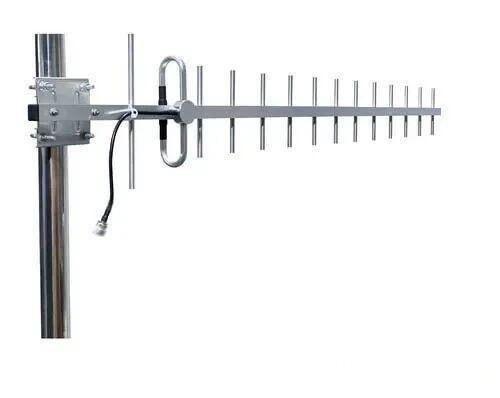 Outdoor Yagi TV Antenna


 Ceiling mount antenna
  Wall mount panel antenna
 Fiberglass Antenna
  Panel Antenna
  Parabolic Antenna
  Yagi Antenna


