Views: 0 Author: Site Editor Publish Time: 2025-11-26 Origin: Site

In the world of global positioning system (GPS) technology, the antenna is a critical component, acting as the gateway that captures faint signals from satellites orbiting overhead. Among the various options available, ceramic patch antennas have become a prevalent choice, prized for their compact size and reliable performance. But does their popularity mean they are the universal best choice for every application? This article delves into the structure, advantages, and limitations of ceramic patch antennas, providing a data-driven analysis to help you determine if they are the right solution for your GPS needs.
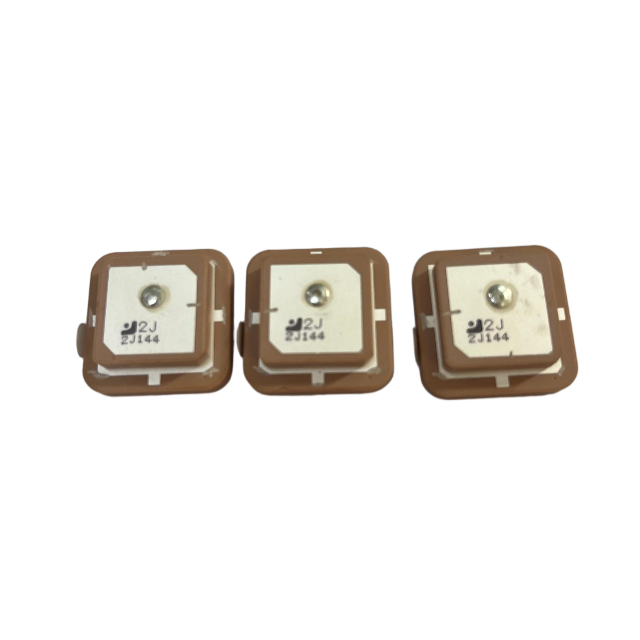
A ceramic patch antenna is a type of microstrip antenna known for its small, flat profile. Its operation hinges on its material composition and precise physical construction.
The core of the antenna is the ceramic chip, typically made from materials with a high dielectric constant. This high permittivity allows the electromagnetic wave to concentrate within the ceramic, enabling the antenna to be manufactured in a much smaller physical size than a conventional antenna. The quality of the ceramic powder and its sintering process are fundamental to the antenna's final performance, influencing its stability and efficiency . Common sizes for these ceramic chips include 25x25mm, 18x18mm, 15x15mm, and 12x12mm, with larger sizes generally offering better reception .
On the surface of this ceramic base lies a silver layer, a critically important conductive layer that forms the radiating element. This surface is not arbitrary; its shape and size are meticulously tuned to ensure the antenna's resonant frequency is centered on the GPS L1 frequency of 1575.42 MHz . However, this frequency is highly susceptible to the surrounding environment. When the antenna is integrated into a device, the proximity of other components and the circuit board itself can detune this frequency. Therefore, the silver coating must be custom-adjusted based on the final product design to pull the frequency back to its optimal point .
The feed point is the location where a pin connects to the silver layer to collect the resonant signal and send it to the receiver. Due to impedance matching requirements, this feed point is rarely at the absolute center of the patch. It is often slightly offset, a design technique known as "de-tuning." A feed point moved in a single direction creates a "single-feed" antenna, while movement in both axes creates a "double-feed" antenna, which helps in achieving better impedance matching .
Finally, the Ground Plane is a critical but often overlooked part of the system. GPS signals exhibit a "ground-bounce" characteristic. A sufficiently large, continuous ground plane beneath the antenna acts as a reflector, significantly enhancing the antenna's gain and performance. A common recommendation is a ground plane of at least 70mm x 70mm to allow the patch antenna to perform at its peak .
The widespread adoption of ceramic patch antennas is driven by several key benefits that align perfectly with the demands of modern electronics:
Compact Size and Low Profile: Their small, flat design makes them ideal for integration into space-constrained portable devices like smartphones, wearable fitness trackers, and handheld navigation units.
Robustness and Durability: The solid ceramic construction makes these antennas mechanically sturdy and resistant to physical shock and vibration, outperforming more fragile alternatives like flexible printed circuit (FPC) antennas.
Stable Performance: Once installed and properly tuned, ceramic antennas offer consistent and reliable performance. They are less prone to performance shifts caused by minor deformations or proximity to other non-metallic objects compared to some other antenna types .
Cost-Effectiveness for Mass Production: The design and manufacturing process is highly scalable, making ceramic patches a very economical solution for high-volume consumer products.
Despite their advantages, ceramic patches are not a perfect solution. Several significant limitations must be considered during the design phase:
Dependence on a Ground Plane: Their performance is heavily reliant on a sufficiently large ground plane. In devices where the PCB is small or the ground is fragmented, the antenna's efficiency can drop dramatically .
Susceptibility to Detuning: As mentioned, the antenna can be easily detuned by nearby metallic components or the device's own housing. This necessitates close collaboration with the antenna supplier and prototyping within the actual product enclosure .
Limited Bandwidth: While suitable for single-band GPS (L1), smaller ceramic patches can struggle to cover the bandwidth required for multi-constellation, multi-frequency GNSS applications (e.g., simultaneously receiving GPS L1, GLONASS L1, and BeiDou B1) without a loss in performance .
Brittleness: Although robust, the ceramic material itself can be brittle and may crack under severe mechanical stress, such as a direct impact, which would render the antenna useless .
To truly assess the value of a ceramic patch antenna, it's essential to compare it with other common antenna technologies used in GPS applications. The table below provides a high-level overview of this comparison.
| Feature | Ceramic Patch Antenna | PCB Trace Antenna | External (Whip) Antenna |
|---|---|---|---|
| Size/Profile | Very low, compact | Very low, flat | Large, external |
| Cost | Low to Medium | Very Low | Medium to High |
| Performance | Good to Very Good (with proper ground) | Variable, often lower | Excellent |
| Robustness | High (but brittle) | Low (on flexible board) | Medium (can be damaged) |
| Design Complexity | Medium (requires tuning) | High (layout-critical) | Low (plug-and-play) |
| Ideal For | Consumer portable devices, trackers | Extreme cost-sensitive, high-volume | Automotive, marine, high-precision |
Another common comparison is between ceramic antennas and Bluetooth antennas (often a PCB trace or chip antenna). While both may be small, a Bluetooth antenna is optimized for the 2.4 GHz band and for communicating with nearby devices, offering more flexible integration but performance that can vary greatly with the device's housing. A ceramic GPS antenna, in contrast, is designed for maximum sensitivity to very weak satellite signals at 1.5 GHz and requires a more stable environment to function effectively .
Choosing the right antenna is a systems-level decision. The following data-driven guide, based on common product categories, can help narrow down the options.
| Application Scenario | Recommended Antenna Type | Key Rationale |
|---|---|---|
| Smartphone / Wearable | Ceramic Patch or PCB Trace | Priority is miniaturization and low cost. Performance is secondary. |
| Asset Tracker (Small) | Ceramic Patch | Excellent balance of size, cost, and reliable performance for most use cases. |
| In-Vehicle Navigation (Built-in) | Ceramic Patch | Stable environment allows ceramic patch to leverage its cost and size benefits. |
| High-Precision Surveying | Active External Antenna | Requires maximum signal quality, multi-frequency support, and phase center stability. |
| Marine / Aviation | Active External Antenna | Demanding environment; need for superior gain and reliability outweighs size/cost. |
| IoT Sensor (Metal Housing) | External Antenna | Ceramic patch would be shielded and detuned inside metal; an external solution is mandatory. |
The performance of a ceramic patch antenna is intrinsically linked to the properties of its dielectric material. Advanced microwave dielectric ceramics are the subject of intense research, particularly for 5G and future 6G communications. The ideal material must balance three key parameters: a sufficient dielectric constant (εr) for miniaturization, an ultra-high quality factor (Q×f) to minimize signal loss, and a near-zero temperature coefficient of resonant frequency (τf) to ensure stable performance across operating temperatures .
The field of ceramic antenna technology is not static. Researchers and manufacturers are continuously pushing the boundaries to overcome existing limitations:
Multi-Band and Wideband Designs: New patch structures, including stacked patches and feeds with sophisticated shapes, are being developed to allow a single ceramic antenna to cover multiple GNSS bands (e.g., L1 and L2) effectively .
Integration with Active Components: The trend is moving towards fully integrated antenna modules where the ceramic patch is pre-packaged with a Low-Noise Amplifier (LNA), filters, and even the receiver on a single substrate. This simplifies design for end-products and guarantees performance .
Metamaterials and EBG Structures: The use of Electromagnetic Band-Gap (EBG) structures and metamaterials is being explored to suppress surface waves that can reduce antenna efficiency and cause coupling in array configurations. This can lead to antennas with higher isolation and lower sensitivity to platform effects .
Advanced Materials: Research into novel ceramic composites, such as polymer-derived SiBCNFe ceramics, while initially targeted for wave absorption, demonstrates the potential for tailoring ceramic electromagnetic properties at the molecular level for specific, high-performance applications .
So, are ceramic patch antennas always the best choice for GPS applications? The evidence clearly points to a nuanced answer: they are an excellent choice for a wide range of applications, but not for all. Their compact size, durability, and cost-effectiveness make them the default champion for consumer-grade and miniaturized devices where space and budget are primary constraints. However, for applications where ultimate performance, multi-frequency support, and operation in challenging electromagnetic environments are required, alternative solutions like active external antennas remain superior.
The key to a successful design lies in a holistic understanding of your product's requirements. You must weigh the importance of size, cost, performance, and environmental robustness. For companies like Zhengzhou LEHENG Electronic Technology Co., Ltd., which operates with a service-first, quality-oriented principle and possesses a professional R&D team, the deep understanding of these trade-offs is crucial. It allows them to provide clients with the right GPS and GNSS antenna solutions, be it a standard ceramic patch or a custom-designed combo antenna, ensuring that the final product achieves the定位, navigation, and timing performance it was designed for.
1. What is the difference between a passive and an active ceramic patch antenna?
A passive ceramic patch antenna is just the radiating element itself. An active version integrates a Low-Noise Amplifier (LNA) and sometimes a filter directly into the assembly. The LNA boosts the very weak satellite signal right at the antenna to overcome losses in the cable to the receiver, which is essential for most embedded applications.
2. Why does the size of the ceramic chip matter in a GPS antenna?
Larger ceramic chips (e.g., 25x25mm) generally have a higher dielectric constant and a larger surface area for capturing signals, leading to better reception sensitivity and a stronger resonance at the GPS frequency. Smaller chips (e.g., 12x12mm) are chosen strictly when size is the most critical constraint, accepting a potential trade-off in performance .
3. Can a ceramic patch antenna work for multiple satellite systems like GPS and GLONASS?
Yes, but with caveats. A well-designed ceramic patch antenna can cover the closely spaced L1 bands of GPS, GLONASS, and Galileo. However, its bandwidth is limited. Supporting wider bandwidths or multiple distinct bands (like L1 and L5) often requires a larger patch or a more complex, multi-resonant design, which can increase cost and size


 External GPS Antenna
  Ceramic antenna
  Internal GPS Antenna
  Surveying Antenna
 Magnet Antenna
  Patch Antenna
  Rubber Antenna
  Screw Antenna
  Spring Antenna
  Other Indoor Coverage Antenna&outdoor Wlan Antenna
 2.4G Antenna
  5.8G Antenna

 Outdoor Yagi TV Antenna


 Ceiling mount antenna
  Wall mount panel antenna
 Fiberglass Antenna
  Panel Antenna
  Parabolic Antenna
  Yagi Antenna


