Views: 0 Author: Site Editor Publish Time: 2025-11-10 Origin: Site

In an increasingly connected world, the humble antenna plays a monumental role. From smartphones and wearables to industrial sensors and vehicle telematics, these devices rely on antennas to transmit and receive data seamlessly. Among the various antenna technologies, the ceramic antenna has emerged as a cornerstone for compact, high-performance electronic devices. Its ability to provide reliable connectivity in a miniature footprint makes it indispensable for modern applications. This article delves into the fundamentals of antenna technology, explores the intricate principles and advantages of ceramic antennas, and examines their pivotal role across the Internet of Things (IoT), automotive, and consumer electronics sectors.
An antenna is essentially a transducer that converts electrical signals into electromagnetic waves and vice versa. It is the critical interface between a guided wave in a circuit and a free-space wave, enabling wireless communication. To understand why ceramic antennas are so significant, one must first grasp some basic antenna principles.
Gain and Directivity: Gain measures an antenna's ability to direct radio frequency (RF) energy in a specific direction. It is expressed in decibels (dBi). A higher gain indicates a more focused radiation pattern, which can increase signal range in that direction but may reduce coverage in others.
Bandwidth: This refers to the range of frequencies over which the antenna can operate effectively. A wider bandwidth allows the antenna to support more frequency bands and data rates.
Impedance: Typically 50 ohms in modern RF systems, impedance is the measure of opposition an antenna presents to the RF current. Impedance matching between the antenna and the feed line is crucial to maximize power transfer and minimize signal reflection.
Radiation Pattern: This is a graphical representation of the relative field strength radiated from the antenna in different directions. It defines the coverage area of the antenna.
Efficiency: Antenna efficiency is the ratio of power radiated to the total power accepted by the antenna. It is a key metric, as losses within the antenna itself (due to materials or matching) reduce the effective radiated power.
A ceramic antenna is a compact, high-performance antenna type that utilizes a ceramic material as its substrate. The fundamental principle behind its small size is the high dielectric constant (εr) of the ceramic material. Since the wavelength within a dielectric material is inversely proportional to the square root of the dielectric constant (λ ∝ 1/√εr), a higher dielectric constant allows the antenna to be physically smaller while operating at the same frequency as a larger antenna on a standard PCB (which has a lower εr) .
There are two primary manufacturing methods for ceramic antennas:
Block Ceramic Antennas: These are constructed by sintering a single block of ceramic at high temperatures. The metallic radiating element is then printed onto the surface of this ceramic block .
Multilayer Ceramic Antennas: These are fabricated using Low-Temperature Co-fired Ceramic (LTCC) technology. Multiple thin layers of ceramic substrate, each printed with a conductive pattern, are stacked and co-fired at high temperatures . This sophisticated process allows for complex three-dimensional internal structures, enabling superior miniaturization and performance in a very robust package .
The design and material science behind ceramic antennas confer several distinct advantages that make them highly suitable for today's compact electronic devices.
Miniaturization and High Dielectric Constant: The core advantage is the significant reduction in size. This makes ceramic antennas ideal for space-constrained applications like smartwatches, GPS trackers, and compact IoT sensors .
High Performance and Stability: Ceramic materials exhibit low dielectric losses, meaning less signal power is wasted as heat. This leads to higher radiation efficiency and stable performance across various environmental conditions, including temperature fluctuations .
Robustness and Reliability: The solid ceramic construction makes these antennas highly durable, offering excellent resistance to vibration, corrosion, and physical damage compared to more fragile antenna types . Their LTCC construction is particularly robust, allowing them to maintain stable performance even when installed near metal surfaces—a common challenge in antenna design .
Selecting the right antenna involves careful trade-offs. The following table compares ceramic antennas with two other common solutions: PCB trace antennas and external whip antennas.
The unique blend of small size, robustness, and high performance allows ceramic antennas to be deployed across a wide array of industries.
Internet of Things (IoT) and M2M: This is a primary application area. Ceramic antennas are found in wireless sensor nodes, smart meters, and asset tracking devices, enabling reliable data transmission for LPWA technologies like LoRa and Wi-SUN .
Consumer Electronics: Their small size makes them perfect for smartphones, wearables (like fitness bands and smartwatches), and Bluetooth accessories (e.g., wireless earbuds and headphones) .
Automotive and Telematics: Ceramic antennas are integral to GPS modules for in-car navigation and fleet management, keyless entry systems, and TPMS (Tire Pressure Monitoring Systems) due to their durability and stability .
Satellite Navigation: They are a common choice in GPS and GNSS receivers, providing the high signal integrity required for accurate positioning in devices ranging from personal navigation aids to advanced logistics trackers .
1.What is the difference between a chip ceramic antenna and a PCB antenna?
A chip ceramic antenna is a standalone surface-mount component with a high-dielectric constant ceramic body, offering stable performance in a tiny, robust package. A PCB antenna is a trace etched directly onto the device's circuit board. While cheaper, its performance is highly dependent on the board's design and is more susceptible to noise from nearby components .
2.Are ceramic antennas better?
"Better" depends on the application. Ceramic antennas are superior when the primary design constraints are miniaturization, performance stability, and robustness. For cost-sensitive projects where board space is not a major issue, a well-designed PCB antenna can be a perfectly adequate and more economical choice .
3.Can ceramic antennas be used for 5G?
While ceramic antennas are excellent for many frequencies, their use in true 5G systems depends on the band. They are well-suited for lower-band and mid-band 5G frequencies. However, the highest-frequency millimeter-wave (mmWave) 5G bands often require different, highly specialized antenna array technologies to function effectively.
From enabling the tiny form factor of a smartwatch to ensuring the reliable operation of an industrial sensor in a remote field, ceramic antennas have proven to be a transformative technology in wireless communications. Their foundation in advanced material science and LTCC manufacturing allows them to deliver robust, high-efficiency performance in an incredibly small footprint. As the Internet of Things continues to expand and devices become ever smaller and more integrated, the role of the ceramic antenna will only grow in importance.
For over a decade, companies like Zhengzhou LEHENG Electronic Technology Co., Ltd. have been at the forefront of this connectivity revolution. As a provider with a professional R&D team and a commitment to quality, certified by ISO9001:2015, LEHENG offers a wide range of antenna solutions, including advanced GPS & GNSS Antennas, 4G & LTE Antennas, and 5G Antennas, serving partners worldwide with an innovation-driven and pragmatic business philosophy.


 External GPS Antenna
  Ceramic antenna
  Internal GPS Antenna
  Surveying Antenna
 Magnet Antenna
  Patch Antenna
  Rubber Antenna
  Screw Antenna
  Spring Antenna
  Other Indoor Coverage Antenna&outdoor Wlan Antenna
 2.4G Antenna
  5.8G Antenna

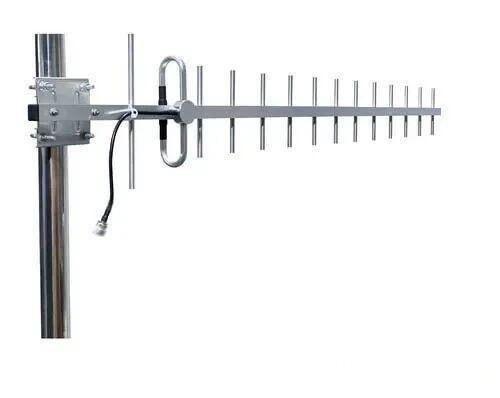 Outdoor Yagi TV Antenna


 Ceiling mount antenna
  Wall mount panel antenna
 Fiberglass Antenna
  Panel Antenna
  Parabolic Antenna
  Yagi Antenna


