Views: 0 Author: Site Editor Publish Time: 2025-11-13 Origin: Site

In the world of modern electronics, global positioning system technology has become a cornerstone for navigation, tracking, and location-based services. At the heart of any reliable GPS system lies the antenna, a component whose performance can make or break the entire application. Among the various types available, the ceramic antenna has emerged as a predominant choice for a wide range of compact devices, from wearable gadgets to advanced internet of things systems. Its ability to balance performance with a drastically reduced footprint addresses one of the most critical challenges faced by today's designers: achieving high precision location data in increasingly smaller form factors.
Designing with ceramic patch antennas, however, presents a unique set of engineering challenges. Success hinges on a deep understanding of the intricate relationship between the antenna's material composition, the device's physical structure, and the target operational environment. This article delves into the essential technical considerations for integrating a GPS ceramic antenna, providing a comprehensive guide to navigating the complexities of impedance matching, mitigating signal loss, and ensuring robust performance in real-world conditions. We will explore the latest material innovations, such as Low Temperature Cofired Ceramic technology, and provide practical guidance for PCB layout and design validation, empowering you to fully leverage the potential of these powerful components in your next project.
A ceramic antenna is a type of patch antenna that utilizes a specialized ceramic substrate to achieve its compact size. The high dielectric constant of the ceramic material allows the electrical waves to be effectively slowed down and contained within a smaller physical space. This principle is what enables the creation of antennas that are significantly smaller than their counterparts built on standard FR4 substrate materials, a feature paramount for modern miniaturized electronics.
The core function of a GPS antenna is to receive radio frequency signals transmitted by satellites in the global navigation satellite system constellation. For consumer and most industrial applications, this primarily involves the L1 band operating at a center frequency of 1575.42 MHz. The antenna's job is to capture this faint signal and deliver it to the GPS receiver module with minimal degradation. A key performance characteristic for GPS is circular polarization, which helps mitigate the effects of signal fading caused by atmospheric conditions and satellite orientation. Ceramic antennas are particularly well-suited for this, as their design can be optimized to receive left-hand circularly polarized waves effectively .
The advantages of using a ceramic patch antenna are substantial. Their small physical size allows them to be integrated into devices where space is at an absolute premium, such as smartwatches, asset trackers, and mobile phones. Furthermore, they offer excellent performance stability across varying temperatures and are less susceptible to performance shifts caused by nearby components compared to more traditional PCB trace antenna designs . This inherent stability simplifies the design process and contributes to more predictable and reliable end-product performance.
Selecting the right ceramic antenna involves a careful analysis of several key electrical and physical parameters. These specifications directly dictate how the antenna will perform in your specific application and must be balanced against your design constraints.
Frequency Band and Bandwidth: The antenna must be precisely tuned to the GPS L1 band at 1575.42 MHz. The operating bandwidth, typically defined by the -3 dB or -10 dB points, determines the range of frequencies over which the antenna will perform effectively. A sufficient bandwidth ensures that the antenna can handle slight manufacturing tolerances and frequency drifts due to temperature changes. For instance, the Vishay VJ5101W157 is designed for 1575 MHz ±50MHz, providing a reliable window for GPS operation .
Gain and Radiation Efficiency: Antenna gain is a measure of its ability to direct radio frequency energy in a specific direction. For GPS applications, which require receiving signals from satellites anywhere in the sky, a near-omnidirectional pattern is often desirable. Peak gain and average gain are both critical metrics. A high radiation efficiency (low insertion loss) is paramount, as any loss directly reduces the strength of the already-weak satellite signal received by the GPS receiver .
Impedance Matching and VSWR: For maximum power transfer, the antenna's impedance must be matched to the RF transmission line, which is almost universally 50 Ohms in modern electronics. The Voltage Standing Wave Ratio is a measure of this match. A VSWR of 2:1 or better is generally targeted, indicating that the antenna is well-matched and minimizing the amount of power reflected back from the antenna, known as return loss .
The material of the antenna itself is a primary factor in its performance. The industry is continuously advancing, with research focused on new ceramic compositions to achieve even better performance. For example, studies into garnet-structured ceramics like Eu2CaSnGa4O12 have demonstrated an ultra-low loss tangent and a low dielectric constant, which are ideal properties for high-efficiency antennas in 5G and next-generation communication devices . Similarly, the development of NaCaCe(MoO4)3 ceramics showcases materials with high-quality factors, which are crucial for minimizing signal loss and improving the signal-to-noise ratio for the GPS receiver module .
Table: Key Ceramic Material Properties for GPS Antennas
Low Temperature Cofired Ceramic technology represents a significant leap forward in the miniaturization and performance of ceramic chip antennas. Unlike traditional manufacturing processes, LTCC involves printing metallic electrodes onto multiple thin layers of ceramic "green tape," which are then stacked, laminated, and co-fired at temperatures below 1000°C. This process allows for the creation of complex, three-dimensional electrode structures within a single, monolithic ceramic chip .
This 3D integration capability is a game-changer for antenna design. It enables engineers to create intricate electromagnetic structures that effectively use the vertical dimension, leading to a dramatically reduced footprint on the printed circuit board without sacrificing performance. This is especially critical for lower frequency applications, where wavelengths are long, and antenna size has traditionally been a barrier to miniaturization. For example, Abracon's AANI-CH-0171 LTCC antenna for sub-GHz applications measures a mere 7.0×2.0×0.8mm, a size reduction of over 60% compared to conventional solutions, while maintaining a high radiation efficiency of 75% .
The benefits of LTCC extend beyond just size. The technology offers excellent thermal stability and reliability, with a coefficient of thermal expansion that can be closely matched to the PCB material. This match reduces mechanical stresses during temperature cycling, a critical factor for devices that must operate in harsh environments, from automotive engine compartments to outdoor industrial settings. The inherent strength of the co-fired ceramic structure also makes LTCC antennas more mechanically robust and less prone to performance degradation from vibration or shock compared to their larger counterparts.
Integrating a tiny ceramic antenna into a consumer electronic device is fraught with potential pitfalls. A successful design anticipates and mitigates these common challenges.
The Ground Plane Dependency: The performance of most ceramic patch antennas is heavily influenced by the size and shape of the system's ground plane. The PCB's ground layer acts as a counterpoise for the antenna, and its dimensions can directly affect parameters like resonant frequency, bandwidth, and radiation pattern. Deviating from the antenna manufacturer's recommended ground plane size can lead to significant performance degradation. It is crucial to adhere to the reference design provided in the antenna's datasheet as a starting point.
Mitigating Signal Loss and Interference: In a crowded electronic device, the weak GPS signal is vulnerable to several sources of signal loss. Insertion loss within the antenna itself should be minimized (e.g., <0.14 dB ). Furthermore, electromagnetic interference from high-speed digital circuits, power supplies, or other wireless modules like Wi-Fi and Bluetooth can easily drown out the satellite signal. Careful board layout, with a clear separation between the RF section and noisy components, along with proper shielding and filtering, is essential. The use of saw filters can provide additional out-of-band rejection, improving the signal-to-noise ratio .
Environmental Factors and Stability: End devices must perform reliably under a wide range of environmental conditions. Ceramic antennas are generally stable, but designers must confirm that the chosen component can operate across the required temperature range. For automotive or industrial applications, this may span from -40°C to +85°C or even higher . Humidity, dust, and physical shock are other factors that must be considered, often influencing the choice of antenna and its placement within the enclosure.
The PCB layout is arguably the most critical phase in achieving a high-performing GPS ceramic antenna design. Even the best antenna will underperform if integrated poorly.
Antenna Placement and Keep-Out Area: The antenna should be positioned at the edge of the PCB, with a clearly defined keep-out area directly beneath and around it. This area must be free of any copper pours (ground or power), traces, or components. Placing the antenna on a corner of the board is often beneficial as it minimizes the required keep-out area while maximizing performance. The ground plane on the layers below the antenna should be removed as specified in the manufacturer's guidelines to prevent capacitive detuning.
The RF Feedline and Impedance Control: The trace connecting the antenna's feed point to the GPS receiver module is a critical RF transmission line. It must be designed as a controlled-impedance microstrip line, typically 50 Ohms. Its width is determined by the PCB stack-up (dielectric thickness and dielectric constant of the FR4 substrate) and must be calculated precisely. This trace should be as short and direct as possible, with gentle curves instead of right-angle bends to minimize reflections and loss.
Maximizing Performance Through Tuning: While a well-designed board should function correctly, fine-tuning is almost always required to achieve peak performance. Ceramic antennas often have one or more matching components, typically a capacitor and/or inductor, in a pi-network configuration. This network is used to fine-tune the antenna's impedance matching to the receiver, compensating for minor variations introduced by the specific PCB layout and enclosure. This tuning should be performed with a vector network analyzer and the final product in its enclosure, as the enclosure material and geometry can affect antenna performance.
While ceramic antennas are a popular choice, they are not the only option. Understanding the trade-offs between different technologies is key to making the right selection.
The primary alternative is the PCB trace antenna, which is essentially a pattern of copper etched directly onto the main circuit board. The biggest advantage of this approach is its low cost – it adds no additional component cost. It also offers significant design flexibility. However, a major drawback is that its performance is highly susceptible to the surrounding environment and layout, often requiring more PCB real estate to achieve performance comparable to a ceramic antenna .
Another alternative is the external active antenna. These are typically larger, standalone units with an integrated low-noise amplifier connected via a cable. They offer the best possible performance and sensitivity because they can be positioned optimally, away from electronic noise. However, they are larger, more expensive, and unsuitable for compact, portable devices.
The choice ultimately comes down to the design priorities. The following table summarizes the key comparisons:
Table: GPS Antenna Technology Comparison
| Feature | Ceramic Chip Antenna | PCB Trace Antenna | External Active Antenna |
|---|---|---|---|
| Cost | Low to Medium | Very Low | High |
| Size | Very Small | Medium to Large | Large |
| Performance | Good to Very Good | Variable (layout-dependent) | Excellent |
| Design Complexity | Medium | High | Low |
| Integration | Soldered to PCB | Etched onto PCB | Connectorized |
For most space-constrained, high-volume products like smartphones, wearables, and IoT trackers, the ceramic patch antenna provides the best compromise, offering a robust, predictable, and compact solution that balances performance, size, and cost effectively .
The future of ceramic antenna technology is intrinsically linked to the evolution of wireless systems. As 5G communication matures and research into 6G communication begins, the demand for antennas that can support higher frequencies, wider bandwidths, and more complex modulation schemes will only intensify. The research into ultra-low loss ceramic materials, such as the Eu2CaSnGa4O12 garnet, is a clear indicator of this direction, pointing toward a new generation of components that offer exceptional efficiency and stability for advanced communication protocols, including future global navigation satellite system enhancements .
Furthermore, the integration of artificial intelligence and machine learning into the material discovery process is set to accelerate innovation. As highlighted in research on ceramic-based electromagnetic interference shielding materials, AI-driven methods are being used to predict material properties and optimize compositions, a approach that will undoubtedly be applied to antenna ceramics to rapidly develop new formulas with tailored characteristics .
In conclusion, the successful integration of a GPS ceramic antenna is a multidisciplinary challenge that requires a careful balance of electrical, mechanical, and material considerations. From selecting the right component based on its gain, efficiency, and return loss, to mastering the PCB layout with a proper ground plane and impedance-controlled feedline, every detail matters. Technologies like LTCC are pushing the boundaries of miniaturization and performance, enabling a new class of compact, high-reliability IoT and navigation devices. By understanding the fundamentals, acknowledging the challenges, and adhering to best practices, designers can harness the full potential of ceramic antennas to create robust, high-performance GPS-enabled products that thrive in the connected world. As a professional manufacturer of GPS and GNSS antennas, Zhengzhou LEHUNG Electronic Technology is committed to providing high-quality ceramic antenna solutions that meet these evolving design challenges.
The primary advantage is its compact size and stable performance. A ceramic antenna uses a material with a high dielectric constant to achieve a small footprint, and its performance is less susceptible to variations caused by the surrounding PCB layout compared to a PCB trace antenna, leading to more predictable and reliable results .
The PCB layout is critical. The size and shape of the ground plane act as a counterpoise for the antenna, directly influencing its resonant frequency and radiation pattern. Furthermore, the RF feedline must be a controlled 50-Ohm impedance microstrip. Incorrect layout, such as placing ground copper too close to the antenna or using a poorly designed feedline, will cause severe signal loss and impedance mismatch, drastically reducing GPS performance.
This is very challenging. Metal shields and blocks radio waves. While a standard ceramic antenna will not function correctly inside a fully metal enclosure, special design techniques exist. Some advanced LTCC antennas feature designs that allow them to be mounted directly onto metal surfaces with minimal performance degradation, making them suitable for certain ruggedized or industrial applications . However, in most cases, the antenna should be placed in a non-metallized area of the enclosure.


 External GPS Antenna
  Ceramic antenna
  Internal GPS Antenna
  Surveying Antenna
 Magnet Antenna
  Patch Antenna
  Rubber Antenna
  Screw Antenna
  Spring Antenna
  Other Indoor Coverage Antenna&outdoor Wlan Antenna
 2.4G Antenna
  5.8G Antenna

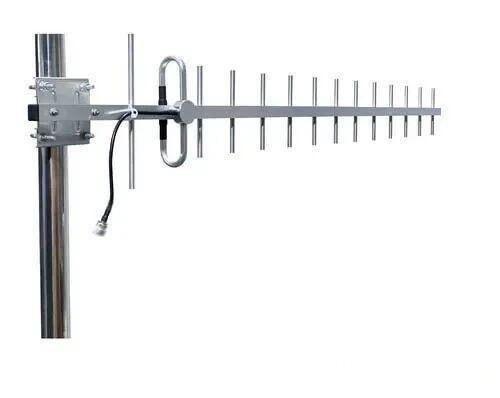 Outdoor Yagi TV Antenna


 Ceiling mount antenna
  Wall mount panel antenna
 Fiberglass Antenna
  Panel Antenna
  Parabolic Antenna
  Yagi Antenna


