Views: 0 Author: Site Editor Publish Time: 2025-11-13 Origin: Site
In the invisible world of wireless communication, the antenna acts as a critical gateway, translating electrical signals into electromagnetic waves and vice versa. The choice of antenna can make or break the performance, size, and cost of your IoT device, smartphone, or telecommunications infrastructure. Among the myriad of options, Ceramic Antennas and PCB Antennas stand out as two of the most prevalent and often compared technologies. This article provides an in-depth, data-driven analysis of Ceramic Antenna vs PCB Antenna performance, empowering engineers, designers, and procurement specialists to make an informed choice based on technical merits and application demands. We will dissect their fundamental principles, compare key performance indicators, and explore how leading manufacturers like Zhengzhou LEHENG Electronic Technology Co., Ltd. leverage these technologies to provide robust solutions across the global connectivity landscape.
To make an intelligent choice between a ceramic and a PCB antenna, one must first understand their core construction and the underlying physics that govern their operation.
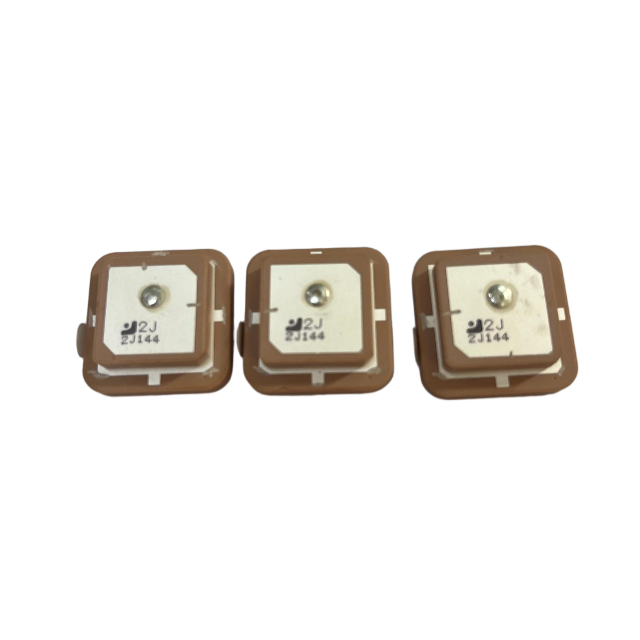
A Ceramic Antenna is a type of antenna fabricated on a ceramic substrate, which has a high dielectric constant. This high permittivity allows the antenna to resonate at a required frequency with a much smaller physical size compared to its low-permittivity counterparts. This makes it an excellent choice for miniaturized devices where space is at a premium.
Ceramic antennas are primarily manufactured using two methods:
Bulk Ceramic Antennas: These are created by sintering an entire ceramic block at high temperatures. The metallic radiating element is then printed onto the surface of this ceramic block.
Multilayer Ceramic Antennas: These utilize Low-Temperature Co-fired Ceramic (LTCC) technology. Multiple layers of ceramic green tape are printed with metallic conductors, stacked, and then co-fired at high temperatures. This advanced process allows for complex three-dimensional structures within a compact footprint, enabling greater design flexibility and further size reduction. The innovative use of LTCC is a key driver behind recent breakthroughs, such as the development of sub-GHz ceramic chips that overcome traditional size limitations for LPWA (Low-Power Wide-Area) applications.
A PCB Antenna, in its simplest form, is a trace etched directly onto the printed circuit board of the device itself. It is a conductive pattern that can take various shapes—such as an inverted-F (IFA), meandered line, or patch—designed to radiate electromagnetic energy. As a fundamental component of integrated antenna systems, its primary advantage lies in its low cost and seamless integration.
The advantages and disadvantages of PCB antennas are clear-cut:
Require no additional components.
Negligible unit cost.
No separate assembly required.
Less prone to physical damage since they are part of the main board.
Performance is highly susceptible to the surrounding PCB layout and noise from other components.
Often suffer from higher insertion loss, less efficient radiation patterns, and generally lower overall radiation efficiency compared to dedicated antenna solutions.
Choosing the right antenna involves weighing several technical parameters against your project's requirements. The following table provides a high-level overview of how these two antenna types stack up.
| Feature | Ceramic Antenna | PCB Antenna |
|---|---|---|
| Size & Integration | Very small, standalone component | Larger, integrated into the board |
| Radiation Efficiency | High (e.g., up to 75% and beyond) | Moderate to Low (susceptible to board noise) |
| Performance Stability | Excellent, less affected by PCB environment | Variable, highly dependent on board design and layout |
| Unit Cost | Higher | Very Low |
| Design Complexity | Higher, requires impedance matching | Lower, but requires careful RF layout |
| Ideal For | Space-constrained, high-performance, and harsh environment applications | Cost-sensitive, high-volume consumer products with less stringent performance demands |
To move beyond the high-level overview, let's examine specific performance data and real-world product comparisons.
Radiation efficiency is a critical metric, indicating how effectively an antenna converts input power into radiated waves. Ceramic antennas consistently outperform PCB antennas here. For instance, Abracon's AANI-CH-0171 LTCC ceramic antenna for sub-GHz applications boasts a radiation efficiency of 75% (-1.2dB loss). In contrast, PCB antennas, due to their proximity to lossy PCB materials and interference, often exhibit significantly lower efficiency, which directly translates to shorter communication range or higher required transmit power.
The push for smaller devices makes miniaturization a key battleground. Ceramic antennas, with their high dielectric constant, have a natural advantage. A state-of-the-art sub-GHz ceramic antenna measures just 7.0x2.0x0.8mm, a feat achieved through 3D LTCC multilayer stacking that reduces the planar footprint by over 60% compared to conventional solutions. While PCB antennas can be made small, achieving effective radiation at lower frequencies (like sub-GHz) requires a larger trace area, which can be a limiting factor in compact designs.
For industrial, automotive, or outdoor applications, performance under environmental stress is non-negotiable. Advanced ceramic antennas are engineered for this. They offer wide temperature stability, with some AEC-Q200 certified models operating reliably from -40°C to +125°C with minimal efficiency fluctuation. A key innovation is metal-mounting capability, where specific designs incorporate a metal back cavity isolation that allows them to be mounted directly on metal surfaces with minimal performance degradation—a scenario that would severely cripple most PCB antennas.
Both antennas can cover popular frequency bands, but their suitability varies by application.
Ceramic Antennas are renowned for their performance in GPS & GNSS Antennas, 5G Antennas, and other high-precision applications. Their design is also being pushed into new frontiers, such as dual-polarized stacked structures for 5G/B5G systems that offer wide bandwidth and high isolation.
PCB Antennas are the workhorses for WiFi Antennas, Bluetooth Modules, and Zigbee applications in cost-conscious consumer electronics. However, for very low-frequency protocols like LoRa or Sigfox (in sub-GHz bands), a carefully designed PCB antenna might be feasible, but a specialized ceramic chip antenna often provides a much better size-to-performance ratio.
The antenna industry is not static. Innovation is driven by the demands of 5G-Advanced, the Internet of Things (IoT), and satellite connectivity. According to a 2025 market report, the global antenna market is being reshaped by three key drivers: 5G-Advanced commercialization, satellite internet deployment, and the rise of smart connected cars.
The quest for higher efficiency and smaller size continues to fuel material research. The use of advanced ceramics in LTCC (Low-Temperature Co-fired Ceramic) processes is a prime example, enabling the 3D miniaturized structures discussed earlier. Furthermore, materials like Liquid Crystal Polymer (LCP) are gaining traction for flexible, high-frequency applications.
The future lies not just in a single antenna type, but in sophisticated systems. We are moving towards "smart antennas" that leverage AI to dynamically adjust their radiation pattern for optimal signal strength. Furthermore, the integration of multiple technologies—for instance, a Ceramic Patch Antenna for GPS alongside a PCB MIMO Antenna for WiFi in a single device—is becoming commonplace to handle multiple wireless standards. This is where a supplier with a broad portfolio, like Zhengzhou LEHENG, which offers everything from GPS/GNSS and 5G antennas to combo and MIMO antennas, provides a distinct advantage.
The decision matrix below outlines the primary selection criteria to guide your choice.
| Your Project Priority | Recommended Antenna Type | Key Rationale |
|---|---|---|
| Ultra-Low Cost | PCB Antenna | Eliminates cost of a separate component and its assembly. |
| Minimizing Physical Size | Ceramic Antenna | High dielectric constant enables smaller resonant structures. |
| Maximum Range & Signal Reliability | Ceramic Antenna | Higher radiation efficiency and better isolation from board noise. |
| Harsh Environments (Heat, Metal) | Ceramic Antenna | Superior temperature stability and specialized metal-mount designs. |
| Rapid Prototyping & Design Simplicity | PCB Antenna | Designed as part of the PCB layout, simplifying initial prototyping. |
Q1: Can a PCB antenna be as good as a ceramic antenna?
In specific, controlled scenarios, a well-designed PCB antenna can perform adequately for its intended application. However, on a like-for-like basis, especially concerning radiation efficiency, miniaturization, and performance stability, a ceramic antenna is generally technically superior. The trade-off is almost always a higher unit cost and more complex RF matching requirements.
Q2: Why are ceramic antennas more efficient?
The primary reason is the high dielectric constant of the ceramic material. This property confines the electromagnetic fields more tightly within the antenna substrate, reducing energy loss and allowing for a more effective resonance in a smaller volume. This also makes them less susceptible to detuning from the surrounding PCB components and layout compared to a bare PCB trace antenna.
Q3: For a small, battery-powered IoT sensor, which antenna should I choose?
This is a classic trade-off. If the sensor is cost-driven and has ample space, a PCB antenna might suffice. However, if the device is highly compact, requires long battery life (where high efficiency is key), or needs to be mounted on or near metal, then a miniaturized Ceramic Antenna, such as an LTCC-based chip antenna, is the definitive technical choice despite its higher cost.
The debate between ceramic and PCB antennas is not about finding a universal winner, but about matching the right technology to the specific economic and performance criteria of your project. PCB antennas offer an unbeatable value proposition for high-volume, cost-sensitive applications where board space is not a primary constraint. In contrast, Ceramic Antennas are the superior technical solution for demanding applications that require miniaturization, high efficiency, environmental robustness, and reliable performance.
Navigating these complex RF design choices requires a partner with deep technical expertise and a reliable supply chain. With almost a decade of experience in the industry, Zhengzhou LEHENG Electronic Technology Co., Ltd. embodies this principle. Adhering to an ISO 9001:2015 certified quality management system and a business philosophy of innovation, pragmatism, and efficiency, LEHENG provides a comprehensive range of antenna solutions. Their product portfolio, which includes high-performance GPS & GNSS Antennas, 5G Antennas, Combo Antennas, and IoT-focused antennas like LoRa and WiFi variants, demonstrates a keen understanding of how to apply these different technologies to solve real-world connectivity challenges for their global partners.


 External GPS Antenna
  Ceramic antenna
  Internal GPS Antenna
  Surveying Antenna
 Magnet Antenna
  Patch Antenna
  Rubber Antenna
  Screw Antenna
  Spring Antenna
  Other Indoor Coverage Antenna&outdoor Wlan Antenna
 2.4G Antenna
  5.8G Antenna

 Outdoor Yagi TV Antenna


 Ceiling mount antenna
  Wall mount panel antenna
 Fiberglass Antenna
  Panel Antenna
  Parabolic Antenna
  Yagi Antenna


