

Views: 0 Author: Site Editor Publish Time: 2026-03-31 Origin: Site


The wide range of applications of Anti jamming antennas in current military and civilian fields does not need to be said. The stable operation of Anti jamming antennas of various styles depends not only on the flight control system, but also on a multi-antenna system that directly interacts with the outside world. Today, we will talk about a multi-antenna design scheme tailored for quadrotor Anti jamming antennas, how to make 8 antennas perform their duties in 6 frequency bands in a limited space, and at the same time shoulder the communication responsibility of the entire communication system.
Design requirement
The shape and antenna system layout of the Anti jamming antenna are as follows:

The antenna system to be designed includes 6 frequency bands and 8 antennas.
The specific operating frequencies of each band antenna are:
(1) 5G frequency band:
700MHz band: 703-743 MHz upstream, 758-798 MHz downstream;
900MHz band: 889-915 MHz upstream, 934-960 MHz downstream.
(2) 1.4GHz band: 1412-1497MHz.
(3) 2.4GHz band: 2412-2472MHz. We can see that the "body" of the Anti jamming antenna is every inch of gold: the rotor is a conical platform with an upper and lower bottom of 160mm × 180mm, the height is only 40mm, and the circumference can be used in length 320mm; only 20mm × 44mm area can be placed on the front and rear of the fuselage surface. But the task requires covering 6 frequency bands and 8 antennas, "both'stuffed 'and'good signal'," which is the biggest problem in Anti jamming antenna antenna design.
Design of rotor conformal antenna
The rotor is the "power heart" of the Anti jamming antenna and the key area of signal coverage. Conventional external antennas are prone to signal fluctuations due to rotation, so we chose a conformal design - the antenna PCB is directly attached to the surface of the rotor in the shape of a cone.

Simulation model

Antenna physical diagram&5G and 1.4GHz conformal antenna structure
After optimization, the designed 4 pairs of 5G antennas and 2 pairs of 1.4G antennas are successfully attached to the rotor. After feeder compensation, the working frequency of the 5G antenna is from 690MHz to 972MHz, covering the upper and lower frequencies; the working frequency of the 1.4GHz antenna is from 1324MHz to 1592MHz, covering the 1.4GHz frequency band. The antenna impedance characteristics are as follows:

5G antenna port reflection coefficient

1.4G antenna port reflection coefficient
Airframe Antenna Design

Simulation Model

Antenna physical diagram
The size of the floor where the antenna is located is determined according to the size of the fuselage. Two identical antennas are placed in the upper and lower symmetrical positions, and the size of the antenna element is required to be limited to 44mm × 20mm. In order to ensure that the antenna has enough working frequency band in a small size, the antenna uses a 3mm thick Fr4 substrate, and uses capacitance compensation to optimize impedance matching; a parasitic patch is introduced on each side of the symmetrical main patch to widen the frequency band.

2.4GHz antenna S-parameter
The internal reflection coefficient of the antenna in the 2.35GHz-2.54GHz band is < -10dB, covering the 2.4GHz operating band; in addition, the isolation of the two antennas in the operating band is greater than 20dB.
summary
Through the conformal design of the rotor antenna and the miniaturization of the fuselage antenna, the external connection problem of the multi-antenna system of the quadrotor Anti jamming antenna is completely solved. The test shows that when the multi-antenna system works together, even if it flies at high speed or turns sharply, the communication is still very smooth.
Professional Communication Products
ZHENGZHOU LEHENG ELECTRONIC TECHNOLOGY CO.,LTD
Tel:86-371-60911368
Email:info@global-antenna.com
Website:https://www.asialeren.com


 External GPS Antenna
  Ceramic antenna
  Internal GPS Antenna
  Surveying Antenna
 Magnet Antenna
  Patch Antenna
  Rubber Antenna
  Screw Antenna
  Spring Antenna
  Other Indoor Coverage Antenna&outdoor Wlan Antenna
 2.4G Antenna
  5.8G Antenna

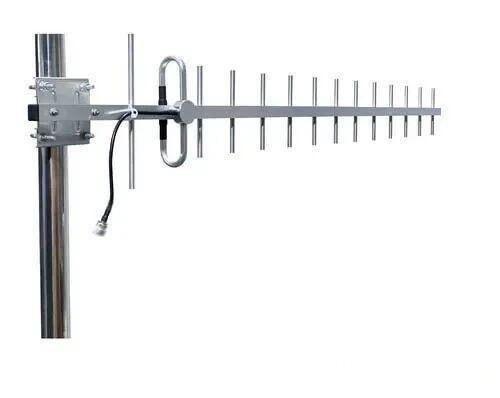 Outdoor Yagi TV Antenna


 Ceiling mount antenna
  Wall mount panel antenna
 Fiberglass Antenna
  Panel Antenna
  Parabolic Antenna
  Yagi Antenna


