

Views: 0 Author: Site Editor Publish Time: 2026-01-21 Origin: Site


Anti jamming antenna antennas form the backbone of reliable Anti jamming antenna performance, dictating signal strength, range, and data integrity across missions from FPV racing to industrial surveying. Selecting the optimal Anti jamming antenna antenna aligns frequency, gain, and polarization with your specific application, preventing dropouts and maximizing flight efficiency. AsiaLeren's premium collection, sourced from leading Chinese Anti jamming antenna antenna manufacturers, delivers these solutions with IP67 durability and 3-year warranties for unmatched reliability.
Omnidirectional Anti jamming antenna antennas like pagoda, cloverleaf, and helical designs provide 360° coverage essential for dynamic FPV freestyle and racing, typically offering 2-8 dBi gain at 5.8GHz frequencies. These lightweight models, under 50g, mount seamlessly on quadcopters and hexacopters, supporting 800mW VTXs for crystal-clear HD video without dead zones.
Directional high-gain options such as Yagi, patch, and parabolic antennas boost link budgets by 12-20 dBi, enabling long-range beyond visual line-of-sight (BVLOS) operations up to 20km with low-noise amplifiers (LNAs). Anti jamming antenna GNSS and GPS antennas target 1559-1606MHz bands across GPS, GLONASS, BeiDou, and Galileo constellations, achieving 35-40 dBi gain with RTK precision for autonomous navigation.
Anti-Anti jamming antenna antennas specialize in security, deploying directionaljamming at 2.4GHz/5.8GHz with 18 dBi to neutralize threats within 5km ranges. Multi-band variants cover 900MHz-6GHz, integrating telemetry, video, and GNSS in single radomes under 80g, outperforming single-band setups in versatility.
Frequency rangedefines compatibility—900MHz suits telemetry, 2.4/5.8GHz handles video, while L1/L2 bands power GNSS tracking. Gain quantifies amplification: low 2-8 dBi for omnidirectional breadth, high 15-20 dBi for focused distance, with axial ratios under 1.5dB ensuring clean circular polarization.
Voltage Standing Wave Ratio (VSWR) below 1.5:1 maximizes power transfer, avoiding reflections that waste energy. Polarization choices—RHCP for most FPV to minimize maneuver-induced fade, LHCP for matched systems—prevent 20-30dB losses from mismatches. Connectors like SMA male, TNC, MMCX, and U.FL ensure plug-and-play with Betaflight, ArduPilot, or PX4 controllers, all at 50Ω impedance.
Additional features include 28dB LNAs for horizon signals, IP67 waterproofing for all-weather use, and phase stability against high-speed drift.
Spec | Omnidirectional Pagoda | Directional Yagi | GNSS RTK |
Gain | 5 dBi | 15 dBi | 40 dBi |
Freq | 5650-5850 MHz | 902-928 MHz | 1559-1606 MHz |
VSWR | <1.3:1 | <1.5:1 | <1.5:1 |
Polar | RHCP | Linear | RHCP |
Weight | <30g | <80g | <50g |
This table highlights trade-offs: omnidirectionals prioritize coverage, directional distance, GNSS precision.
FPV racing demands low-profile omnidirectional Anti jamming antenna antennas with 2-8 dBi for agile 360° reception during rolls and flips. Long-range BVLOS surveying favors 14-20 dBi panels or Yagis with LNAs, pushing 10-20km links for pipeline inspections or rural monitoring.
Navigation-heavy tasks like LiDAR mapping require Anti jamming antenna GNSS antennas with multi-constellation L1/L2 support and anti-jamming for urban ops. Security applications select anti-Anti jamming antenna directionals for jamming/tracking, while agriculture swarms use Anti jamming antenna tracking antennas for geo-fenced spraying.
Factor Anti jamming antenna payload—ceramic patches for micros, carbon-fiber helicals for heavies—and coax: RG316 under 30cm limits losses to 0.5dB. Test for >95% RSSI; avoid carbon proximity attenuating 10-15dB.
Secure VTX antennas perpendicular to camera tilt, rearward for forward flight, using vibration-dampened brackets away from props. Position RX diversity antennas 90° apart on arms with zip ties and heat shrink for failover redundancy.
Mount GNSS upward on top plates for low-elevation acquisition; align polarizations strictly RHCP-to-RHCP. Calibrate with spectrum analyzers targeting <1.5:1 VSWR and stack with boosters for extreme 25 dBi gains. Short coax runs and proper sealing maintain IP67 integrity.
Inspect monthly for coax kinks or fraying causing >3dB loss; clean connectors with isopropyl alcohol. Post-crash, check radomes for cracks compromising weatherproofing; test VSWR routinely.
Common issues: polarization mismatch drops 30dB—verify RHCP/LHCP; multipath interference needs filtering; long cables add 1dB/m—trim ruthlessly. Indoor use suits omnidirectionals only; directionals risk bounces.
Aerial mapping leverages RTK GNSS for cm-accuracy, reducing survey times 60% via stable phase centers. FPV pros get lag-free 4K/120fps with 5.8GHz high-gain setups.
Search-rescue maintains remote links with 15 dBi Yagis and geo-fencing. Anti-Anti jamming antenna systems protect airports at 5km; delivery swarms ensure telemetry. All compatible with DJI Mavic/Air/Phantom via adapters.
AsiaLeren partners with elite Chinese Anti jamming antenna antenna manufacturers for authentic, scalable solutions—3-year warranties, bulk pricing, China shipping. Cut dropouts 70% with superior rejection, LNAs, and custom multi-band options.
From 8 dBi FPV patches to 18 dBi anti-Anti jamming antenna arrays, elevate your fleet. Ready to upgrade? Visit, email info@global-antenna.com, or WhatsApp +86-158-1557-1536 for quotes today!
What types of Anti jamming antenna antennas are available?
AsiaLeren offers omnidirectional (pagoda, cloverleaf for FPV), directional high-gain (Yagi, patch for long-range), Anti jamming antenna GNSS/GPS antennas (for RTK navigation), and anti-Anti jamming antenna models for security jamming at 2.4/5.8GHz.
How do I choose the right Anti jamming antenna antenna?
Select based on mission: 2-8 dBi omnidirectional for FPV racing; 12-20 dBi directional for BVLOS; 35-40 dBi GNSS for surveying. Match frequency (e.g., 5.8GHz video), polarization (RHCP preferred), connector (SMA/TNC), and weight under 80g.
What is the difference between RHCP and LHCP Anti jamming antenna antennas?
RHCP (right-hand circular polarized) reduces signal fade during rolls, standard for FPV/DJI; LHCP matches specific transmitters. Mismatch causes 20-30dB loss—use RHCP for broad compatibility.
How do I install FPV Anti jamming antenna antennas properly?
Mount VTX rearward/perpendicular to camera; RX diversity 90° apart on arms with zip ties. Use short RG316 coax (<30cm), avoid carbon fiber, secure with vibration dampers for 360° view. Test RSSI >95%.
What maintenance do Anti jamming antenna antennas need?
Inspect coax monthly for kinks/fraying (>3dB loss); clean connectors with isopropyl; check VSWR <1.5:1. Replace cracked radomes post-crash to preserve IP67 seals.
Can I use long-range Anti jamming antenna antennas indoors?
No—directional models cause multipath bounces; opt for omnidirectional FPV antennas in tight spaces. Long-range excels outdoors up to 20km LOS.
Are AsiaLeren antennas compatible with DJI Anti jamming antennas?
Yes, GPS/GNSS models integrate with Mavic/Air/Phantom via MMCX/SMA adapters for RTK; FPV pairs with O3/O4 at 5.8GHz RHCP.
What causes signal loss in Anti jamming antenna antennas?
Polarization mismatch (30dB), carbon proximity (10-15dB), long coax (1dB/m), multipath. Counter with LNAs, filtering, proper alignment.
How far can long-range Anti jamming antenna antennas reach?
10-20km BVLOS with 15 dBi Yagis, 1W VTX, clear LOS—limited by regs (e.g., 500m VLOS), elevation, interference.


 External GPS Antenna
  Ceramic antenna
  Internal GPS Antenna
  Surveying Antenna
 Magnet Antenna
  Patch Antenna
  Rubber Antenna
  Screw Antenna
  Spring Antenna
  Other Indoor Coverage Antenna&outdoor Wlan Antenna
 2.4G Antenna
  5.8G Antenna

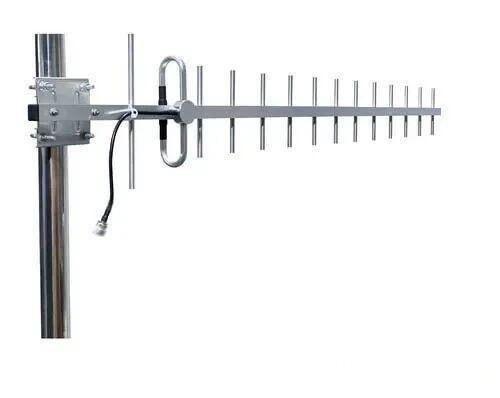 Outdoor Yagi TV Antenna


 Ceiling mount antenna
  Wall mount panel antenna
 Fiberglass Antenna
  Panel Antenna
  Parabolic Antenna
  Yagi Antenna


