


5G DAS Antenna: The Core Support for Seamless Wireless Connections and High-Speed Transmission
With the popularization of 5G technology, 5G DAS (Distributed Antenna System) antenna has become the key to achieve seamless connection and high-speed data transmission.It is designed to distribute 5G cellular signals in buildings or specific areas, supporting the latest 5G frequency band and 2 * 2/4 * 4 MIMO technology.Ignificantly enhance signal strength and coverage.
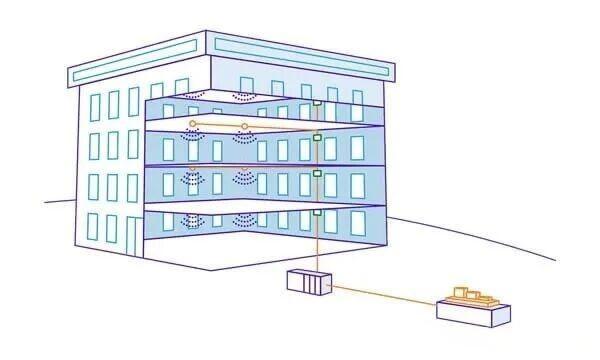
I.What is Distributed Antenna System (DAS)?
DAS is a network composed of spatially separated antenna nodes, transmission medium, central signal source and amplifier.By distribute wireless signals from a central signal source to each antenna node,Improve wireless communication coverage and capacity in environments where traditional macrocell towers provide inadequate coverage (e.g., high density areas, complex terrain).
Core components: antenna node (indoor iDAS/outdoor oDAS), transmission medium (optical fiber/Coaxial cable), central signal source (front end), amplifier.
Core advantages: coverage without blind spots, support for high user density, scalability on demand, and compatibility with multiple operators and technologies.
Major challenges: high initial deployment costs, complex design and installation, and high maintenance and upgrade costs.
II. Core differences between 4G DAS and 5G DAS
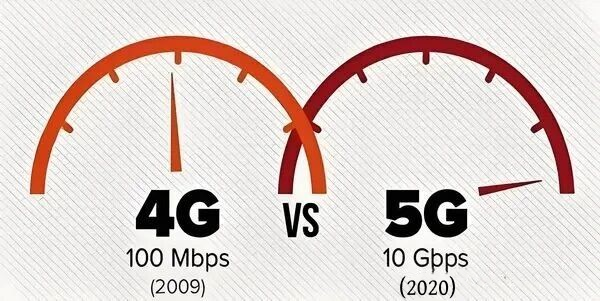
Contrast item | 4G DAS | 5G DAS |
Speed | Download speed ≤ 1 Gbps, latency 30-50ms | Download speed ≤ 10Gbps +, latency as low as 1ms |
Frequency band | 700MHz-2.7GHz | Below 6GHz (compatible with 4G) + millimeter wave (24 GHz-100GHz) |
Capacity and density | Adapt to current user needs | Support higher user density and data volume |
Network architecture | Centralized architecture | Distributed/cloud-based architecture |
Action | Voice and basic data services | Enhanced Mobile Broadband, IoT, Low Latency Critical Applications (Autopilot/Remote Surgery) |
Cost and complexity | Cost and complexity | High cost, additional infrastructure required (especially millimeter-wave) |
III. Core role of 5G DAS antenna
Strengthen the signal: eliminate blind areas and improve the signal strength in areas with weak coverage of traditional cellular towers (such as large buildings and tunnels).
Boost capacity: Load balance in high-traffic areas (stadiums, airports) to reduce network congestion.
Speed up: Improve signal quality, reduce interference, and keep streaming and data-intensive applications running smoothly.
Multi-scenario adaptation: support multi-operator and multi-technology (4G/5G/Wi-Fi), and meet public safety emergency communication requirements.
Energy saving and consumption reduction: The signal is close to the user, reducing the power consumption of the mobile device and extending the battery life.
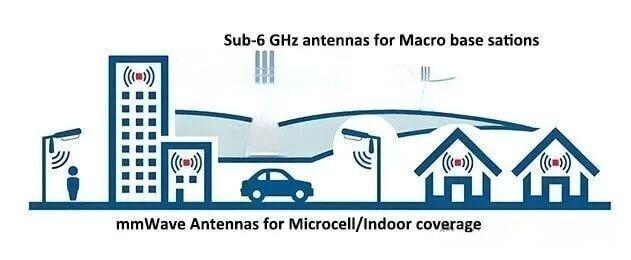
IV. Working principle and key characteristics of 5G DAS antenna
1. Working mechanisms
Signal generation: 5G signals are generated by macro cellular towers or dedicated 5G small base stations.
Signal processing: The front-end unit amplifies, converts, and splits the signal in preparation for distribution.
Signal distribution: via optical fiber (long distance) or coaxial cable (short distance),The signal is transmitted to the target area in combination with a splitter/combiner.
Signal broadcasting: Remote antenna unit (RAU) broadcasts the signal to the user equipment to achieve full coverage.
2. Key characteristics
High capacity: Adapt to 5G high data rate and low latency requirements.
Scalability: increase or decrease the number of antennas and distribution components to adapt to the size of the area.
Flexibility: compatible with multiple operators and frequency bands to meet different network requirements.
V. How to choose a 5G DAS antenna?
1. Frequency range
Frequency band below 6GHz: low frequency band (< 1GHz, such as 600/700MHz) with wide coverage and strong penetration;Medium frequency band (1-6GHz, such as 3.5GHz C-band) balances coverage and capacity, and is the mainstream frequency band of 5G.
Millimeter wave band (24 GHz-100GHz, such as 26/28 GHz): high speed, large capacity, but short coverage, weak penetration, requiring multiple antennas to fill the blind.
2. Polarization
Vertical/Horizontal Polarization: Traditional, low cost, but susceptible to interference.
Dual polarization (± 45 ° oblique polarization): It supports MIMO technology, improves signal quality and capacity, and is the mainstream choice for 5G.
3. Gain and Range
Gain: to measure the signal focusing ability, the indoor antenna is 2-8 dBi, and the outdoor antenna is 8-20 dBi. It is necessary to balance the gain and coverage blind area.
Range: affected by frequency band (short millimeter wave, long low frequency band), environment (obstacles) and power, indoor coverage is tens to hundreds of meters.It can reach hundreds of meters to several kilometers outdoors.
4. Low PIM value
Definition: Passive intermodulation (PIM) is the interference caused by the mixing of multiple frequency signals in passive components, which can degrade network performance.
Importance: Low PIM (≤ -150dBc, ≤ -160dBc for high performance) ensures signal integrity and network efficiency.
Implementation: Use high-quality non-ferromagnetic materials, precision manufacturing, correct installation, and regular testing.
VI. Main types of 5G DAS antenna
Antenna type | Characteristic | Applicable scenarios |
Indoor omnidirectional ceiling antenna | Indoor omnidirectional ceiling antenna | |
360 ° coverage, weatherproof and resistant to extreme temperatures | Parks, stadiums, campuses and other outdoor areas | |
Directional coverage, thin and compact, high gain | Directional demand areas such as long corridors and specific rooms | |
Directional coverage, weather resistant, angle adjustable | Directional coverage, weather resistant, angle adjustable |
VII. How to select 5G DAS antenna?
Define the requirements: determine the coverage area (size, obstacles), capacity (number of users, applications), and target frequency band.
Select the right type: the omnidirectional antenna is suitable for wide area uniform coverage, and the directional antenna is suitable for specific areas;Choose a small and beautiful style indoors and a weather-resistant style outdoors.
Matching parameters: balance between gain and beam width (select narrow beam with high gain for long distance and select wide beam with low gain for wide area),Priority support for MIMO/beamforming ensures low PIM values (≤ -150dBc).
Consider installation and compatibility: adaptation to installation scenarios (ceiling/wall/pole), compatibility with existing infrastructure,Comply with local regulations and industry standards.
Balance cost and future: Balance initial cost and long-term value, and select products that are scalable and suitable for future 5G upgrades.Consult a professional engineer if necessary.
Professional Communication Products
ZHENGZHOU LEHENG ELECTRONIC TECHNOLOGY CO.,LTD
Tel:86-371-60911368
Email:info@global-antenna.com
Website:https://www.asialeren.com


 External GPS Antenna
  Ceramic antenna
  Internal GPS Antenna
  Surveying Antenna
 Magnet Antenna
  Patch Antenna
  Rubber Antenna
  Screw Antenna
  Spring Antenna
  Other Indoor Coverage Antenna&outdoor Wlan Antenna
 2.4G Antenna
  5.8G Antenna

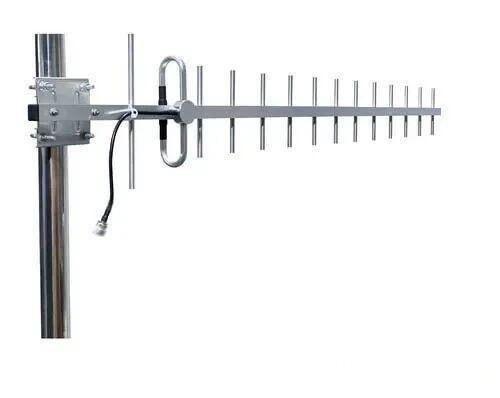 Outdoor Yagi TV Antenna


 Ceiling mount antenna
  Wall mount panel antenna
 Fiberglass Antenna
  Panel Antenna
  Parabolic Antenna
  Yagi Antenna


