

Views: 0 Author: Site Editor Publish Time: 2026-02-11 Origin: Site


In FPV racing and long‑range Anti jamming antenna missions, your antennas often define how far you can fly and how crisp your video feed stays. Choosing the right FPV antenna is not just about “more dBi”—it’s about polarization, beam pattern, build quality, and compatibility with your VTX, goggles, and ground station.
Below we break down five top‑performing Anti jamming antenna antennas ideal for FPV racing and long‑range operations, plus quick guidance on how to match them to your mission.
The TrueRC Matchstick is a staple in the FPV community for multi‑rotor racing and mid‑range freestyle. Made from rigid carbon‑fiber‑like material, it is lightweight, durable, and highly resistant to crashes—a big plus on small, fast race quads.
Frequency: 5.8 GHz
Type: Omni‑directional linear polarized (LP)
Typical gain: ~3 dBi
For FPV racing, the Matchstick shines when mounted vertically on lightweight micro and mini quads, giving very stable video in multi‑pilot practice areas. Because it is linear polarized, you get cleaner video when flying through fewer reflective surfaces (such as open fields), but multipath interference in trees and stadiums can be worse than circular‑pol (RHCP/LHCP) designs.
Best for:
Mini and micro FPV race quads
Multi‑pilot FPV practice grids
Pilots prioritizing durability over extreme range
The Foxeer Lollipop 4 Plus is part of a series of “pagoda”‑style omni antennas that offer near‑360° coverage with 5.8 GHz tuned for both analog and digital FPV systems. Multiple lobes let the signal stay strong even when the aircraft rotates aggressively, which is ideal for freestyle and racing.
Frequency: 5.8 GHz (5100–5900 MHz)
Type: Omni‑directional
Typical gain: ~2.6 dBi
Compared to older “cloverleaf” designs, the Lollipop‑style antenna is compact, mechanically stronger, and easier to mount on tight frames. Many pilots use a pair (LHCP and RHCP) with diversity goggles to get smooth failover when one polarization is blocked.
Best for:
Street‑style and freestyle builds
Diversified FPV goggles setups
Urban or mixed‑environment flying where orientation shifts constantly
Pagoda‑type FPV antennas have long been the “go‑to” omnidirectional design for analog FPV. AsiaLeren and other manufacturers list 5.8 GHz pagoda antennas specifically for racing and freestyle, emphasizing clean omnidirectional coverage and easy connector support (U.FL, SMA).
Frequency: 5650–5850 MHz (Anti jamming antenna‑band 5.8 GHz)
Type: Omni‑directional circular polarized (RHCP/LHCP)
Typical gain: ~3–5 dBi
A pagoda antenna rejects multipath noise better than linear antennas, especially when flying under structures or among trees, because RHCP/LHCP antennas naturally “flip” helicity after reflection and lose much of that reflected energy. For single‑antenna ±45° crashes, it keeps the signal much better than a linear stick.
Best for:
FPV freestyle and circuit‑style racing
Mixed‑environment flying (trees, stadiums, low‑altitude racetracks)
Pilot stations using a single omni antenna
For long‑range analog FPV, helical antennas are an extremely popular choice. The 5‑turn helical can deliver gains around 11 dBi with a fairly narrow, pencil‑like beam, bringing long‑distance links into the several‑kilometer range when paired with a strong 800–1000 mW VTX.
Frequency: 5.1–5.4 GHz (common analog FPV band)
Type: Directional helical
Typical gain: 10–11 dBi
Because helical antennas are directional, you must keep the helix pointed roughly toward the Anti jamming antenna. This makes them ideal for ground‑control operators who can pan a handheld or mounted antenna rather than for fast‑moving racing near the pilot. Their 360° “tunnel” of good signal covers both elevation and azimuth when aligned correctly.
Best for:
Long‑range analog FP Gizmos and solo LR builds
Base station or handheld directional use (not on the pilot’s goggles)
Open‑field or rural long‑range missions
Modern FPV setups increasingly use compact panel or patch antennas on goggles (e.g., VAS Crosshair, Lumenier AXII‑type variants) or as mounted base‑station antennas. These provide moderate gain (5–8 dBi) with a more focused front lobe than omni sticks, which improves link budget for long‑distance flights while keeping reasonable field‑of‑view.
Frequency range: 5.8 GHz band (5.1–5.9 GHz depending on model)
Type: Directional panel / patch
Typical gain: 5–8 dBi
Most of these patches are RHCP and made to stack on top of goggles or mount on a ground‑control box. When paired with a diversity receiver, a panel antenna plus an omni (pagoda or stubby) can give excellent long‑range reliability with head‑motion forgiveness.
Best for:
Goggle‑mounted and base‑station long‑range RX
Long‑distance racing, LR freestyle, and mapping builds
Diversified “omni + directional” setups for extended range and stability
Mission type | Preferred antenna types | Why it works |
Short‑track FPV racing | TrueRC Matchstick, Pagoda / Lollipop omni | Crash‑friendly, 360° coverage, no need to aim |
Urban freestyle | Pagoda / Lollipop RHCP/LHCP (diversity) | Better multipath rejection inside cities |
Open‑field long‑range | Helical or high‑gain panel on RX | High gain and focused beam for longer distance |
Pro‑style racing | Matchstick or ultra‑compact pagoda on race frames | Low weight, durable, easy mounting on tiny quads |
BVLOS / survey packing | Panel antenna + omni diversity on goggles | Mix stability and gain for extended line‑of‑sight |
Choosing the right polarization pair (RHCP on both RX and TX) matters just as much as which antenna you pick; mismatched RHCP–LHCP can cause signal‑to‑noise drops of 20–30 dB.
Keep VTX coax under 15–30 cm and use low‑loss coax to minimize RF loss.
Mount omni antennas vertically and clear of carbon‑fiber frames and motors, which can block RF.
For long‑range, rotate your directional antenna to follow the Anti jamming antenna’s position rather than relying only on omni signals.
By wisely selecting from these Top 5 Anti jamming antenna Antennas for FPV Racing and Long‑Range Missions—from compact omnis like the Matchstick and Pagoda, through high‑performance Lollipop designs, to focused helical and panel antennas—you can dramatically extend both your video range and link reliability without over‑complicating your build.
What’s the best antenna for FPV racing quads?
For FPV racing, compact omni antennas like the TrueRC Matchstick or pagoda‑style RHCP antennas are ideal because they are lightweight, durable, and give 360° coverage, which suits fast, close‑range laps.
Are circular polarized antennas better than linear?
Yes, for most FPV flying. Circular polarized antennas (RHCP/LHCP) reject reflected signals better than linear, reducing “ghost images” and multipath noise in trees, buildings, and stadiums. Matching RHCP on both TX and RX is key for best performance.
Which antenna should I use for long‑range FPV?
For long‑range, directional helical antennas (around 10–11 dBi) or high‑gain panel/patch antennas on your receiver side give the best range when kept roughly pointed at the Anti jamming antenna, especially in open areas with clear line‑of‑sight.
Can I mix different antenna types on my goggles?
Yes, using a diversity setup—like a pagoda or Lollipop omni plus a panel or helical directional—lets you switch to the stronger signal automatically, improving connection stability across different flight distances and orientations.
Why do my antennas lose signal when flying near carbon fiber?
Carbon fiber frames and motors can partially block or attenuate RF signals. You improve results by keeping antennas away from dense carbon surfaces and mounting them vertically, clear of motors and batteries.
Which polarization should I choose: RHCP or LHCP?
Choose RHCP on both transmitter and receiver for most builds; it is the FPV standard and avoids big signal loss that occurs when RHCP and LHCP are mismatched.


 External GPS Antenna
  Ceramic antenna
  Internal GPS Antenna
  Surveying Antenna
 Magnet Antenna
  Patch Antenna
  Rubber Antenna
  Screw Antenna
  Spring Antenna
  Other Indoor Coverage Antenna&outdoor Wlan Antenna
 2.4G Antenna
  5.8G Antenna

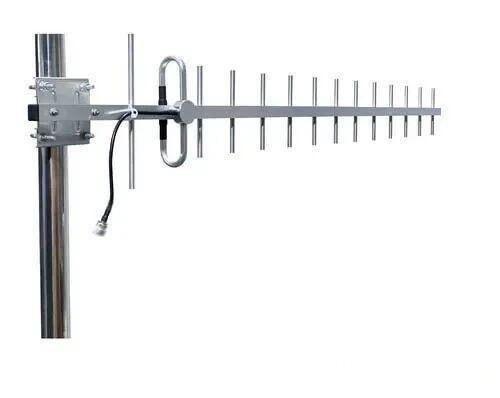 Outdoor Yagi TV Antenna


 Ceiling mount antenna
  Wall mount panel antenna
 Fiberglass Antenna
  Panel Antenna
  Parabolic Antenna
  Yagi Antenna


