


GLFPC033
GLOBAL
8517710000
100PC
Accepted
10000PC/Day
| Quantity: | |
|---|---|
| PDF Export | |


Item | FPC |
PN | GLFPC033 |
Frequency Range (MHz) | 700-2700 |
Gain (dBi) | 3 |
V.S.W.R | ≤1.5 |
Max power input(W) | 20 |
Connector | IPEX or welding |
Dimension | 23.7*38mm |
Product Introduction
1.Ultra-Wide Band Coverage:Fully supports the 700-2700MHz core frequency band, perfectly compatible with global 2G, 3G, and 4G LTE mobile networks and various IoT communication standards. A single antenna design can meet the multi-network access needs of devices in different regions worldwide, simplifying R&D and certification processes.
2.High-Efficiency Signal Transmission:Voltage Standing Wave Ratio (VSWR) ≤1.5, achieving near-ideal impedance matching between the antenna and the RF front-end, minimizing signal reflection loss, ensuring efficient RF energy transmission, and providing reliable guarantees for device communication stability and coverage.
3.Classic Rectangular Flexible Design:Utilizes a 23.7*38mm rectangular flexible PCB structure, extremely thin, allowing for flexible bending or mounting according to the device's internal space, providing an easy-to-integrate wireless connectivity solution for terminal products of various sizes and shapes.
4.Flexible and Convenient Integration Options:Offers both standard IPEX connector interfaces (facilitating assembly and maintenance) and direct soldering connection methods, adapting to the process requirements and cost budgets of different production lines, giving product design greater flexibility.
5.High Power Handling and Durability: Supports a maximum input power of up to 20W, providing ample power margin for devices and ensuring stable operation under high loads. The flexible substrate is robust and reliable, able to withstand mechanical stress during assembly and long-term environmental conditions.
Application Scenarios
●Smart Metering Terminals: Integrated into 4G Cat.1/NB-IoT smart water meters, electricity meters, and gas meters for remote data reading.
●Mobile Payment and POS Machines: Provides stable cellular network connectivity for handheld card readers and wireless POS machines.
●Vehicle Tracking and T-Boxes: Used in vehicle GPS trackers, vehicle-mounted T-Boxes, and shared mobility devices.
●Industrial Data Acquisition Equipment: Used in industrial routers, DTUs, environmental monitoring sensors, etc.
●Portable Medical and Security Equipment: Integrated into mobile medical monitoring devices and 4G law enforcement recorders.
FAQ
Q: Which network operators does this antenna specifically support?
A: As long as the carrier network operates within the 700-2700MHz frequency band (such as China Mobile's Band 3/8, China Unicom's Band 1/3, China Telecom's Band 1, etc.), and your device's RF module supports the corresponding standard, this antenna is compatible. It enhances the physical signal and does not differentiate between carriers.
Q: Does it support 5G networks?
A: It does not support major new 5G frequency bands. The highest frequency of the GLFPC033 is 2700MHz, while the mainstream 5G NR Sub-6GHz bands (such as n77/n78: 3300-4200MHz) are higher than this range. However, it can be used in the 4G (LTE) network connection portion of 5G devices that requires backward compatibility.
Q: Is IPEX or soldering better?
A: It depends on your needs. IPEX connectors facilitate production line assembly, testing, and subsequent maintenance, making them suitable for mass production. Direct soldering provides a more robust connection, lower cost, and smaller footprint, suitable for designs with high reliability and cost control requirements.
Q: What are the most important considerations for PCB layout?
A: The most crucial point is to reserve the correct and sufficient clearance. It is essential to strictly follow the design guidelines, completely clearing all PCB layers below the antenna radiator (especially the ground plane), and ensuring the area around the antenna is kept away from metal components, batteries, and sources of interference.
Q: Will a 3dBi gain affect the communication distance?
A: For this type of small omnidirectional antenna, 3dBi is an optimized typical gain value that balances performance and size. The actual communication distance is determined by the full system link budget. With a proper RF front-end design, it can adequately meet the communication needs of most IoT and mobile data terminals.
Q: How to secure the antenna inside the device?
A: It is recommended to use dedicated thin double-sided tape (such as EMI shielding adhesive with conductive backing or 3M 9448 series) to smoothly attach it to the inner wall of the device housing or an internal non-metallic bracket.


 External GPS Antenna
  Ceramic antenna
  Internal GPS Antenna
  Surveying Antenna
 Magnet Antenna
  Patch Antenna
  Rubber Antenna
  Screw Antenna
  Spring Antenna
  Other Indoor Coverage Antenna&outdoor Wlan Antenna
 2.4G Antenna
  5.8G Antenna

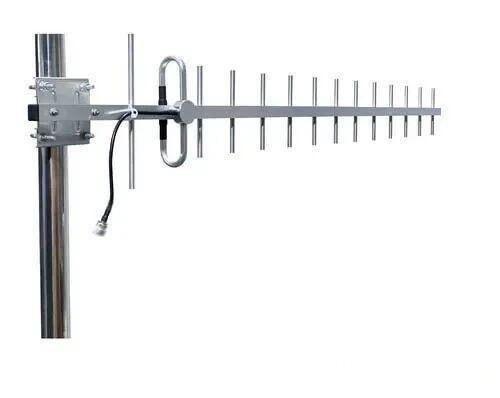 Outdoor Yagi TV Antenna


 Ceiling mount antenna
  Wall mount panel antenna
 Fiberglass Antenna
  Panel Antenna
  Parabolic Antenna
  Yagi Antenna


