

Views: 0 Author: Site Editor Publish Time: 2026-01-17 Origin: Site


Modern connectivity relies on antennas tailored to each cellular generation, with 5G antennas offering ultra-high speeds, 4G providing reliable broadband, and 3G supporting legacy basics. Understanding their differences helps select the right option for routers, vehicles, or IoT devices, especially combo models covering all bands.
5G antennas operate across wide ranges like 600-6000MHz, including sub-6GHz for coverage and mmWave above 24GHz for peak speeds up to 100 times faster than 4G. 4G LTE antennas focus on 700MHz-2.7GHz, balancing penetration through obstacles and data rates for streaming or fleet tracking. 3G antennas handle narrower bands below 3GHz, suiting basic tasks like MMS but lacking 5G's bandwidth for modern IoT.
Higher gain in 5G antennas (5-12 dBi) extends range in urban settings via MIMO tech, though mmWave limits distance compared to 4G's 3-5 dBi omnidirectional spread. 4G models excel in wide-area rural coverage with better obstacle penetration, supporting ~2,000 devices per km². 3G antennas offer modest 3-5 dBi gain over longer ranges but struggle with capacity, ideal only for legacy wearables or telemetrics.
Combo5G/4G/3G antennasintegrate multi-band support (600-6000MHz) with SMA connectors, weatherproof IP67 builds, and backward compatibility to avoid drops in mixed networks. 4G antennas emphasize MIMO for doubled throughput and low-profile mounts on vehicles, while 5G adds beamforming for low latency (1ms). 3G designs prioritize compact ground planes for medical devices, lacking 5G's helical or panel options for directional boosts.
Feature | 5G Antennas | 4G Antennas | 3G Antennas |
Gain (dBi) | 5-12 | 3-5 | 3-5 |
MIMO Support | Massive MIMO | Basic MIMO | None |
Latency | 1ms | 20-30ms | Higher (>50ms) |
Device Capacity | 1M+ per km² | ~2,000 per km² | Limited |
5G antennas deliver up to 40dBi in combos for high-mobility like Anti jamming antennas, slashing latency for AR/VR versus 4G's HD streaming focus. 4G outperforms 3G in throughput (5-100Mbps downloads) with lower VSWR for minimal loss in routers. 3G caps at 144kbit/s, fine for video calls but obsolete amid 5G's scalability for smart cities.
Mount 5G/4G/3G combos externally on RVs or industrial gear for seamless band-switching in mining or agriculture, boosting signals over obstacles. Use 4G for stable remote monitoring and 5G for C-V2X vehicle safety or autonomous tech. 3G fits transitional backups or global roaming wearables, but upgrades to combos for future-proofing.
Position antennas high with line-of-sight to towers, using LMR-400 cables and magnetic bases for vehicles. Test via apps like Network Cell Info post-SMA connection to modems from Huawei or ZTE. Avoid metal obstructions; ceiling mounts work indoors for omnis covering 360°.
Ready to boost connectivity with Asialeren's 5G 4G 3G antennas? Email us at Contact Usfor a fast quote. Get expert advice on combo antennas for routers, vehicles, or IoT—tailored solutions, prompt response guaranteed!
What is a 5G 4G 3G Antenna?
A 5G 4G 3G antenna, or combo antenna, covers frequencies from 600-6000MHz, enabling automatic band-switching for uninterrupted service from legacy 3G to high-speed 5G NR. These multi-band units suit M2M applications like smart meters and industrial automation, outperforming single-band options with backward compatibility.
Can 4G Antennas Work with 5G Devices?
No, standard 4G antennas (700MHz-2.7GHz) lack coverage for 5G's sub-6GHz and mmWave bands, plus MIMO requirements for higher speeds. Use dedicated 4G/5G combos to ensure compatibility and avoid signal drops during network transitions.
How Do These Antennas Improve Signal Strength?
External MIMO elements boost gain (5-12 dBi) and reduce dead zones by focusing signals toward towers, with low VSWR minimizing loss. Mount high with low-loss cables like LMR-400 for optimal throughput in urban, rural, or obstructed areas.
Are Combo Antennas Suitable for Outdoor Use?
Yes, Asialeren's models feature IP67 weatherproofing for harsh environments like vehicles, maritime, or construction sites. They handle high-mobility scenarios with 360° omnidirectional coverage or directional panels for extended range.
What Connectors Do These Antennas Use?
Most use SMA, RP-SMA, N-Female, or TS-9 connectors for quick modem integration on Huawei, ZTE, or Ubiquiti routers. Dual ports enable MIMO for doubled 4G/5G data rates.
Do They Support Global Roaming?
Yes, wideband 600-6000MHz coverage spans international carriers, allowing seamless 2G/3G/4G/5G fallback for travel or mixed networks. Ideal for RVs, fleets, or emergency services.
Key Differences in Frequency and Gain?
Aspect | 5G Antennas | 4G Antennas | 3G Antennas |
Frequency | 600-6000MHz+mmWave | 700-2700MHz | Below 3GHz |
Gain | 5-12 dBi | 3-5 dBi | 3-5 dBi |
MIMO | Massive | Basic | None |
How to Install for Best Performance?
Position high with line-of-sight to towers, secure magnetic/bracket mounts, and use short low-loss cables. Test signals via apps like Network Cell Info after connecting; avoid metal interference.
Why Choose Asialeren Combo Antennas?
They reduce hardware costs with full 2G-5G support, high-gain (up to 40dBi), and GPS options for telematics. Proven for industrial B2B like excavator monitoring or skincare e-commerce hotspots.


 External GPS Antenna
  Ceramic antenna
  Internal GPS Antenna
  Surveying Antenna
 Magnet Antenna
  Patch Antenna
  Rubber Antenna
  Screw Antenna
  Spring Antenna
  Other Indoor Coverage Antenna&outdoor Wlan Antenna
 2.4G Antenna
  5.8G Antenna

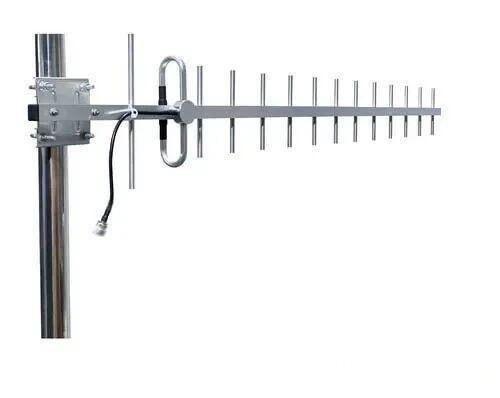 Outdoor Yagi TV Antenna


 Ceiling mount antenna
  Wall mount panel antenna
 Fiberglass Antenna
  Panel Antenna
  Parabolic Antenna
  Yagi Antenna


