

Views: 0 Author: Site Editor Publish Time: 2026-01-14 Origin: Site


5G antennas form the backbone of next-generation wireless networks, enabling ultra-fast speeds and massive connectivity. These devices support high-frequency bands for seamless data transmission in diverse applications.
A 5G antenna transmits and receives high-frequency signals across sub-6GHz and mmWave bands, delivering speeds up to 100 times faster than 4G with latency as low as 1ms. Unlike 4G antennas limited to 700MHz-2.7GHz, 5G models cover 600-6000MHz for future-proof multi-band operation, including backward compatibility with 3G and 4G. Combo antennas from manufacturers like AsiaLeren integrate MIMO technology for doubled throughput and omnidirectional gain of 5-10 dBi.
Key features include compact, weatherproof designs with SMA connectors for routers, vehicles, and IoT devices. They support global roaming by automatically switching bands from GSM to 5G NR.
5G antennas use transmitters to convert electrical signals into electromagnetic waves and receivers to do the reverse, optimized for MIMO with multiple elements handling simultaneous data streams. Beamforming directs signals precisely toward devices, boosting efficiency in dense areas, while massive MIMO supports over 1 million devices per km². Sub-6GHz bands provide wide coverage and penetration, balancing range and speed, whereas mmWave (24-40GHz) offers peak throughput but shorter range.
In practice, these antennas employ low VSWR for minimal loss and polarization options like linear or circular for optimal performance. AsiaLeren's models, such as Omni Combo (600-6000MHz, 5-8 dBi), mount via magnetic bases or poles for 360° coverage.
5G antennas outperform 4G in speed, capacity, and latency but require denser deployment due to higher frequencies.
Aspect | 5G Antenna | 4G Antenna |
Frequency Range | 600-6000MHz (sub-6/mmWave) | 700-2700MHz |
Gain | 5-12 dBi (MIMO) | 3-5 dBi |
Capacity | 1M+ devices/km² | ~2,000 devices/km² |
Latency | ~1ms | Higher |
Coverage | Shorter (mmWave), wide (sub-6) | Better penetration |
4G antennas lack full 5G band support and advanced MIMO, making combo units essential for transitions. Single-band alternatives suit fixed indoor use but fail in mobile or multi-network scenarios.
5G antennas enable bandwidth-intensive tasks like AR/VR, autonomous vehicles, and smart cities with enhanced network slicing for prioritized traffic. They reduce dead zones in rural or obstructed areas via high-gain external mounting and support NB-IoT for industrial sensors.
Applications span:
Vehicles and RVs for telematics and C-V2X safety.
IoT/smart meters in agriculture and mining for real-time data.
Routers/hotspots in maritime or off-grid surveillance.
Weatherproof IP67 builds ensure outdoor reliability, cutting hardware costs through versatility.
Mount antennas high with line-of-sight to towers, using low-loss LMR-400 cables to minimize attenuation. Secure with magnetic or bracket mounts on vehicles; test via apps like Network Cell Info. Compatible with Huawei/ZTE routers via SMA/N-female connectors.
5G antennas drive digital transformation by powering high-mobility, low-latency networks essential for enterprise scalability. As 5G adoption grows, investing in multi-band solutions like AsiaLeren's ensures uninterrupted service across generations, boosting throughput in demanding environments. Businesses gain from reduced latency and massive connectivity for IoT and beyond.
Ready to enhance your setup with a 5G antenna or 4G LTE antenna? Visit Contact Us to request a quote via email today. Receive customized guidance for your 5G 4G 3G antenna requirements—quick reply assured!
What is a 5G antenna?
A 5G antenna is a multi-band device supporting sub-6GHz and mmWave frequencies from 600-6000MHz, enabling ultra-fast speeds up to 100 times faster than 4G with 1ms latency. AsiaLeren's combo models ensure backward compatibility with 3G and 4G for seamless connectivity in routers, vehicles, and IoT.
How does a 5G antenna work?
It uses MIMO technology with multiple elements for simultaneous data streams, beamforming to direct signals precisely, and low VSWR for minimal loss. Sub-6GHz bands provide coverage, while mmWave offers peak throughput; omnidirectional patterns deliver 360° performance.
Can a 4G antenna work with 5G devices?
No, 4G antennas limited to 700-2700MHz lack full 5G band support and advanced MIMO requirements. Use dedicated 4G 5G combo antennas like AsiaLeren's for compatibility and optimal speeds.
What are the benefits of 5G antennas?
They boost signal strength, reduce dead zones, support massive IoT connectivity (1M+ devices/km²), and enable real-time applications like AR/VR and telematics. Weatherproof IP67 designs cut costs through multi-band versatility.
Are these antennas suitable for outdoor use?
Yes, AsiaLeren's models feature rugged, weatherproof builds for vehicles, maritime, and industrial sites. High-gain options (5-12 dBi) overcome weak signals in rural or obstructed areas.
What connectors and mounts are used?
Common SMA, N-Female, or RP-SMA connectors pair with Huawei/ZTE routers; mounts include magnetic bases, brackets, or ceiling flush for easy installs.
Do 5G antennas support global roaming?
Yes, wideband coverage (600-6000MHz) allows automatic band-switching from 2G to 5G NR across carriers and regions.
How do I install a 5G antenna?
Mount high with line-of-sight to towers using low-loss LMR-400 cables; test signals via apps like Network Cell Info and secure cabling to avoid strain.


 External GPS Antenna
  Ceramic antenna
  Internal GPS Antenna
  Surveying Antenna
 Magnet Antenna
  Patch Antenna
  Rubber Antenna
  Screw Antenna
  Spring Antenna
  Other Indoor Coverage Antenna&outdoor Wlan Antenna
 2.4G Antenna
  5.8G Antenna

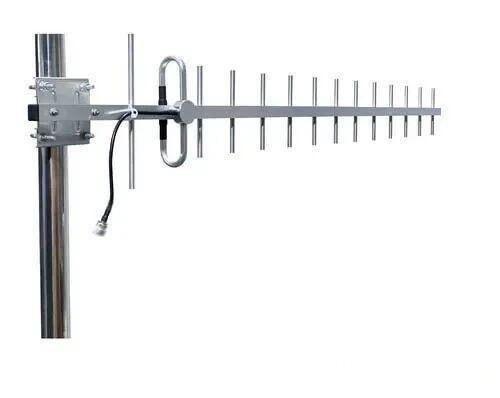 Outdoor Yagi TV Antenna


 Ceiling mount antenna
  Wall mount panel antenna
 Fiberglass Antenna
  Panel Antenna
  Parabolic Antenna
  Yagi Antenna


