

Views: 0 Author: Site Editor Publish Time: 2025-07-08 Origin: Site


In the realm of television setups, the choice of the right coaxial cable plays a pivotal role in signal quality and overall performance. The debate between using RG6 and RG59 coaxial cables for TV applications has been ongoing among professionals and enthusiasts alike. Understanding the nuances of these Coaxial Cables is essential for making an informed decision that enhances your viewing experience.
Coaxial cables, commonly referred to as coax, are specialized electrical cables designed to transmit high-frequency signals with minimal losses. They consist of an inner conductor surrounded by a dielectric insulating layer, which is then encased by a conducting shield, typically made of metallic braid and foil. This construction allows the cable to carry signals with high integrity, shielding them from external electromagnetic interference.
The concept of coaxial cable was first introduced by Oliver Heaviside in 1880, showcasing its potential to eliminate signal interference between parallel cables. Since then, it has become a cornerstone in various applications, including telephone trunk lines, broadband internet, and television signal distribution. The precise spacing and dimensions of the cable and its connectors are critical for efficient transmission, especially at high frequencies.
Choosing between RG6 and RG59 coaxial cables hinges on understanding their structural differences and how these affect performance in TV applications. Both cables are used for transmitting video signals, but their distinct characteristics make them suitable for different setups.
RG6 cables are generally thicker, with a larger diameter center conductor and a heavier shielding compared to RG59. Specifically, RG6 cables typically have a center conductor diameter of 18 AWG, while RG59 cables have a 20 AWG conductor. The larger conductor in RG6 allows for lower attenuation of signals, making it more suitable for transmitting high-frequency signals over longer distances.
The frequency handling capabilities of the cables are a significant differentiator. RG6 cables are designed to handle frequencies up to 3 GHz, which makes them ideal for satellite and cable television signals that operate at higher frequencies. In contrast, RG59 cables are optimal for frequencies up to 1 GHz, sufficient for analog video and lower frequency applications.
Shielding is critical in preventing electromagnetic interference. RG6 cables often feature a quad-shielding design, which includes multiple layers of foil and braid shields, enhancing their ability to block interference. RG59 cables typically have single or dual shielding, which may be less effective in environments with high interference.
Understanding the practical applications of RG6 and RG59 cables in TV setups helps determine which cable is better suited for specific scenarios.
RG6 cables are the standard for most modern installations, particularly in digital satellite and cable television systems. Their ability to handle higher frequencies with minimal signal loss makes them ideal for delivering high-definition content. The enhanced shielding also reduces the risk of interference from other electronic devices.
RG59 cables are commonly used in analog video systems and are suitable for short runs. They are often found in older installations and are adequate for CCTV systems and low-frequency signals. However, their higher attenuation at high frequencies makes them less suitable for modern digital TV signals over longer distances.
A head-to-head comparison of RG6 and RG59 cables reveals key performance metrics that impact TV signal quality.
Signal attenuation increases with cable length. RG6 cables exhibit lower attenuation per unit length compared to RG59 due to their larger conductor size. For instance, over a 100-foot run, RG6 may experience a 5.65 dB loss at 750 MHz, while RG59 could lose significantly more, making RG6 the preferable choice for longer distances.
The bandwidth of a cable determines its ability to carry signals of different frequencies. RG6 cables support a wider bandwidth, accommodating high-definition and satellite signals that require higher frequencies. RG59 cables, with their narrower bandwidth, may not support these signals effectively, leading to degraded picture quality.
In environments with significant electromagnetic interference, such as urban areas with many electronic devices, the superior shielding of RG6 cables provides better protection. This results in cleaner signals with fewer artifacts, contributing to a better viewing experience.
Budget constraints often influence the choice between RG6 and RG59 cables. RG59 cables are generally less expensive due to their thinner construction and lower material costs. However, the potential need for signal boosters or repeaters, especially over longer distances, can offset the initial savings.
Investing in RG6 cables may entail higher upfront costs but can result in long-term benefits. The ability to support future upgrades in signal quality and compatibility with newer technologies makes RG6 a cost-effective solution over time. It reduces the likelihood of needing to replace cables as technology advances.
The physical aspects of cable installation can impact the decision-making process. Factors such as flexibility, connector compatibility, and environmental conditions play roles in cable selection.
RG59 cables are more flexible due to their thinner size, making them easier to install in tight spaces or around sharp corners. This can be advantageous in complex installations where maneuverability is critical. RG6 cables, being thicker, may require more effort to install but offer superior performance.
Compatibility with connectors is essential. RG6 cables typically use F-type connectors, standard in modern TV installations. RG59 cables may use BNC or older connector types. Ensuring compatibility with existing equipment is crucial to avoid additional costs and complications.
Outdoor installations require cables that can withstand environmental stresses. RG6 cables often come with protective jackets resistant to UV light and moisture, making them suitable for exterior use. RG59 cables may lack these protective features, limiting their use to indoor applications.
Analyzing the technical specifications of RG6 and RG59 cables provides deeper insight into their suitability for TV applications.
| Specification |
|---|
| RG6 |
|---|
| RG59 |
|---|
| Impedance |
| 75 Ω |
| 75 Ω |
| Center Conductor Diameter |
| 18 AWG |
| 20 AWG |
| Maximum Frequency |
| 3 GHz |
| 1 GHz |
| Attenuation at 750 MHz (dB/100 ft) |
| 5.65 |
| 8.0 |
Industry experts generally recommend RG6 cables for most TV applications due to their superior performance characteristics. The advancements in television technology, including high-definition and 4K broadcasts, necessitate cables that can handle higher bandwidths and frequencies.
Given the rapid evolution of broadcast technologies, installing RG6 cables ensures compatibility with future upgrades. This approach minimizes the need for re-cabling, saving time and resources in the long run.
While RG6 is generally preferable, RG59 cables still have their place in certain niche applications. In situations where flexibility and ease of installation are paramount, and the signal requirements are modest, RG59 may suffice.
Deciding between RG6 and RG59 cables for TV applications involves considering factors such as signal frequency, cable length, interference, and future-proofing needs. RG6 cables, with their superior performance in terms of lower attenuation, higher frequency handling, and better shielding, are generally the better choice for modern television systems. They ensure high-quality signal transmission, supporting the demands of today's high-definition content. Leveraging the right Coaxial Cables is essential for an optimal viewing experience that meets current and future technological advancements.
Q1: Can I use RG59 cables for high-definition television?
A1: While it's possible, RG59 cables are not ideal for high-definition signals due to higher attenuation and limited frequency handling. RG6 cables are recommended for HD content to ensure signal integrity.
Q2: Are RG6 cables compatible with older TV systems?
A2: Yes, RG6 cables are compatible with older systems. They can handle both traditional analog and modern digital signals, making them versatile for various applications.
Q3: Does cable length affect the choice between RG6 and RG59?
A3: Yes, for longer cable runs, RG6 is preferable due to its lower signal loss over distance. RG59 may be adequate for very short runs but can degrade signal quality over longer distances.
Q4: What role does shielding play in cable performance?
A4: Shielding protects the signal from electromagnetic interference. RG6's superior shielding ensures cleaner signal transmission, crucial in environments with many electronic devices.
Q5: Are there cost advantages to using RG59 cables?
A5: RG59 cables are less expensive initially. However, potential costs for signal boosters or future upgrades may offset these savings, making RG6 a more economical choice long-term.
Q6: Can I mix RG6 and RG59 cables in the same installation?
A6: Mixing cables is not recommended as it can lead to impedance mismatches, causing reflections and signal loss. Consistency in cable type ensures optimal performance.
Q7: How does the dielectric material affect cable performance?
A7: The dielectric insulator affects signal attenuation and velocity. High-quality materials in RG6 cables reduce losses and support higher frequency transmission compared to RG59.


 External GPS Antenna
  Ceramic antenna
  Internal GPS Antenna
  Surveying Antenna
 Magnet Antenna
  Patch Antenna
  Rubber Antenna
  Screw Antenna
  Spring Antenna
  Other Indoor Coverage Antenna&outdoor Wlan Antenna
 2.4G Antenna
  5.8G Antenna

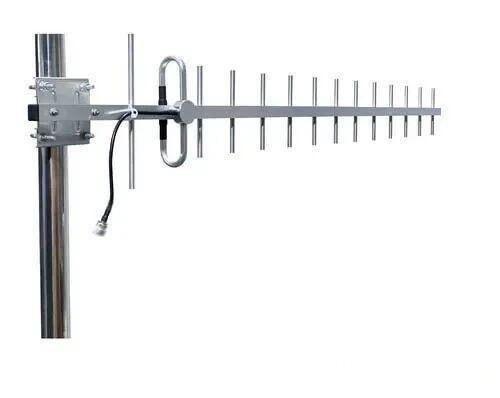 Outdoor Yagi TV Antenna


 Ceiling mount antenna
  Wall mount panel antenna
 Fiberglass Antenna
  Panel Antenna
  Parabolic Antenna
  Yagi Antenna


