

Views: 0 Author: Site Editor Publish Time: 2026-01-29 Origin: Site


5G antennas offer superior speed and capacity over 4G models, but your choice depends on network availability, device compatibility, and budget. This guide breaks down key differences to help you decide, optimized for things like "5G antenna vs 4G antenna."
5G antennas support wider frequency bands, including sub-6 GHz for broad coverage and mmWave for ultra-high speeds up to 10 Gbps, while 4G antennas focus on 700-2700 MHz for reliable mid-range performance. 5G uses advanced Massive MIMO with dozens or hundreds of elements for simultaneous data streams, compared to 4G's simpler 4-8 element MIMO that doubles throughput but lacks 5G's precision. Beamforming in 5G directs signals dynamically to users, reducing latency to 1ms, whereas 4G beamforming is less adaptive and covers areas omnidirectionally.
Expect 20x faster downloads with 5G antennas due to shorter wavelengths enabling precise control and higher device density—over 1,000 devices per square meter. 4G antennas deliver solid 100-300 Mbps peaks but struggle in crowded areas, while 5G handles massive IoT loads with low interference. Real-world tests show 5G antennas cutting movie download times dramatically versus 4G, ideal for streaming or AR/VR.
Feature | 4G Antenna | 5G Antenna |
Peak Speed | 1 Gbps | 20 Gbps |
Latency | 20-30 ms | 1 ms |
Frequency Range | 700-2700 MHz | Sub-6 GHz + mmWave (up to 40 GHz) |
Device Capacity | Moderate (urban limits) | 1,000+ per m² |
MIMO Elements | 4-8 | 64-256 |
4G antennas excel in wide coverage with omnidirectional or sector designs suited for vehicles and rural setups, using low-profile mounts. 5G antennas need denser placement due to higher frequencies' shorter range, but panel and directional types boost accuracy in urban spots. 5G's smaller size from shorter wavelengths fits compact devices better, although mmWave signals penetrate walls poorly compared to 4G.
4G antennas remain more affordable and broadly compatible with existing LTE networks, offering practical value in areas with slower 5G deployment. 5G models typically cost 20-50% more upfront but serve as future-proof investments amid rising global adoption projected to reach 50% by 2026. Evaluate local carriers: upgrade to 5G if sub-6 GHz coverage prevails; otherwise, 4G meets current needs reliably.
Choose 4G antennas for budget vehicles, basic routers, or stable rural signals—reliable without overkill. Opt for 5G if you need IoT hubs, high-speed home/office setups, or automotive telematics demanding low latency. For industrial uses like machinery monitoring, 5G's capacity shines; For simple comms, 4G saves money.
AsiaLeren, a trusted China manufacturer and supplier, offers durable antennas for both standards. Here are top picks:
5G Magnet Antenna (600-6000MHz, 5dBi Gain) : High-gain outdoor model with strong magnet for vehicles. Ideal for full 5G coverage. Buy here
5G High-Gain Dual-Band Magnet Antenna : Versatile for automotive, supports sub-6 and mmWave. Buy here
4G LTE Magnet Antenna (698-2700MHz, 5dBi) : Proven for wideband 4G, magnetic mount for easy installation. Buy here
4G Full-Band FPC Antenna (IPEX Connector) : Flexible PCB design for devices, compact and reliable. Buy here
5G Vehicle Magnetic Mount Antenna : SMA male, LMR100 cable for pro installs. Buy here
Buy 5G if your area has solid coverage and you prioritize speed for smart homes or business—worth the investment long-term. Stick with 4G for cost savings and compatibility where 5G is spotty; upgrade later. Contact AsiaLeren for bulk/custom orders from China—fast shipping worldwide. Test signal strength first via apps like OpenSignal.
What is the main difference between 5G and 4G antennas?
5G antennas support broader bands like sub-6 GHz and mmWave (up to 40 GHz) for higher speeds, while 4G focuses on 700-2700 MHz for stable coverage. This enables 5G's Massive MIMO versus 4G's basic setup.
Which offers better speed and latency?
5G antennas deliver up to 20 Gbps peaks with 1ms latency, 20x faster than 4G's 1 Gbps and 20-30ms. Ideal for IoT and streaming in dense areas.
Do 5G antennas have better coverage?
No—4G antennas provide a wider range on lower frequencies; 5G needs more base stations due to signal attenuation. Sub-6 GHz 5G matches 4G coverage better than mmWave.
Are 5G antennas compatible with 4G devices?
Many are backward-compatible via multi-band designs covering 600-6000 MHz, but check specs for your router/modem. AsiaLeren models support both seamlessly.
Which is cheaper: 5G or 4G antennas?
4G antennas cost 20-50% less and suit non-5G areas like rural Chattogram; 5G future-proofs but pricier upfront.
When should I buy a 5G antenna?
Choose 5G for urban/high-speed needs, vehicles, or industrial IoT; Stick to 4G for budget/reliable basics.
How to install a 5G/4G magnet antenna?
Mount on metal surface with clear sky view, connect SMA/IPEX, test signal—strong magnet ensures stability.
Where to buy quality 5G/4G antennas from China?
AsiaLeren manufactures durable options with CTAs for quotes. Explore: 5G Magnet , 4G LTE.


 External GPS Antenna
  Ceramic antenna
  Internal GPS Antenna
  Surveying Antenna
 Magnet Antenna
  Patch Antenna
  Rubber Antenna
  Screw Antenna
  Spring Antenna
  Other Indoor Coverage Antenna&outdoor Wlan Antenna
 2.4G Antenna
  5.8G Antenna

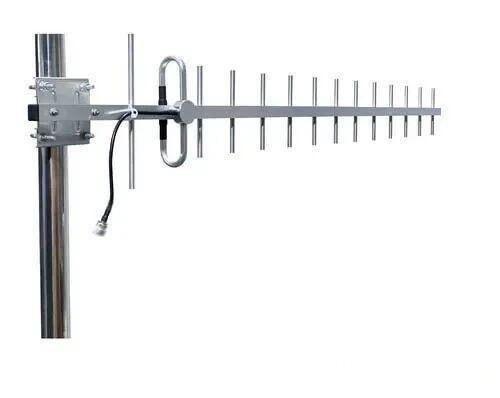 Outdoor Yagi TV Antenna


 Ceiling mount antenna
  Wall mount panel antenna
 Fiberglass Antenna
  Panel Antenna
  Parabolic Antenna
  Yagi Antenna


