

Views: 0 Author: Site Editor Publish Time: 2026-02-03 Origin: Site


Choosing the right 5G antenna can transform your connectivity, especially in demanding environments like urban buildings or remote sites. AsiaLeren, a leading manufacturer and supplier from China, offers high-performance 5G 4G 3G combo antennas designed for both indoor and outdoor use, ensuring seamless multi-band support.
5G antennas operate across sub-6GHz and mmWave bands, delivering ultra-high speeds up to 100 times faster than 4G with latency as low as 1ms. Indoor versions suit compact setups like routers in homes or offices, while outdoor models excel in harsh conditions with weatherproof builds. AsiaLeren's combo antennas cover 600-6000MHz, providing backward compatibility for 4G and 3G devices.
These antennas boost signal strength for IoT, vehicles, and hotspots, featuring MIMO technology for doubled throughput and omnidirectional patterns for 360° coverage. Unlike single-band options, AsiaLeren's multi-band designs reduce hardware needs and costs for businesses.
Indoor antennas prioritize ease and aesthetics for home or office routers. They integrate compactly near windows or ceilings, with low-profile mounts and connectors like RP-SMA for quick setup on Huawei or ZTE devices.
Pros:
Simple installation without drilling or weatherproofing.
Cost-effective for apartments or temporary setups, often under $50.
Minimal interference indoors, ideal for smart homes or small offices.
Cons:
Weaker signal penetration through walls, limiting range in concrete structures.
Lower gain (typically 3-5 dBi), struggling in fringe areas or high-mobility spots.
Susceptible to indoor obstacles like furniture or HVAC systems.
AsiaLeren's ceiling-mount indoor models offer 4-7 dBi gain across 600-6000MHz, perfect for routers in weather-sensitive indoor environments.
Outdoor antennas mount on roofs, poles, or vehicles for superior performance in open spaces. They feature IP67-rated weatherproofing, magnetic or bracket mounts, and high-gain designs up to 10 dBi for extended range.
Pros:
Exceptional signal capture with line-of-sight to towers, boosting speeds by 2-5x over indoor options.
High gain (5-12 dBi) and MIMO for rural, maritime, or industrial sites.
Overcomes obstacles like trees or buildings, enabling C-V2X in vehicles.
Cons:
Higher cost and complex installation requiring cables like LMR-400 to minimize loss.
Exposure to elements risks damage without proper sealing.
Less portable for frequent moves.
AsiaLeren's omni combo outdoor antennas (600-6000MHz, 5-8 dBi, SMA/N connectors) thrive on trucks, RVs, or construction sites.
Feature | Indoor 5G Antennas | Outdoor 5G Antennas |
Gain (dBi) | 3-7 | 5-12 |
Weather Resistance | None | IP67-rated |
Installation Ease | Plug-and-play | Requires mounting/cabling |
Signal Strength | Limited by walls | Superior range |
Cost | Lower | Higher |
Best For | Homes/offices | Vehicles/IoT/remote |
Outdoor models outperform indoors by 100-500% in throughput tests, especially in weak coverage. Indoor suits urban apartments; outdoor dominates rural or mobile needs.
Residential: Indoor antennas enhance Fritzbox or ZTE routers in apartments, but switch to window-mounted for better penetration. AsiaLeren's panel MIMO (9-12 dBi) boosts home hotspots.
Vehicles and RVs: Outdoor magnetic-mount combos ensure constant telematics and video surveillance on buses or boats. They handle high-mobility with band-switching from 3G to 5G.
Industrial IoT: Outdoor antennas power smart meters, agriculture sensors, or mining trackers in fringe areas. Indoor versions fit factory routers away from elements.
Enterprise Networks: Roof-mounted outdoor panels for offices overcome urban interference; indoor ceiling omnis for warehouses.
Off-Grid Surveillance: High-gain outdoor models (up to 40dBi combos) maintain uplinks in remote construction or emergency sites.
AsiaLeren antennas support LTE Cat-M1, NB-IoT, and GPS integration for precise applications.
Mount antennas high with clear line-of-sight to towers; use low-loss cables and test via apps like Network Cell Info. For outdoors, secure with brackets and seal connections. Indoors, position near windows pointing outward.
Select SMA/TS-9 connectors for MIMO ports to maximize 5G speeds. AsiaLeren models ensure low VSWR for minimal loss.
As a China-based manufacturer, AsiaLeren delivers superior 5G 4G 3G combo antennas with multi-band efficiency (698-5000MHz), outperforming generics in gain and durability. Backed by rigorous testing, they minimize interference for massive MIMO demands.
Ready to upgrade? Contact AsiaLeren today for a custom quote on outdoor or indoor 5G antennas. Email us for tailored advice and fast shipping—optimize your network now!
What is the main difference between outdoor and indoor 5G antennas?
Outdoor 5G antennas are weatherproof (IP67-rated) with higher gain (5-12 dBi) for extended range, while indoor models offer compact, low-profile designs (3-7 dBi) for easy router integration.
Can indoor 5G antennas be used outdoors?
No, indoor antennas lack weather resistance and may fail in rain, wind, or UV exposure; always choose IP67-rated outdoor models for vehicles or roofs.
Do outdoor antennas really improve 5G speeds over indoor ones?
Yes, outdoor antennas boost throughput by 2-5x via better line-of-sight and MIMO, ideal for rural or fringe areas where indoor signals drop due to walls.
What are the best use cases for indoor 5G antennas?
Indoor antennas suit homes, apartments, offices, or warehouses with routers like Huawei/ZTE, providing 360° coverage without drilling.
When should I choose outdoor 5G antennas?
Opt for outdoor models in vehicles, RVs, industrial IoT, agriculture, or maritime setups needing high-gain over obstacles.
How do I install an outdoor 5G antenna?
Mount high on poles/brackets with clear tower view, use LMR-400 cables, SMA/N connectors, and test via apps like Network Cell Info.
Are combo 5G/4G/3G antennas better than single-band?
Yes, AsiaLeren's 600-6000MHz combos ensure backward compatibility, global roaming, and cost savings versus separate antennas.
What connectors work with 5G routers?
Most use SMA, RP-SMA, TS-9, or N-Female for MIMO ports; AsiaLeren models match Huawei, ZTE, Ubiquiti devices.
Can 4G antennas work with 5G devices?
No, due to differing bands and MIMO needs; use AsiaLeren 4G/5G combos for seamless support.


 External GPS Antenna
  Ceramic antenna
  Internal GPS Antenna
  Surveying Antenna
 Magnet Antenna
  Patch Antenna
  Rubber Antenna
  Screw Antenna
  Spring Antenna
  Other Indoor Coverage Antenna&outdoor Wlan Antenna
 2.4G Antenna
  5.8G Antenna

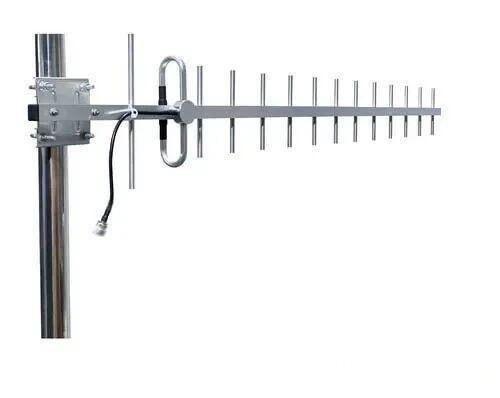 Outdoor Yagi TV Antenna


 Ceiling mount antenna
  Wall mount panel antenna
 Fiberglass Antenna
  Panel Antenna
  Parabolic Antenna
  Yagi Antenna


