

Views: 0 Author: Site Editor Publish Time: 2026-02-03 Origin: Site


Choosing the right GPS antenna is crucial for reliable positioning in applications from vehicle tracking to precision agriculture. Active and passive GPS antennas differ fundamentally in design and performance, impacting signal quality, range, and cost.
Passive GPS antennas receive signals without amplification. They rely solely on the inherent sensitivity of their design, transmitting raw GNSS signals like GPS, GLONASS, or BeiDou directly to the receiver.
These antennas suit short cable runs under 1 meter where signal loss is minimal. Without a built-in low-noise amplifier (LNA), they avoid added noise but struggle in weak-signal environments or with long cables.
Common in consumer devices like smartwatches and basic vehicle navigators, passive models prioritize simplicity and low power draw.
Active GPS antennas integrate an LNA to boost weak satellite signals by 20-40 dB before transmission. Powered via the coaxial cable (typically 3-5V DC), they compensate for cable losses and enhance reception in challenging conditions.
This amplification improves low-elevation satellite tracking, anti-interference, and overall positioning accuracy, especially for multi-GNSS systems supporting RTK and DGPS.
Ideal for professional uses like surveying, Anti jamming antennas, and marine operations, active antennas feature high gain, circular polarization, and stable phase centers for centimeter-level precision.
Feature | Passive GPS Antennas | Active GPS Antennas |
Amplification | None; raw signal only | Built-in LNA (20-40 dB gain) |
Cable Length | Short (<1m); high loss over distance | Long (up to 30m+); loss compensated |
Signal Strength | Good in open areas; weak in obstructed spots | Strong even in urban canyons or foliage |
Power Consumption | Zero additional power | 3-10mA via coax |
Noise Figure | Low inherent noise | Slightly higher but filtered LNA |
Cost | Lower (simple design) | Higher (includes electronics) |
Applications | Consumer trackers, wearables | Surveying, agriculture, vehicles |
Active models excel in gain and stability, while passive ones win on cost and battery life.
Pros: Compact, inexpensive, no power needs, minimal failure points.
Cons: Limited range, poor performance in interference or low-signal areas, unsuitable for high-precision tasks.
Pros: Superior signal capture, multi-feed designs for phase stability, waterproof/UV-proof radomes for fieldwork.
Cons: Higher cost, requires power supply, potential LNA overload in very strong signals.
For example, a passive antenna might suffice for a handheld fitness tracker in open skies, but fail on a rooftop with tall buildings nearby.
Opt for passive if your setup involves short connections and strong signals. They're perfect for budget trackers, IoT sensors, or devices prioritizing longevity over precision.
In good environments, their simplicity reduces complexity—no DC bias needed on the receiver.
Select active for demanding scenarios: long cables, obstructed views, or sub-meter accuracy. Industries like precision agriculture, construction, and Anti jamming antenna mapping rely on their high gain and wide beam patterns.
Multi-GNSS active antennas from suppliers like AsiaLeren combine GPS, Galileo, and BeiDou for robust RTK performance, even in sheltered areas.
Passive antennas power everyday navigation in cars and phones, where signals are reliable. Active ones drive professional tools—think GNSS rovers for surveying or vehicle antennas for fleet management.
In digital construction, active high-precision antennas ensure stable positioning despite site interference.
Consider environment (urban vs. rural), cable length, required accuracy (meter vs. cm-level), power budget, and budget. Test in real conditions: active often justifies extra cost for reliability.
GNSS evolution favors active multi-band models for future-proofing against new satellites.
AsiaLeren, a leading Chinese manufacturer and supplier, offers cost-effective high-precision GNSS antennas with multi-feed designs, high gain, and durable radomes.
Their vehicle and surveying antennas support RTK/DGPS for applications in agriculture, Anti jamming antennas, and construction—perfect for upgrading from passive to active performance.
Contact AsiaLeren today for tailored active GPS antennas that boost your precision without breaking the bank. Visit https://www.asialeren.com/gps-gnss-antenna.html or email sales@asialeren.com for quotes and samples.
What Is the Main Difference?
Passive GPS antennas receive satellite signals without amplification, relying on the receiver's sensitivity. Active antennas include a low-noise amplifier (LNA) to boost signals, improving performance over long cables or in weak-signal areas.
Do Active Antennas Need Power?
Yes, active antennas require 3-5V DC power, typically supplied through the coaxial cable from the GPS receiver. Passive antennas draw no power, making them ideal for battery-powered devices.
Which Performs Better in Cities?
Active antennas excel in urban environments with tall buildings, as their LNA counters multipath interference and signal loss. Passive models may struggle, leading to slower fixes or lower accuracy.
What Are Typical Gains?
Passive antennas offer 0-3 dBic gain, while active ones provide 20-30 dB from the LNA plus 3-7 dBic antenna gain. AsiaLeren's active GNSS antennas feature high gain for low-elevation tracking.
Can I Use Long Cables?
Passive antennas work best with cables under 1-3 meters due to signal loss. Active antennas handle 5-10m or more, thanks to amplification—perfect for vehicle roofs or Anti jamming antenna mounts.
Are Active Antennas More Accurate?
For high-precision tasks like RTK surveying, active antennas with stable phase centers (via multi-feed designs) deliver centimeter-level accuracy. Passive suits basic navigation.
What About Size and Cost?
Passive antennas are smaller and cheaper ($5-20), fitting consumer gadgets. Active models cost $20-100+ due to electronics but offer durability like AsiaLeren's waterproof radomes.
How Do I Install Them?
Mount outdoors with sky view; active on vehicle roofs for best signal. Use quality RG174 cable and avoid metal obstructions. AsiaLeren antennas are UV-proof for long field use.
Do They Support Multi-GNSS?
Yes, modern antennas like AsiaLeren's handle GPS, GLONASS, Galileo, and BeiDou with circular polarization for reliable reception across constellations.
Which Should I Buy for Precision Agriculture?
Choose AsiaLeren's active GNSS antennas—they provide high gain, wide beams, and RTK compatibility for accurate mapping in obstructed fields.


 External GPS Antenna
  Ceramic antenna
  Internal GPS Antenna
  Surveying Antenna
 Magnet Antenna
  Patch Antenna
  Rubber Antenna
  Screw Antenna
  Spring Antenna
  Other Indoor Coverage Antenna&outdoor Wlan Antenna
 2.4G Antenna
  5.8G Antenna

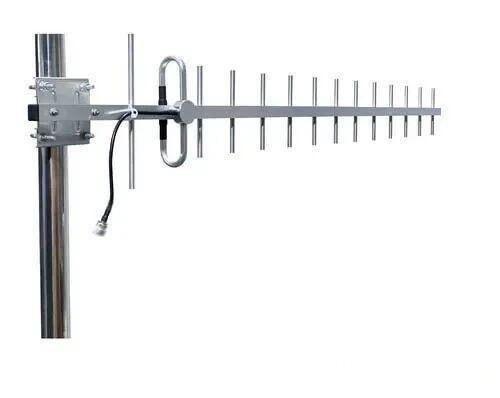 Outdoor Yagi TV Antenna


 Ceiling mount antenna
  Wall mount panel antenna
 Fiberglass Antenna
  Panel Antenna
  Parabolic Antenna
  Yagi Antenna


