

Views: 0 Author: Asialeren Publish Time: 2026-05-26 Origin: Site


If you've ever managed a motorcade in a busy urban area, you've probably seen a scene like this: a car suddenly appears on the wrong street, its trajectory jumps repeatedly on the map, or the GPS signal completely disappears between tall buildings.
For many fleet operators, logistics companies, and IoT solution providers, GPS trackers' location misalignment in urban environments is an unavoidable problem in daily operations. On highways or open sections, trackers tend to perform well; once vehicles enter dense urban areas, the frequency of location errors increases significantly.
The good news is that, in most cases, the problem is not with the trackers themselves. Urban environments present a unique set of signal challenges that affect satellite reception, positioning stability and tracking accuracy. Understanding these issues and finding ways to improve GPS accuracy can make fleet tracking more reliable.
Cities are one of the trickiest environments for GPS systems. Modern cities are riddled with obstacles and sources of interference that can degrade or even distort GNSS signals.
Here are some of the most common causes of inaccurate GPS trackers in cities.
GPS signals have difficulty penetrating underground structures.
When vehicles enter tunnels, underground garages, or underground loading and unloading areas, the satellite signal can become extremely weak or even disappear entirely.
Many fleet operators will encounter:
● Vehicle status "lost contact"
● track update lag
● The route was abruptly interrupted
Although some advanced GPS trackers can assist with positioning via cellular networks, the underground environment remains one of the major challenges facing fleet tracking systems.
Not all GPS tracker antennas have the same performance.
Many low-cost trackers use compact built-in antennas with limited sensitivity. In open outdoor environments, such antennas may be sufficient; but in cities, where the signal is already weak, antenna quality is crucial.
A weak antenna may be inadequate in the following areas:
● Satellite acquisition speed
● signal stability
● positioning accuracy
● location update rate
Due to this, professional fleet tracking systems are often equipped with external GNSS antennas.
Sometimes there is nothing wrong with the tracker itself - it's just that the installation is not ideal.
GPS antennas need as wide a view of the sky as possible. Unfortunately, many trackers are installed in:
● Under the seat
● Inside the metal compartment
● Under the dashboard
● Near electronic devices
These installation errors can significantly reduce satellite signal reception.
For better GPS performance, avoid installing:
● Metal shield
● Closed cabin
● High-power electronic equipment surrounding area
The correct fixed position can significantly improve the positioning accuracy of GPS in urban environments.
Many modern GPS trackers rely on both GNSS satellites and cellular networks to obtain location updates and transmit data.
In densely populated cities, cellular networks can be overloaded. Especially during peak hours, this can cause:
● Data upload is slow
● Vehicle tracking delay
● Intermittent connection
For fleet management systems that rely heavily on real-time updates, network congestion can cause significant tracking lag.
City vehicles are equipped with more electronic devices than ever before.
● Driving recorder
● LTE router
● Vehicle Control System
● Power converter
● All kinds of communication equipment
The electromagnetic interference generated by these devices may affect the normal operation of GPS trackers.
Industrial vehicles and commercial transportation systems are particularly vulnerable because a large number of on-board electronic systems operate simultaneously, making it difficult to completely avoid interference with each other.
One of the most effective ways to reduce GPS tracker signal problems is to upgrade to an external high-gain GNSS antenna.
Unlike small built-in antennas, external GNSS antennas are designed to achieve efficient reception under weaker satellite signals. It can provide:
· Higher signal sensitivity
· Faster satellite acquisition speed
· More stable signal quality
· More accurate positioning capabilities
For urban fleet tracking, the improvement brought about by this disparity is considerable.
Vehicles operating in the following scenarios:
· Dense downtown area
· Logistics hub
· Underground loading and unloading area
· Smart city environment
It is often possible to obtain more reliable positioning results by properly installing external GPS antennas.
High-quality GNSS antennas can also help reduce:
· GPS Drift
· signal interrupt
· Position jump
· The route is inaccurate
If your fleet tracking system is frequently inaccurate, here are a few simple improvements that could significantly help.
· Upgrade to high-gain GNSS antennas: Stronger antennas help improve satellite signal reception in harsh environments.
· Select the appropriate installation location: Avoid hidden or closed fixing points.
· Reduce electromagnetic interference: Keep GPS devices away from strong power systems and communication equipment.
· Update tracker firmware: Modern firmware updates often improve signal processing algorithms and positioning logic.
· Utilize industrial-grade hardware: Commercial fleet operations can benefit from more stable and durable GPS tracking devices.
When selecting a GNSS antenna for a tracker, buyers typically encounter two options: active and passive antennas.
· Built-in low noise amplifier (LNA)
· Higher signal sensitivity
· Suitable for fleet tracking and urban environments
· It is more stable in areas with weak signals
· Lower cost
· Design is simpler
· Suitable for basic application scenarios
· In dense urban environments, the effect is relatively limited
For professional fleet management, an active GNSS antenna is usually a more recommended option.

Urban environments always present challenges for GPS tracking systems. High-rises, tunnels, electromagnetic interference, and cellular congestion can all compromise positioning accuracy.
However, with a reasonable hardware configuration, fleet operators can significantly enhance the reliability of tracking.
Combine the following elements:
· Industrial grade GPS tracker
· High Gain External GNSS Antenna
It can significantly reduce GPS positioning biases in urban environments.
For fleets operating in smart cities, logistics centers, and dense metropolitan areas, reliable GPS tracking begins with greater signal reception and better antenna performance.
Professional Communication Products
ZHENGZHOU LEHENG ELECTRONIC TECHNOLOGY CO.,LTD
Tel:86-371-60911368
Email:info@global-antenna.com
Website:https://www.asialeren.com


 External GPS Antenna
  Ceramic antenna
  Internal GPS Antenna
  Surveying Antenna
 Magnet Antenna
  Patch Antenna
  Rubber Antenna
  Screw Antenna
  Spring Antenna
  Other Indoor Coverage Antenna&outdoor Wlan Antenna
 2.4G Antenna
  5.8G Antenna

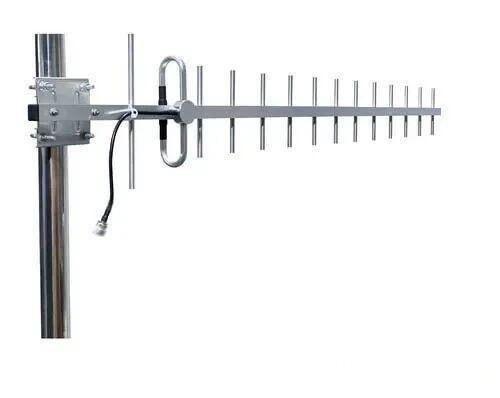 Outdoor Yagi TV Antenna


 Ceiling mount antenna
  Wall mount panel antenna
 Fiberglass Antenna
  Panel Antenna
  Parabolic Antenna
  Yagi Antenna


