 English
Views: 0 Author: Site Editor Publish Time: 2025-12-11 Origin: Site

A yagi antenna remains one of the most efficient and widely adopted directional antennas in modern wireless communication. Its simple mechanical structure, combined with high forward gain and excellent noise rejection, makes it a preferred choice for demanding long-distance links. Whether you are deploying an Outdoor WLAN antenna bridge across buildings, improving rural connectivity, boosting UHF/VHF performance, or optimizing IoT data transmission, the Yagi design offers a reliable and scientifically proven solution.
As wireless networks increasingly require stable, targeted, and interference-resistant coverage, understanding how a Yagi antenna works—and why engineers rely on it—has become more important than ever. The following guide breaks down the core principles, benefits, internal structure, real-world applications, and installation best practices to help you maximize performance in any outdoor environment.
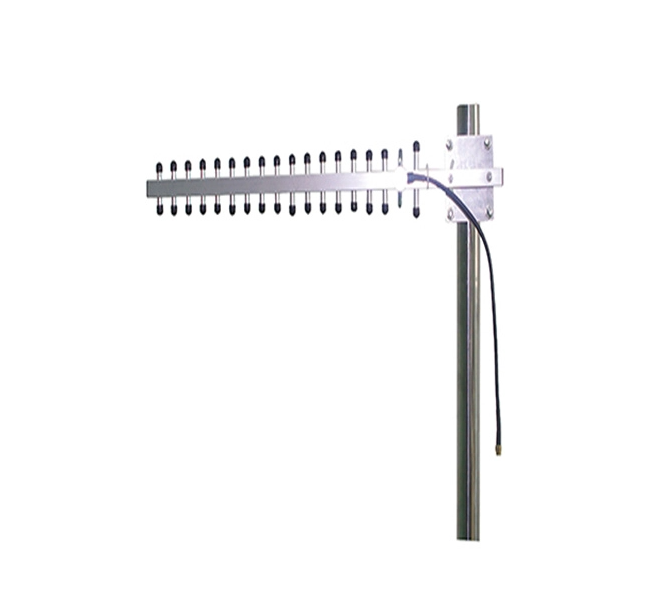
A Yagi antenna—also called a Yagi-Uda antenna—is a directional antenna that uses multiple metal rods arranged in a straight line. These rods interact to focus radio waves into one strong beam. Because of that, a Yagi can reach farther than dipole or omnidirectional antennas of the same size.
Engineers often pick Yagi antennas for:
Long-range Outdoor WLAN antenna links
VHF and UHF systems
FM radio
Emergency communication
IoT and telemetry
Rural internet setups
A Yagi antenna packs a surprising amount of performance into a simple structure. Below is an overview of why people in RF engineering rely on it so often.
| Feature | Why It Matters |
|---|---|
| High gain | Strong, concentrated signal for long-distance links |
| Directional beam | Reduces interference and boosts range |
| Lightweight + compact | Easy pole mounting outdoors |
| Low cost | Cheaper than dish antennas or panel antennas |
| Wide bandwidth (folded dipole models) | Useful for VHF/UHF and WLAN applications |
| Easy to build or scale | Perfect for DIY or professional aerospace designs |
A Yagi antenna’s directional behavior makes it ideal for an Outdoor WLAN antenna setup where you need stable long-distance point-to-point communication.
A Yagi antenna works because each metal rod plays a specific role.
These rods—called “elements”—shape how radio waves travel and how strong the final beam becomes.
This is the only element connected to the feedline.
Usually a half-wave dipole
Can be a folded dipole for wider bandwidth
Converts electrical power into electromagnetic waves
Also receives signals coming back from the air
When people talk about “feeding a Yagi antenna,” they’re really talking about feeding this driven element.
The reflector sits behind the driven element.
Slightly longer than the dipole
Pushes energy toward the front
Reduces backward radiation
Improves the front-to-back ratio
This reflective behavior is why the Yagi antenna produces a strong forward beam—perfect for Outdoor WLAN antenna links needing clear direction.
Directors are placed in front of the driven element.
Each one is shorter than the dipole
They pull the electromagnetic energy forward
Add more gain when you increase the number of directors
More directors = narrower beamwidth + higher gain.
That’s why long Yagi antennas look like spears with many short rods pointing in one direction.
A yagi antenna might look simple from the outside—just a line of metal rods—but inside, a lot of smart physics is happening.
Its performance comes from mutual coupling, a phenomenon where each element affects the others through electromagnetic interaction. This interaction shapes the signal so the antenna sends or receives energy in one strong direction. That’s why engineers often choose a Yagi for long-distance Outdoor WLAN antenna systems where you need stable, focused links.
When radio waves reach the driven element, the element begins radiating energy based on the frequency coming from the transmitter. But what makes a Yagi unique is how the reflector and directors respond to that energy. These surrounding elements don’t connect to the feedline; instead, they pick up induced currents from the driven element. Because each rod has a slightly different length, it resonates differently. These small differences cause the waves to shift phase—either lagging behind or moving slightly ahead.
Here’s the extended chain reaction that explains how the Yagi antenna forms its powerful beam:
The transmitter injects RF power into the driven element, which starts radiating in all directions like a typical dipole.
The reflector, placed behind the driven element, picks up some of this energy, delays it slightly, and re-radiates it forward. This creates constructive interference in the forward direction and suppresses signal behind the antenna.
The directors, which sit in front, resonate at a slightly higher frequency and pull the energy forward by producing currents that radiate a little earlier than the driven element.
As the signal interacts with multiple directors, the forward lobe becomes narrower, more focused, and stronger.
The final result is a clean, high-gain beam that travels much farther than the energy from a simple dipole.
This entire process—reflector pushing, directors pulling, and the driven element feeding energy—creates the classic directional pattern a yagi antenna is known for. In real-world installations, especially for Outdoor WLAN antenna setups between buildings or across open land, this directional boost means better stability, less noise, and more reliable long-distance communication.
| Antenna Type | Coverage | Gain | Best Use |
|---|---|---|---|
| Yagi antenna | Directional | High | Long-distance Outdoor WLAN antenna links, TV, radio |
| Dipole | Wide | Medium | Indoor WiFi, basic communication |
| Omni | 360° | Low | Hotspots, routers |
| Parabolic dish | Very narrow | Very high | Satellite, professional point-to-point |
| Panel antenna | Semi-directional | Medium-high | Urban WLAN bridges |
A Yagi antenna hits the sweet spot between cost, performance, and ease of installation.
Many large properties—farms, industrial parks, workshops, and remote buildings—struggle with weak WiFi because access points sit far apart. A yagi antenna solves this by sending a concentrated beam toward the other end of the network link. Since the signal doesn’t scatter like an omnidirectional antenna, interference drops and connection stability improves. That’s why installers often choose a Yagi for long-distance Outdoor WLAN antenna bridges, especially when trees, walls, or equipment yards block most normal WiFi signals.
Homes in rural or mountainous areas often deal with weak TV reception because broadcast towers sit miles away. The narrow forward beam of a yagi antenna acts like a spotlight, capturing faint signals that would normally fade. This focused pickup helps older analog broadcasts and modern digital TV systems achieve clearer images and fewer dropouts. Even lightweight rooftop installations benefit from the Yagi design since it maintains strong reception despite wind or weather changes.
Ham operators love the control and reach that Yagi antennas provide. Whether they operate on VHF, UHF, or specialized bands, a Yagi lets them push signals much farther using the same transmitter power. The directional beam reduces background noise and helps operators make reliable contacts during contests, emergency drills, and long-distance DX communication. Many hams even rotate their Yagi arrays to track signals across the horizon.
When communication simply cannot fail, the dependable performance of a yagi antenna becomes invaluable. Field teams use them to establish point-to-point links during disasters, allowing command units to stay connected when cell towers collapse. Military personnel also rely on Yagis because they cut through interference, support secure directional links, and perform consistently in harsh weather or unstable environments.
Low-power IoT devices sometimes need to send data over long distances, such as environmental sensors placed in forests, agricultural monitoring stations, or utility meters along remote infrastructure. A Yagi boosts the reach of these small transmitters by steering the signal in a single direction. This efficiency helps extend battery life and ensures reliable data transfer where omnidirectional antennas would struggle.
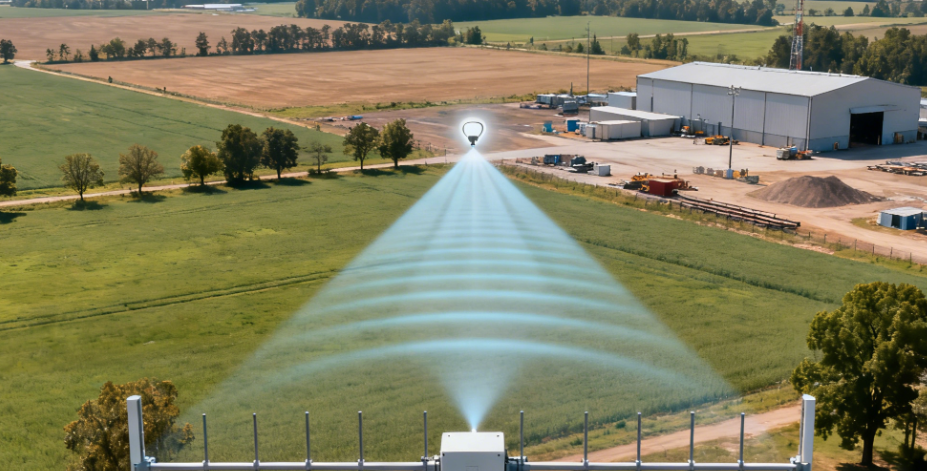
A Yagi doesn’t guess where your signal source is—it expects you to point it. Installers usually take time to align the directors toward the target location, whether it’s a WiFi access point, a cellular base station, or a distant broadcast tower. Small adjustments can make big differences in gain, especially for Outdoor WLAN antenna links that span several hundred meters or more.
Height reduces obstructions such as buildings, crops, trees, and even parked vehicles. The clearer the path, the stronger the link. Mounting a yagi antenna on a tall mast or rooftop helps the beam travel farther without bouncing off the ground or nearby structures.
Signals weaken as they travel through cable. Low-loss coax preserves the high-gain advantage of the antenna and keeps your Outdoor WLAN antenna system stable. Installers often choose thicker coax runs or shorter cable lengths so the Yagi’s performance isn’t wasted before the signal even reaches the equipment.
Metal sheds, fences, air-conditioning units, or steel beams can distort the antenna’s radiation pattern. When a yagi antenna sits too close to conductive surfaces, the beam spreads unpredictably or loses strength. Keeping several feet of clearance helps maintain the designed forward gain.
Rain and moisture don’t seem harmful, but they can gradually detune connectors and affect impedance at high frequencies. Wrapping exposed joints, sealing coax connections, and using corrosion-resistant hardware extend the lifespan of both the Yagi and your Outdoor WLAN antenna installation. Good weatherproofing also prevents intermittent drops that often confuse users.
A: A yagi antenna is mainly used for long-distance directional communication, including Outdoor WLAN antenna links, TV reception, amateur radio, telemetry, and remote monitoring.
A: Yes, a Yagi provides higher gain and a focused beam, making it far more effective for long-range point-to-point communication than an omnidirectional antenna.
A: Range depends on power, alignment, and environment, but many properly installed Yagi antennas can reach several kilometers, especially in Outdoor WLAN antenna setups with clear line-of-sight.
A: Yes, it concentrates most of the signal in one strong forward direction, which reduces interference and improves link quality.
A: Point the directors—the shorter elements—toward the signal source, such as a WiFi access point, cell tower, TV tower, or another building in a WLAN bridge.
A yagi antenna may appear mechanically simple, but its performance is rooted in precise electromagnetic behavior and smart directional energy control. From Outdoor WLAN antenna projects to emergency communication, remote sensor networks, and TV reception in challenging environments, its ability to deliver stable, long-range, high-gain connectivity continues to make it one of the most trusted antenna types worldwide. With proper installation, alignment, and weatherproofing, a Yagi can dramatically improve link quality while keeping costs under control.
If you are looking for professionally engineered Yagi antennas, Outdoor WLAN antenna solutions, or custom RF communication hardware, Zhengzhou LEHENG Electronic Technology Co., Ltd. offers high-performance products designed for reliability and real-world durability. With strong R&D capabilities and advanced manufacturing, LEHENG provides antenna systems that deliver exceptional gain, stability, and long-distance performance across industrial, commercial, and outdoor networking projects.


