

Views: 0 Author: Site Editor Publish Time: 2026-01-21 Origin: Site


5G networks demand specialized antennas to handle high-speed data, low latency, and massive connectivity. Omnidirectional and directional 5G antennas represent two primary types, each suited to distinct use cases like urban mobility or rural fixed links.
5G antennas transmit and receive signals across sub-6 GHz and mmWave frequencies, enabling speeds up to 100 times faster than 4G. They support beamforming and MIMO technologies for precise signal direction and multiple data streams. Unlike older generations, 5G antennas manage wider bandwidths and higher frequencies, requiring designs that minimize interference while maximizing coverage.
Omnidirectional 5G antennas radiate signals in a 360-degree horizontal pattern, resembling a lightbulb's glow. They excel in environments with signals from multiple directions, such as urban areas or mobile setups. Key advantages include simple installation without alignment and consistent coverage for devices in motion, though signal strength spreads evenly, limiting range.
Typical gain ranges from 3-9 dBi, making them ideal for hotspots, vehicles, or indoor Wi-Fi routers integrated with 5G modems. In 5G contexts, they handle sub-6 GHz bands effectively for broad IoT connectivity.
Directional 5G antennas focus energy in a narrow beam, like a spotlight, boosting range and signal quality toward a specific target. They offer higher gain (10-25 dBi or more) for penetrating obstacles or reaching distant towers. This focus suits point-to-point links, such as backhaul or rural broadband.
Yagi, parabolic, or panel designs dominate, often requiring precise aiming via apps or signal meters. In mmWave 5G, their narrow beamwidth combats path loss at high frequencies.
Feature | Omnidirectional Antennas | Directional Antennas |
Coverage Pattern | 360° horizontal | Narrow beam (e.g., 30-60°) |
Gain | Moderate (3-9 dBi) | High (10+ dBi) |
Installation | Easy, no alignment | Requires pointing |
Best For | Mobile, urban, multi-source | Fixed, long-range, rural |
Range | Shorter, even spread | Longer in focus direction |
Omnidirectional options suit dynamic scenarios but weaken over distance; directional types amplify targeted signals at the cost of flexibility.
Omnidirectional antennas power city-wide 5G access points, Anti jamming antennas, or fleet vehicles needing all-around reception. They thrive where towers surround the user, like Chattogram's dense networks.
Directional antennas dominate fixed installations: rural homes linking to far-off towers, enterprise backhaul, or stadium temporary setups. Pair them with 5G routers for stable, high-throughput connections in low-signal zones.
Hybrid systems combine both for optimal coverage, such as omni for local devices and directional for backbone links.
Omnidirectional Pros:
Versatile for mobility.
Quick deployment.
Handles multipath signals well.
Cons:
Lower gain limits distance.
Prone to interference in crowded spectra.
Directional Pros:
Superior range and SNR.
Interference rejection.
Efficient for 5G mmWave.
Cons:
Alignment sensitivity.
A narrow field risks missing signals if towers shift.
Choose based on the environment: test with signal analyzers for best results.
Asialeren, a leading Chinese manufacturer and supplier, produces robust 5G antennas compatible with 3G/4G/5G bands. Their omnidirectional and directional models feature weatherproof builds, high gain, and MIMO support for seamless upgrades. Sourced directly from factories in China, these antennas offer cost savings without compromising quality—ideal for e-commerce resellers or industrial projects.
What makes 5G antennas faster than 4G?
5G antennas support wider bands like sub-6GHz and mmWave (up to 40GHz), enabling speeds 100x faster than 4G via massive MIMO for parallel data streams.
How do 5G antennas reduce latency?
They use beamforming to direct signals precisely, achieving 1ms latency by minimizing interference and enabling edge processing—ideal for real-time apps like AR or IoT.
Are combo 5G/4G/3G antennas backward compatible?
Yes, AsiaLeren's multi-band models cover 600-6000MHz, auto-switching from 3G (144 kbit/s) to 5G peaks for seamless roaming and no dead zones.
Can 4G antennas work on 5G devices?
No, 4G antennas lack mmWave and advanced MIMO support; use dedicated 4G/5G combos for full speed and connectivity.
How do external antennas improve router connectivity?
High-gain (5-10 dBi) omnis boost signals in weak areas, doubling throughput via MIMO—perfect for routers in vehicles or rural e-commerce setups.
What installation tips maximize performance?
Mount high with line-of-sight to towers, use low-loss cables, and test with signal apps; weatherproof designs suit indoor/outdoor use.


 External GPS Antenna
  Ceramic antenna
  Internal GPS Antenna
  Surveying Antenna
 Magnet Antenna
  Patch Antenna
  Rubber Antenna
  Screw Antenna
  Spring Antenna
  Other Indoor Coverage Antenna&outdoor Wlan Antenna
 2.4G Antenna
  5.8G Antenna

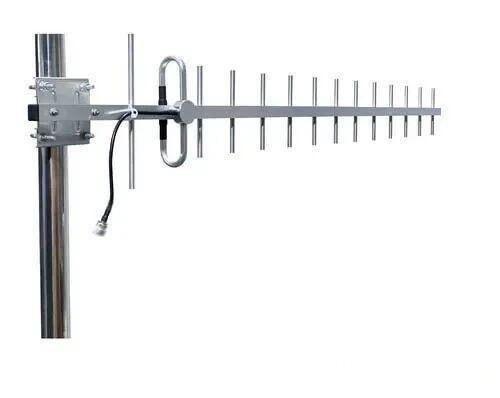 Outdoor Yagi TV Antenna


 Ceiling mount antenna
  Wall mount panel antenna
 Fiberglass Antenna
  Panel Antenna
  Parabolic Antenna
  Yagi Antenna


