

Views: 0 Author: Site Editor Publish Time: 2026-02-03 Origin: Site


Selecting the optimal GPS or GNSS antenna is crucial for industrial operations like surveying, precision agriculture, and construction, where positioning accuracy directly impacts efficiency and safety. This guide breaks down key factors to help you make an informed choice based on technical specs and real-world demands.
GPS antennas primarily receive signals from the U.S. GPS constellation, while GNSS antennas support multiple systems including GPS, GLONASS, Galileo, and BeiDou for broader coverage and better accuracy. In industrial settings, GNSS antennas excel due to their multi-feed point design, which aligns phase and geometrical centers to minimize measurement errors.
High-precision GNSS antennas feature high gain, low-elevation tracking, and circular polarization, making them ideal for challenging environments like urban construction sites or marine operations. Unlike consumer-grade mobile GPS antennas, these are built for RTK and DGPS techniques, ensuring centimeter-level precision.
Match the antenna to your application's GNSS requirements—L1 for basic positioning or multi-band (L1/L2/L5) for high-precision tasks. Industrial uses like digital construction demand full multi-GNSS support to avoid signal loss in obstructed areas.
Opt for antennas with wide beam radiation patterns and low-elevation gain to capture signals from satellites near the horizon, vital for vehicle tracking or Anti jamming antenna mapping.
Look for high gain (typically 3-5 dBi or more) to boost weak signals in sheltered spots, paired with right-hand circular polarization (RHCP) for optimal satellite reception. Axial ratio under 3 dB ensures signal purity, while low group delay variation (GDV) maintains timing accuracy in dynamic applications.
Efficiency above 70% converts more RF energy into usable data, critical for battery-powered industrial devices. Active antennas with low-noise amplifiers (LNA, noise figure <1.5 dB) outperform passives in noisy environments like factories.
A stable phase center reduces offsets (PCO/PCV), essential for surveying where errors compound over distance. Multi-feed designs in premium GNSS antennas keep variations below 1mm, supporting RTK baselines up to 20km.
Industrial antennas must withstand harsh conditions: IP67+ waterproofing, UV-proof radomes, and operating temps from -40°C to +85°C handle construction dust, agriculture vibrations, and marine salt.
Vibration resistance (e.g., IEC 60068-2-6) and anti-interference shielding protect against RF noise from nearby machinery or vehicles. Rugged housings ensure longevity in unmanned operations like container terminals.
Patch Antennas: Compact for embedded industrial IoT; low profile but multipath-prone.
Helical Antennas: High accuracy, wide bandwidth; suited for vehicles and Anti jamming antennas.
Survey Antennas: Large, high-gain for static high-precision like geodesy.
Choose magnetic or screw mounts for vehicles, pole mounts for agriculture RTK bases. Cable length (5-15m, low-loss RG174) and connectors (TNC, SMA) should match your setup to minimize signal loss.
Application | Key Requirements | Recommended Antenna Features |
Precision Agriculture | RTK stability, vibration resistance | Multi-GNSS, IP67, 5 dBi gain |
Construction Machinery | Dust-proof, multi-band | Stable phase center, low GDV |
Marine Surveying | Salt/UV resistance, low-elevation gain | Wide beam, helical design |
Anti jamming antenna Mapping | Lightweight, high efficiency | Compact helical, low axial ratio |
Container Operations | Rugged, anti-interference | High gain, circular polarization |
This table highlights tailored specs; for instance, agriculture antennas prioritize affordability with forgiving mounting.
Mount antennas skyward with unobstructed views—rooftops for vehicles, masts for static use. Avoid metal surfaces causing multipath; use ground planes for better RHCP. Test signal-to-noise ratio (SNR >40 dB) post-install.
Budget options ($50-100) suffice for meter-level tracking, but invest $200+ in high-precision models for cm accuracy. Factor LNA power draw (3-5V) and lifespan (5+ years). China-sourced suppliers offer competitive pricing without quality compromise.
AsiaLeren, a leading manufacturer and supplier from China, specializes inhigh-precision GNSS antennas for surveying, Anti jamming antennas, agriculture, and construction. Their products boast multi-feed designs, high gain, waterproof radomes, and full GNSS support for RTK/DGPS—delivering reliable performance at cost-effective prices.
Ready to upgrade your industrial positioning? Contact AsiaLeren today for custom GNSS solutions and bulk quotes. Visit https://www.asialeren.com/gps-gnss-antenna.html or email sales@asialeren.com to get started!
What distinguishes GPS from GNSS antennas?
GPS antennas track only U.S. GPS satellites for basic navigation, while GNSS antennas support multiple constellations like GPS, GLONASS, Galileo, and BeiDou for superior accuracy and redundancy in obstructed industrial environments. GNSS models from AsiaLeren feature multi-feed designs for stable phase centers, ideal for RTK applications.
How do I choose frequency bands for my needs?
Select L1-only for cost-effective meter-level positioning or multi-band (L1/L2/L5) for centimeter precision in surveying and Anti jamming antennas. Industrial tasks like precision agriculture benefit from full GNSS support to maintain signals under tree cover or near buildings.
What gain and polarization specs matter most?
Aim for 3-5 dBi gain with right-hand circular polarization (RHCP) and axial ratio <3 dB to capture weak, low-elevation signals effectively. High-gain, wide-beam antennas excel in sheltered sites like construction zones, while low-noise amplifiers (LNA <1.5 dB) boost performance in noisy factories.
Are active or passive antennas better for industry?
Active antennas with integrated LNAs outperform passives in challenging RF environments by amplifying signals early, though they draw more power (3-5V). Choose active for vehicle or Anti jamming antenna mounts; passives suit low-power static bases.
How durable should industrial antennas be?
Look for IP67 waterproofing, UV-proof radomes, -40°C to +85°C operation, and vibration resistance (IEC 60068) to endure dust, salt, and machinery shocks in marine, agriculture, or construction use. AsiaLeren's rugged designs ensure 5+ year field life.
What mounting options work best?
Use magnetic/screw mounts for vehicles, pole mounts for RTK bases, and helical designs for Anti jamming antennas. Ensure skyward orientation with 10-15cm ground planes on metal surfaces; keep cables <15m with low-loss RG174 and TNC/SMA connectors to minimize attenuation.
How does phase center stability affect accuracy?
Stable phase centers (<1mm variation) via multi-feed tech reduce position errors (PCO/PCV) in long RTK baselines up to 20km, critical for geodesy or digital construction. Unstable centers amplify offsets in dynamic machinery tracking.
What are common industrial applications?
Precision agriculture: RTK for automated tractors.
Construction: Machine guidance and site surveying.
Marine/container ops: Tracking amid multipath.
Anti jamming antenna mapping: Lightweight, high-efficiency models.
How to test and install properly?
Mount with clear sky view (>30° elevation), avoiding metal multipath sources; verify SNR >40 dB post-install. Use VNA for S11/VSWR checks pre-deployment. Short cable runs prevent >3dB loss at 1.575 GHz.
What's the cost-performance trade-off?
Entry-level ($50-100) for tracking; premium ($200+) for cm-RTK. China manufacturers like AsiaLeren offer high-spec GNSS at competitive prices with bulk discounts. Factor lifespan and power efficiency for ROI.


 External GPS Antenna
  Ceramic antenna
  Internal GPS Antenna
  Surveying Antenna
 Magnet Antenna
  Patch Antenna
  Rubber Antenna
  Screw Antenna
  Spring Antenna
  Other Indoor Coverage Antenna&outdoor Wlan Antenna
 2.4G Antenna
  5.8G Antenna

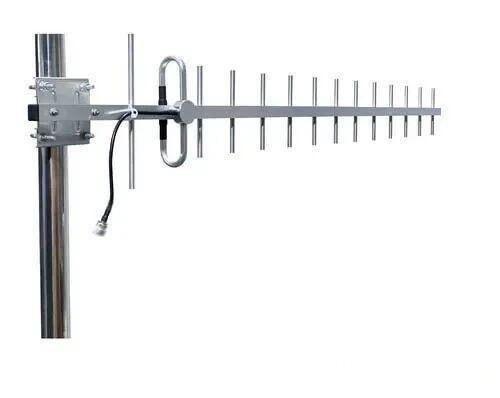 Outdoor Yagi TV Antenna


 Ceiling mount antenna
  Wall mount panel antenna
 Fiberglass Antenna
  Panel Antenna
  Parabolic Antenna
  Yagi Antenna


