

Views: 0 Author: Site Editor Publish Time: 2025-07-08 Origin: Site


Coaxial cables have been fundamental to the transmission of high-frequency signals since their inception in the late 19th century. These cables, known for their unique structure of concentric conductors separated by a dielectric insulator, are pivotal in various applications ranging from telecommunications to broadcasting. Understanding the different types of coaxial cables is essential for professionals aiming to optimize signal transmission and minimize interference. This comprehensive analysis delves into the three primary types of Coaxial Cables, exploring their construction, applications, and the underlying principles that govern their performance.
The evolution of coaxial cables can be traced back to the pioneering work of Oliver Heaviside in 1880. Heaviside's British patent outlined the use of coaxial design to eliminate signal interference between parallel cables, a significant advancement in electrical engineering. His insights laid the groundwork for modern transmission lines, enabling efficient and reliable communication over long distances. The first practical applications of coaxial cables emerged with early transatlantic telegraph cables, demonstrating their capacity to carry signals with minimal loss.
At the core of coaxial cable technology is the principle of confining electromagnetic fields within the cable's structure. The inner conductor carries the signal, while the outer conductor, or shield, serves as a ground reference and barrier against external electromagnetic interference. The dielectric insulator between these conductors maintains consistent spacing and determines the cable's characteristic impedance. This design ensures efficient signal transmission with low attenuation.
Understanding the electrical properties of coaxial cables is crucial for selecting the appropriate type for specific applications. Key parameters include:
Characteristic Impedance (Z0): Dictated by the ratio of the inner and outer conductor diameters and the dielectric constant of the insulator. Common impedances are 50 Ω and 75 Ω.
Attenuation: Loss of signal strength measured in decibels per unit length, influenced by conductor resistance and dielectric losses.
Voltage Handling: Maximum voltage capacity determined by the dielectric strength and dimensions of the cable.
Frequency Response: Ability to transmit signals effectively across a range of frequencies without significant loss or distortion.
Coaxial cables are diversified into various types to cater to specific needs and environments. The three primary types are:
Rigid Coaxial Cables
Semi-Rigid Coaxial Cables
Flexible Coaxial Cables
Rigid coaxial cables consist of solid inner and outer conductors separated by disc insulators. The outer conductor is typically a smooth or corrugated copper tube, providing excellent shielding and minimal signal loss. These cables are designed for permanent installations where flexibility is not required. They are commonly used in high-power transmission lines, antenna feeders, and broadcast facilities.
The inner conductor is usually a solid copper rod, chosen for its high conductivity. The dielectric insulator can be air with spacers or solid materials like polyethylene or Teflon. The outer conductor's rigidity ensures precise conductor spacing, essential for maintaining consistent characteristic impedance and minimizing reflections.
Due to their low attenuation and high power handling capabilities, rigid coaxial cables are ideal for transmitting signals in applications such as:
Broadcast transmitters
Cellular base stations
Satellite communication systems
Semi-rigid coaxial cables feature a solid metal outer conductor, typically copper, with a dielectric made of PTFE (Teflon) and a solid inner conductor. These cables offer a balance between performance and flexibility, allowing for precise, stable performance in high-frequency applications up to 50 GHz.
The metal outer sheath provides superior shielding effectiveness, reducing electromagnetic interference and signal leakage. The PTFE dielectric ensures low loss and high thermal stability, making these cables suitable for demanding environments.
Semi-rigid coaxial cables are commonly used in:
Military and aerospace systems
Microwave circuits
High-frequency test equipment
Flexible coaxial cables are characterized by a braided metal shield and flexible dielectric materials. The inner conductor can be solid or stranded to enhance flexibility. These cables are prevalent in applications requiring movement or frequent bending.
The braided shield, usually made from copper or aluminum, allows the cable to bend without affecting electrical properties significantly. Dielectric materials such as foam polyethylene reduce the cable's weight and improve its flexibility while maintaining low-loss characteristics.
Flexible coaxial cables are widely used in:
Consumer electronics (televisions, VCRs)
Data communication networks (Ethernet cables)
Mobile radio communication
Comparing the three types of coaxial cables involves analyzing their electrical and mechanical properties to determine suitability for specific applications.
Rigid coaxial cables exhibit the lowest attenuation due to their solid conductors and minimal dielectric losses. Semi-rigid cables offer slightly higher attenuation but maintain excellent performance at high frequencies. Flexible cables have higher attenuation, making them less suitable for long-distance high-frequency transmission without amplification.
| Cable Type | Attenuation (dB/100m at 1GHz) | Max Frequency (GHz) |
| Rigid | 5.0 | 10 |
| Semi-Rigid | 6.5 | 50 |
| Flexible | 10.0 | 3 |
Power handling capability is critical in high-power applications. Rigid cables excel due to their larger conductor sizes and air dielectric, which allows for higher peak voltages before dielectric breakdown occurs. Semi-rigid cables have moderate power handling, while flexible cables are limited due to smaller conductor sizes and solid dielectrics.
Shielding effectiveness is essential to prevent signal leakage and minimize interference. Rigid and semi-rigid cables offer superior shielding due to their solid outer conductors. Flexible cables have lower shielding effectiveness because of gaps in the braided shield, although designs with multiple layers (e.g., quad-shielded cables) can enhance performance.
Selecting the appropriate coaxial cable involves balancing electrical performance with mechanical requirements such as flexibility, weight, and environmental resistance.
Cables used in outdoor or harsh environments must resist ultraviolet light, moisture, and temperature extremes. Rigid cables with protective jackets are suitable for such conditions. Flexible cables designed for burial include water-blocking gels to prevent moisture ingress.
Applications requiring frequent movement, such as robotics or portable equipment, necessitate flexible cables. The trade-off is higher attenuation and lower shielding effectiveness. Understanding the application's mechanical demands ensures the cable's longevity and reliability.
Innovation in coaxial cable design continues to address the evolving needs of high-frequency communication systems.
Research into advanced dielectric materials aims to reduce signal attenuation. Foam dielectrics and engineered polymers offer lower dielectric constants, enabling cables to perform efficiently at higher frequencies with reduced losses.
Enhanced shielding, such as double or quad shielding with combinations of foil and braid, improves electromagnetic compatibility (EMC). These advancements are critical in environments with high levels of electromagnetic interference, ensuring signal integrity.
Understanding the three primary types of coaxial cables—rigid, semi-rigid, and flexible—is essential for engineers and technicians involved in signal transmission. Each type offers distinct advantages and is suited to specific applications. By selecting the appropriate cable based on electrical properties, environmental conditions, and mechanical requirements, professionals can optimize system performance and reliability. The ongoing advancements in coaxial cable technology continue to support the ever-increasing demands for high-speed, high-frequency communication systems.
For further insights into the applications and capabilities of different Coaxial Cables, continued research and exploration of emerging technologies are encouraged.
1. What are the main differences between rigid, semi-rigid, and flexible coaxial cables?
Rigid coaxial cables have solid outer conductors and are used in fixed installations due to their lack of flexibility. Semi-rigid cables feature a solid metal outer sheath but offer limited bending capability, suitable for precise applications. Flexible cables have braided shields, allowing for significant flexibility but with slightly higher signal loss and lower shielding effectiveness.
2. How does the dielectric material affect coaxial cable performance?
The dielectric material impacts the cable's capacitance, characteristic impedance, and attenuation. Materials with lower dielectric constants, such as foam polyethylene, reduce signal loss and allow for higher frequency transmission. The choice of dielectric also influences the cable's voltage handling and thermal properties.
3. Why is shielding effectiveness important in coaxial cables?
Shielding effectiveness determines a cable's ability to prevent external electromagnetic interference from affecting the signal and to minimize signal leakage. High shielding effectiveness is crucial in environments with significant electromagnetic noise or where signal integrity is paramount, such as in military or aerospace applications.
4. Can flexible coaxial cables be used for high-frequency applications?
Flexible coaxial cables are generally limited to lower frequency applications due to higher attenuation and less stable characteristic impedance at high frequencies. For high-frequency applications above a few GHz, semi-rigid or rigid coaxial cables are preferred due to their superior performance.
5. How do environmental factors influence coaxial cable choice?
Environmental factors such as temperature extremes, moisture, UV exposure, and mechanical stress can degrade cable performance over time. Selecting cables with appropriate jackets, protective coatings, and materials resistant to these factors ensures long-term reliability and performance in specific environments.
6. What role does characteristic impedance play in coaxial cable applications?
Characteristic impedance is fundamental for impedance matching to minimize reflections and maximize power transfer between the cable and connected equipment. Common impedance values are 50 Ω for RF applications and 75 Ω for video and cable television, chosen based on optimizing power handling and signal attenuation.
7. Are advancements in coaxial cable technology keeping pace with modern communication demands?
Yes, ongoing research into materials science and cable design continues to enhance coaxial cable performance. Innovations such as advanced dielectrics, improved shielding techniques, and specialized constructions enable coaxial cables to meet the increasing requirements for higher frequencies, greater data rates, and enhanced signal integrity in modern communication systems.


 External GPS Antenna
  Ceramic antenna
  Internal GPS Antenna
  Surveying Antenna
 Magnet Antenna
  Patch Antenna
  Rubber Antenna
  Screw Antenna
  Spring Antenna
  Other Indoor Coverage Antenna&outdoor Wlan Antenna
 2.4G Antenna
  5.8G Antenna

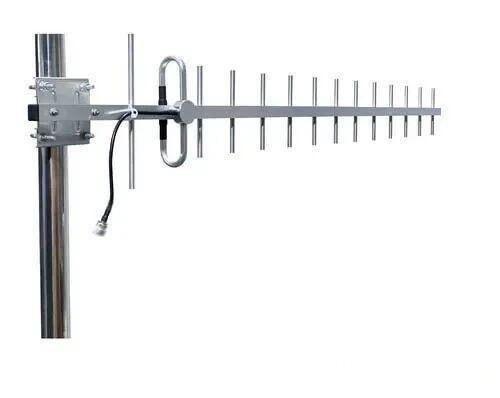 Outdoor Yagi TV Antenna


 Ceiling mount antenna
  Wall mount panel antenna
 Fiberglass Antenna
  Panel Antenna
  Parabolic Antenna
  Yagi Antenna


