Views: 0 Author: Site Editor Publish Time: 2026-01-22 Origin: Site

Imagine a busy hospital in which doctors are unable to retrieve patients' medical records in time due to interruption of mobile signals;In the conference center of a high-end hotel, the transnational video conference was interrupted due to Wi-Fi stuttering;Or a modern warehouse, the intelligent logistics system is paralyzed by the loss of Internet of Things signals.These seemingly isolated problems actually point to the same core crux: the failure of indoor wireless coverage.
In many indoor antenna schemes,Ceiling Antenna is one of the most common forms used by engineers and system integrators.
This paper will deeply analyze the working principle of the ceiling antenna,Different types of ceiling antennas (including Omni ceiling antenna, Directional ceiling antenna, etc.)To address specific connectivity challenges in the business environment.
Ceiling antenna is a kind of antenna specially designed to be installed on the ceiling surface.Its core function is to receive, amplify and re-radiate wireless signals to eliminate signal blind spots in indoor space.Unlike traditional outdoor antennas or router built-in antennas, it is optimized for complex indoor radio wave propagation environments.The problem of serious attenuation after the signal passes through the wall is solved.

Ceiling antennas usually do not work independently, but as the key end node of the distributed antenna system.The workflow can be simplified into three steps:
1. Signal reception: Connect to a signal source (e.g., cellular signal booster, Wi-Fi access point) via coaxial cable.
2. Signal processing and radiation: Antennas convert electrical signals into electromagnetic waves and release them into space in a specific radiation pattern.
3. Two-way communication: simultaneously receive signals from user devices (such as mobile phones and sensors) and transmit them back to the network.
This mode of operation makes it a passive and efficient signal coverage extension tool.

Different types of antennas address different building structures and usage scenarios.Understanding their differences is the first step in developing an effective coverage scheme.
· How it works: Radiates a signal evenly 360 degrees in the horizontal direction, like a "signal doughnut.".
· Typical application scenarios:
o Open office area
o Hotel lobby, conference center
o Common areas of retail stores
· Business value: Achieve uniform coverage of large areas with the minimum number of devices, reducing initial deployment costs and complexity.
· How it works: Focuses signal energy in a specific direction (such as a fan or beam), covering greater distances and providing greater penetration.
· Typical application scenarios:
o The hotel has a long corridor
o The promenade of the airport terminal
o Loading and unloading passage of large warehouse
· Commercial value: accurately solve the problem of weak signal in linear or long-distance areas, avoid signal waste and improve efficiency.
· The working principle is that a plurality of resonant circuits are integrated in a single antenna,Supports multiple bands simultaneously (e.g., 700MHz 5G + 2.4GHz Wi-Fi + 1800MHz 4G).
· Typical application scenarios:
o Corporate headquarters that need both cellular and Wi-Fi
o Smart parks that support public safety (such as fire intercom) and business networks
o Modern plant with multiple IoT technologies deployed
· Commercial value: "One line with multiple functions" greatly simplifies wiring and saves ceiling space.And significantly reduce the capital and maintenance costs of deploying separate antennas for each network.
· Working principle: adopt ultra-thin or camouflage design (such as sprayable shell and integrated lamp design).Visual invisibility while maintaining performance.
· Typical application scenarios:
o High-end hotels, luxury shops, art galleries
o Historic Building Renovation Project
o Any environment with extremely high requirements for interior aesthetics
· Business value: Protect and enhance the design integrity of the space and the customer experience while ensuring technical performance.Meet the dual needs of high-end projects.
Difference between Ceiling Antenna and other indoor antennas
Antenna type | Overlay property | Applicable scenarios |
Ceiling Antenna | Uniform downward coverage | Most interior spaces |
Panel Antenna | Directional coverage | A particular direction or area. |
Wall-mount Antenna | Flexible installation | Small-scale or supplementary blindness |
Project requirements | Antenna type is recommended | Key considerations |
Uniform coverage of large areas (e.g., open offices) | Omni Ceiling Antenna | Installation density, antenna gain, ceiling height |
Solve long distance/penetration challenges (e.g. corridors, cubicles) | Directional Ceiling Antenna | Pointing angle, front-to-back ratio and precise positioning of target area |
Integration of multiple wireless services (e.g. 5G + Wi-Fi + IoT) | Multi-band Ceiling Antenna | List of bands to be supported, PIM indicators |
Maintain the aesthetic integrity of the space | Low-profile / Hidden Ceiling Antenna | Size, color/finish customization options, thermal performance |
Choosing the right antenna type is only half the battle. Professional deployment needs to consider:
1. Preliminary site survey: use professional equipment to measure the existing signal strength and identify the blind area, which is the basis of the design scheme.
2. Cabling infrastructure: high quality low loss cables and compliant grounding systems,It is the key to ensure that the signal quality is not destroyed by cable attenuation.
3. Compliance and certification: Ensure that the antenna products comply with the radio regulations and safety certifications (such as FCC, CE) of the country where the project is located.
4. Future extensibility: When choosing a Multi-band Ceiling Antenna,Support capability for future new frequency bands (such as future 5G-A frequency band) shall be reserved.
Sum up
Ceiling antennas are far more than simple "signal amplifiers." They are meticulously designed and deployed engineering solutions based on architecture, radio propagation theory, and specific business needs. From hospitals ensuring uninterrupted communication for emergency responders to shopping malls providing seamless mobile payment experiences for thousands of customers, the right ceiling-mounted antenna system is a reliable, efficient, and future-proof cornerstone of wireless connectivity in modern infrastructure.
Whether it's the convenience of omnidirectional coverage, the efficiency of directional focusing, the economy of multi-frequency integration, or the aesthetics of concealed installation, its core value remains constant: transforming intangible wireless signals into tangible guarantees for business operations and enhanced user experience.
If you are planning a wireless coverage project for an office building, hotel, hospital, or industrial facility and would like a free assessment of a solution tailored to your specific building layout and business needs, our team of engineers can provide you with professional advice.
Q: How much area can ceiling antenna cover?
A: The coverage depends on the antenna type, gain, transmission power and building structure.A typical Omni Ceiling Antenna can effectively cover an area with a radius of 15-25 meters in an open environment.
Q: Is it necessary to modify the existing decoration to install the ceiling antenna?
A: For standard suspended ceilings (such as mineral wool panels), the installation is very simple.The Low-profile/Hidden Ceiling Antenna is designed to minimize installation traces.Professional services will develop the most non-intrusive deployment options.
Q: How can I tell if I need an Omni or Directional antenna for my project?
A: It depends on the geometry of the space. Select omnidirectional for open areas, and directional for long strips or areas that need to penetrate multiple walls.In general, a complete DAS system will use a mix of both types to achieve optimal coverage.
Professional Communication Products
ZHENGZHOU LEHENG ELECTRONIC TECHNOLOGY CO.,LTD
Tel:86-371-60911368
Email:info@global-antenna.com
Website:https://www.asialeren.com


 External GPS Antenna
  Ceramic antenna
  Internal GPS Antenna
  Surveying Antenna
 Magnet Antenna
  Patch Antenna
  Rubber Antenna
  Screw Antenna
  Spring Antenna
  Other Indoor Coverage Antenna&outdoor Wlan Antenna
 2.4G Antenna
  5.8G Antenna

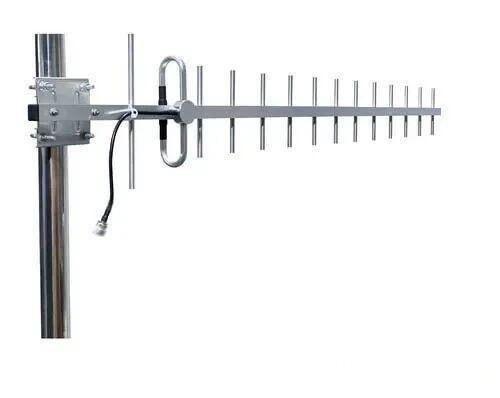 Outdoor Yagi TV Antenna


 Ceiling mount antenna
  Wall mount panel antenna
 Fiberglass Antenna
  Panel Antenna
  Parabolic Antenna
  Yagi Antenna


