

Views: 0 Author: Site Editor Publish Time: 2025-07-08 Origin: Site


Coaxial cables, often simply referred to as Coaxial Cables, have been a fundamental component in electrical and communication systems for over a century. With the advent of modern technologies such as fiber optics and wireless communication, one might wonder about the relevance of coaxial cables in today's world. This article delves into the current applications of coaxial cables, exploring their enduring significance in various industries, and examines the advancements that keep this technology pertinent.
The origins of coaxial cables date back to the 19th century, with the pioneering work of English physicist Oliver Heaviside. In his 1880 British patent, Heaviside demonstrated how coaxial cable designs could mitigate signal interference between parallel conductors. This innovation laid the groundwork for the development of efficient transmission lines capable of carrying high-frequency electrical signals with minimal losses.
Initially utilized in the first transatlantic telegraph cables, coaxial cables played a critical role in long-distance communication. Their unique construction—consisting of an inner conductor surrounded by a concentric conducting shield separated by a dielectric insulator—allowed for the reliable transmission of signals over vast distances. The shared geometric axis between the inner conductor and the outer shield is the defining characteristic that gives coaxial cables their name and exceptional electromagnetic properties.
Despite the emergence of alternative technologies, coaxial cables remain integral in numerous modern applications. Their ability to carry high-frequency signals with low losses makes them indispensable in specific contexts where reliability and performance are paramount.
In the realm of telecommunications, coaxial cables are extensively used to connect radio transmitters and receivers to their antennas. Their shielding properties prevent electromagnetic interference, ensuring a clear and stable signal transmission. Additionally, coaxial cables are employed in broadband internet infrastructures, particularly in hybrid fiber-coaxial (HFC) networks. These systems leverage the strengths of both fiber optics and coaxial cables to deliver high-speed internet services to end-users.
Coaxial cables have long been the backbone of cable television distribution. Their capacity to handle high-bandwidth signals makes them ideal for transmitting multiple television channels without significant loss of quality. Even with the rise of digital streaming platforms, many regions still rely on coaxial infrastructures for television and radio broadcast services, highlighting their continued relevance.
In military and aerospace contexts, the reliability and durability of coaxial cables are of utmost importance. Coaxial cables are used in various systems, including communication arrays, radar installations, and electronic warfare equipment. Their ability to resist external electromagnetic interference ensures the integrity of critical data transmissions under challenging conditions.
Technological innovations have significantly enhanced the performance of coaxial cables, reinforcing their position in modern applications. These advancements focus on improving signal integrity, increasing bandwidth capacity, and enhancing physical durability.
Modern coaxial cables benefit from advanced materials used in their construction. The inner conductors may now be composed of high-purity copper or copper-clad steel, optimizing conductivity and mechanical strength. Insulating materials have also evolved, with polyethylene foam and polytetrafluoroethylene (PTFE) being used to reduce signal attenuation and maintain consistent characteristic impedance.
To further minimize electromagnetic interference, modern coaxial cables often incorporate multi-layer shielding. Techniques such as quad shielding—which uses alternating layers of metallic foil and braided wire—significantly reduce signal leakage and ingress. These enhancements are crucial in environments with high levels of electromagnetic noise, ensuring that the coaxial cable's performance remains uncompromised.
Advancements in manufacturing precision have allowed coaxial cables to be used effectively in high-frequency applications, including microwave and millimeter-wave technologies. By controlling the dimensions of the conductors and the dielectric properties with high accuracy, coaxial cables can maintain signal integrity at frequencies exceeding several gigahertz, making them suitable for cutting-edge communication systems.
While technologies like fiber optics and wireless communication have gained prominence, coaxial cables still offer distinct advantages in certain scenarios. Understanding these differences is essential for making informed decisions regarding transmission media.
Fiber optic cables provide unparalleled bandwidth and are immune to electromagnetic interference, making them ideal for long-distance and high-data-rate transmissions. However, they are more fragile and require specialized equipment for installation and maintenance. Coaxial cables, in contrast, are robust, easier to handle, and cost-effective for shorter distances and applications where ultra-high bandwidth is not critical.
Wireless technologies offer mobility and ease of deployment, but they are susceptible to interference, security risks, and bandwidth limitations. Coaxial cables provide a stable and secure physical medium that ensures consistent signal quality. In controlled environments where reliability is paramount, such as in industrial settings or data centers, coaxial cables are often preferred.
The ongoing development of coaxial technology suggests a sustained relevance in the future. Research is focused on enhancing coaxial cables' capacity to support higher frequencies and data rates, potentially integrating them with other technologies in hybrid systems.
Hybrid fiber-coaxial (HFC) networks exemplify how coaxial cables can be integrated with fiber optics to optimize performance and cost. In such systems, fiber optics are used for long-distance transmission to local nodes, while coaxial cables connect the nodes to individual consumers. This approach leverages the advantages of both media, providing high-speed internet access without the need to replace existing coaxial infrastructure entirely.
Innovations in coaxial cable design aim to reduce attenuation and increase bandwidth. Techniques such as using superior dielectric materials, refining conductor geometries, and improving shielding effectiveness contribute to cables capable of handling the demands of modern high-speed networks.
When implementing coaxial cables in any system, several factors must be considered to ensure optimal performance. These include impedance matching, attenuation, signal leakage, and environmental factors affecting the cable's durability.
Coaxial cables are designed with specific characteristic impedances, commonly 50 Ω or 75 Ω. Matching the impedance of the cable with that of the connected equipment is crucial to minimize reflections and standing waves, which can degrade signal quality. This matching ensures maximum power transfer and reduces the potential for signal distortion.
Attenuation in coaxial cables increases with frequency. Selecting the appropriate cable type and size is essential to minimize losses, especially in high-frequency applications. Larger diameter cables generally exhibit lower attenuation due to reduced skin effect losses, although they may be less flexible and more challenging to install.
Effective shielding is vital to prevent electromagnetic interference both to and from the coaxial cable. Multi-layered shields and high-quality connectors ensure that the electromagnetic fields are confined within the cable, maintaining signal integrity and complying with regulatory standards on emissions.
Coaxial cables must be suitable for the environments they operate in. This includes considerations related to temperature ranges, exposure to moisture, UV radiation, and potential mechanical stresses. Selecting cables with appropriate jacket materials and protective features is essential for longevity and safety.
For outdoor applications, coaxial cables may require UV-resistant jackets and water-blocking features to prevent moisture ingress. Flooded cables with water-blocking gels can protect against minor cuts and abrasions that could otherwise allow water to penetrate, leading to signal degradation and potential failure.
In indoor environments, especially in plenum spaces, cables must meet fire safety standards to prevent the spread of flames and reduce the emission of toxic fumes. Plenum-rated coaxial cables use materials like PTFE for insulation, which are flame-retardant and produce less smoke.
Coaxial cables continue to be a vital component in modern communication systems. Their unique properties, including effective shielding, ease of installation, and reliability, ensure their ongoing utility across various industries. Advancements in materials and design have further enhanced their performance, allowing them to meet the demands of contemporary high-frequency applications. While alternative technologies like fiber optics and wireless communication offer certain advantages, coaxial cables maintain their relevance through a combination of practicality and technological innovation. As such, they remain an indispensable tool in the transmission of high-frequency electrical signals with low losses, confirming that coaxial cables are indeed still in widespread use today.
Q1: Are coaxial cables still used in modern internet infrastructure?
Yes, coaxial cables are still widely used in internet infrastructure, especially in hybrid fiber-coaxial (HFC) networks. These networks use fiber optics for long-distance transmission and coaxial cables, such as Coaxial Cables, to connect local nodes to end-users, providing high-speed internet access.
Q2: What advantages do coaxial cables offer over fiber optics?
Coaxial cables are more robust, cost-effective, and easier to install than fiber optics. They are ideal for shorter distances where ultra-high bandwidth is not critical, and their durability makes them suitable for environments that may be challenging for the more fragile fiber optic cables.
Q3: How have coaxial cables improved to meet modern technology demands?
Advancements in materials, shielding techniques, and manufacturing precision have enhanced coaxial cables' performance. Improvements include the use of superior dielectric materials, multi-layer shielding like quad shielding, and refined conductor geometries, allowing them to handle higher frequencies and data rates.
Q4: Can coaxial cables support high-definition video transmission?
Yes, coaxial cables can support high-definition video transmission. They have sufficient bandwidth to carry high-quality video signals, which is why they are still used in cable television distribution and some professional video applications.
Q5: Are there any environmental considerations when using coaxial cables?
Environmental factors such as temperature extremes, moisture, UV radiation, and mechanical stresses can affect coaxial cables. Selecting cables with appropriate protective features, like UV-resistant jackets or water-blocking gels, ensures durability and reliable performance in various environments.
Q6: What is the significance of impedance in coaxial cables?
Impedance matching is crucial in coaxial cables to minimize signal reflections and losses. Common impedances are 50 Ω and 75 Ω, and matching the cable impedance with connected equipment ensures maximum power transfer and maintains signal integrity.
Q7: Do coaxial cables pose any security risks compared to wireless systems?
Coaxial cables are generally more secure than wireless systems because they provide a closed physical medium for signal transmission, reducing the risk of interception. This makes them preferable for sensitive data transmissions where security is a priority.


 External GPS Antenna
  Ceramic antenna
  Internal GPS Antenna
  Surveying Antenna
 Magnet Antenna
  Patch Antenna
  Rubber Antenna
  Screw Antenna
  Spring Antenna
  Other Indoor Coverage Antenna&outdoor Wlan Antenna
 2.4G Antenna
  5.8G Antenna

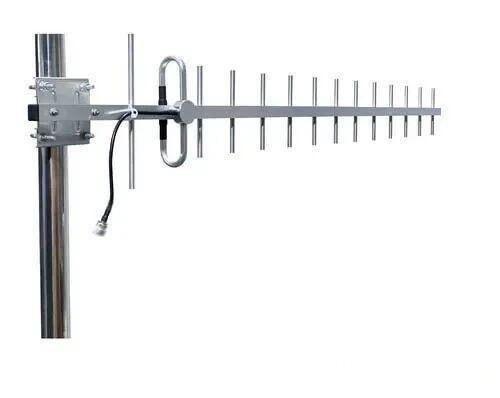 Outdoor Yagi TV Antenna


 Ceiling mount antenna
  Wall mount panel antenna
 Fiberglass Antenna
  Panel Antenna
  Parabolic Antenna
  Yagi Antenna


