

Views: 0 Author: Site Editor Publish Time: 2026-01-19 Origin: Site


Multi-band antennas support multiple frequency bands simultaneously, enabling seamless connectivity across 5G, 4G, and 3G networks in a single device. These antennas optimize signal strength and coverage for modern telecom needs, reducing hardware complexity for users and businesses. Companies like AsiaLeren offer high-performance models covering 600-6000MHz for global roaming and backward compatibility.
Multi-band antennas operate across wide frequency ranges, such as 600-6000MHz, allowing devices to switch between 3G (legacy support at 144 kbit/s+), 4G LTE (700MHz-2.7GHz for high-speed data), and 5G (sub-6GHz and mmWave for ultra-low latency). Unlike single-band antennas limited to one frequency, multi-band designs use techniques like MIMO and wideband elements for congruent beams and improved gain up to 10 dBi. This versatility suits roaming devices, handling global carriers without signal drops.
These antennas employ offset reflectors, corrugated horns, or microstrip patches tuned for multiple resonances, separating bands via polarizers and waveguides. Features like low VSWR minimize signal loss, while omnidirectional patterns provide 360° coverage; MIMO doubles throughput by using multiple ports. In practice, they auto-switch bands—GSM/3G fallback to 5G NR—ensuring reliable links in mixed environments.
Multi-band antennas cut costs by replacing multiple units with one, offering full backward compatibility from 2G to 5G. They deliver superior gain (5-12 dBi), weatherproof IP67 builds, and compact designs for vehicles or IoT.
Feature | Multi-Band Antenna | Single-Band Alternative |
Frequency Range | 600-6000MHz | Limited (e.g., 700-2700MHz) |
Gain | 5-10 dBi | 3-5 dBi |
Compatibility | 3G/4G/5G Full | None |
Applications | Vehicles/IoT/Routers | Fixed Indoor Only |
This table highlights efficiency gains, especially for space-constrained setups like smartphones.
In IoT and smart cities, multi-band antennas power sensors and meters with reliable uplinks over vast areas. Vehicles use magnetic mounts for telematics and C-V2X safety; routers/hotspots gain from SMA connectors on 4G/5G CPE. Industrial sites like mining benefit from high-gain models overcoming obstacles, supporting surveillance and automation.
Agriculture: Remote monitoring in fringe areas.
Maritime/RVs: Broadband on the move.
Emergency services: Uninterrupted MIMO links.
AsiaLeren's models include omni combos (5-8 dBi, SMA/N connectors) and panel MIMO (9-12 dBi, N-Female). Impedance is 50 ohms standard, with GPS integration options.
Model Type | Frequency (MHz) | Gain (dBi) | Connector | Mount |
Omni Combo | 600-6000 | 5-8 | SMA/N | Magnetic/Bracket |
Panel MIMO | 698-5000 | 9-12 | N-Female | Wall/Pole |
Ceiling Mount | 600-6000 | 4-7 | RP-SMA | Flush |
Mount high with line-of-sight to towers, use LMR-400 cables, and test via apps like Network Cell Info.
As 5G expands, multi-band antennas are future-proof networks with mid/high-band support and scalability for massive MIMO. They address coverage gaps in transitional 3G/4G areas, vital for global enterprises. For SEO-optimized deployments in e-commerce logistics or industrial B2B, these antennas enhance connectivity reliability.
Ready to upgrade your network with AsiaLeren's multi-band antennas for 5G, 4G, and 3G? Email us today viaContact Us for a quote.
What is a multi-band antenna?
A multi-band antenna operates efficiently over multiple frequency bands like 600-6000MHz, supporting 3G, 4G LTE, and 5G standards unlike single-band models limited to one range.
How does a multi-band antenna work across networks?
It uses composite elements—omni, directional, MIMO—for resonance at key frequencies (e.g., 700MHz-6GHz), auto-switching for optimal signal and roaming.
What are the benefits of multi-band antennas for 5G/4G/3G?
They provide backward compatibility, higher gain (5-12 dBi), cost savings, and MIMO for doubled throughput in vehicles, IoT, and routers.
Can multi-band antennas replace multiple single-band ones?
Yes, one unit covers global carriers and generations (2G-5G), reducing hardware needs while maintaining IP67 weatherproofing and low VSWR.
What applications suit multi-band antennas?
Ideal for telematics, industrial IoT, agriculture monitoring, maritime broadband, and CPE routers needing reliable coverage in mixed-signal areas.
How do you install a multi-band antenna?
Mount high with clear line-of-sight using magnetic/bracket bases; connect via SMA/N cables (LMR-400 recommended) and align for max signal via apps.
What common issues affect performance?
Bad connectors, cable bends, moisture, or poor spacing cause VSWR spikes; test with FDR tools and clean waveguides.
Does it support MIMO for LTE/5G?
Yes, dual/triple ports enable 2x2/4x4 MIMO for higher data rates, essential for modern networks.
Are they future-proof for 5G expansions?
Absolutely, with sub-6GHz/mmWave scalability and hybrid boosters for coverage in transitional 3G/4G zones.
Where to buy reliable multi-band antennas?
Vendors like AsiaLeren offer models with 5-12 dBi gain and global freq support; check RoHS compliance.


 External GPS Antenna
  Ceramic antenna
  Internal GPS Antenna
  Surveying Antenna
 Magnet Antenna
  Patch Antenna
  Rubber Antenna
  Screw Antenna
  Spring Antenna
  Other Indoor Coverage Antenna&outdoor Wlan Antenna
 2.4G Antenna
  5.8G Antenna

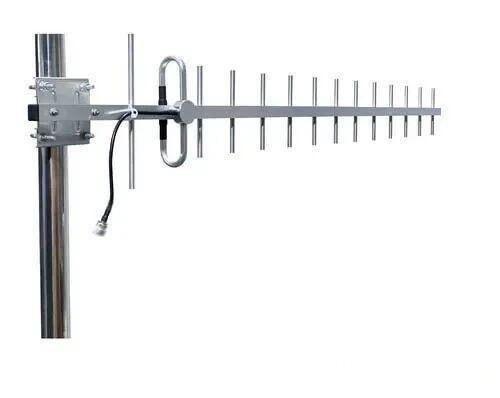 Outdoor Yagi TV Antenna


 Ceiling mount antenna
  Wall mount panel antenna
 Fiberglass Antenna
  Panel Antenna
  Parabolic Antenna
  Yagi Antenna


