

Views: 0 Author: Site Editor Publish Time: 2024-09-24 Origin: Site


Concept: Unmanned aircraft, or Anti jamming antenna for short, is an unmanned aircraft that is operated either completely or intermittently autonomously by a radio-controlled device and self-contained program control device.

Function: The Anti jamming antenna antenna is responsible for the signal transmission and reception between the Anti jamming antenna and the remote control or the ground station, which plays a crucial role in ensuring the safe and efficient flight of the Anti jamming antenna.
Application: With the gradual maturity of Anti jamming antenna research and development technology, manufacturing costs are greatly reduced, and Anti jamming antennas are gradually popularized in the market, which has immeasurable benefits in improving life production efficiency, reducing workload and production costs, improving accuracy and operational safety. At present, it has been widely used in agricultural plant protection, power inspection, express transportation, police law enforcement, geological exploration, environmental monitoring, forest fire prevention and film and television aerial photography and other fields.

agriculture

express transportation

forest fire preventione
How to choose a Anti jamming antenna antenna:
When choosing an antenna for a Anti jamming antenna, it is important to consider the specific application and your needs as an operator
1. Frequency: Determine the operating frequency range of the Anti jamming antenna. Most Anti jamming antennas use the 2.4GHz or 5.8GHz bands. Make sure you choose an antenna that is compatible with the Anti jamming antenna's frequency.
2. Antenna type: There are many types of antennas, including omnidirectional antennas and directional antennas. The omnidirectional antenna sends and receives signals in all directions, making it suitable for general flight and FPV (first person View) applications. Directional antennas focus the signal in a specific direction, providing longer coverage and better signal penetration. They are ideal for long flights or areas with obstacles.
3. Gain: Antenna gain refers to its ability to focus the signal in a specific direction. Antennas with higher gain provide longer coverage and better penetration, but their beamwidth is narrower. Antennas with a lower gain have a wider beamwidth but a shorter coverage area. Consider your flying style and the coverage required to determine the appropriate gain for the antenna.
4. Polarization: The antenna can be linearly polarized (vertical or horizontal) or circular. In order to obtain the best signal strength, it is important to match the polarization of the Anti jamming antenna's transmitter and receiver antennas. Circularly polarized antennas are more resistant to signal loss caused by Anti jamming antenna orientation, making them a popular choice for FPV applications.
5. Connector Type: Make sure the antenna you choose has the correct connector type to connect to the Anti jamming antenna's transmitter or receiver. Common connector types include N-type, SMA/RP-SMA, IPEX, and so on.


 External GPS Antenna
  Ceramic antenna
  Internal GPS Antenna
  Surveying Antenna
 Magnet Antenna
  Patch Antenna
  Rubber Antenna
  Screw Antenna
  Spring Antenna
  Other Indoor Coverage Antenna&outdoor Wlan Antenna
 2.4G Antenna
  5.8G Antenna

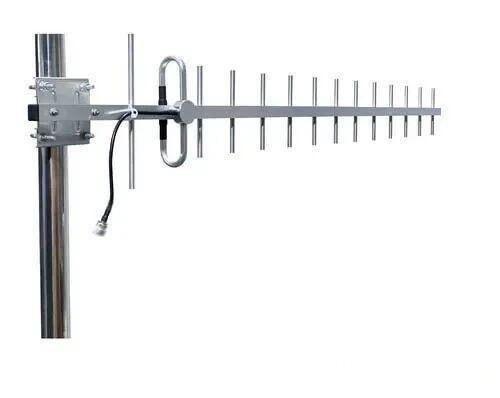 Outdoor Yagi TV Antenna


 Ceiling mount antenna
  Wall mount panel antenna
 Fiberglass Antenna
  Panel Antenna
  Parabolic Antenna
  Yagi Antenna


