 English
Views: 0 Author: Site Editor Publish Time: 2025-12-15 Origin: Site

Clear radio communication depends on many factors, but antenna height matters most. With a VHF antenna, height often decides whether a signal reaches a few miles or travels far beyond the horizon. VHF systems support marine radios, aviation communication, emergency services, and outdoor coordination. They perform best when signals move through open space without obstruction.
VHF signals rely on line-of-sight. A low antenna struggles with terrain, buildings, and Earth’s curvature. A higher one gains visibility and stability. This applies to fixed systems and portable devices. Even a handheld walkie-talkie antenna works better when held higher or used from elevated ground. Understanding antenna height helps build clearer, more reliable communication systems.
A VHF antenna sends and receives radio energy. It works inside the 30–300 MHz frequency range. These frequencies suit outdoor communication. Marine radios, aviation radios, emergency systems use them daily. The antenna converts electrical power into radio waves. It also captures incoming signals for the receiver. Its position controls how well this exchange happens.
VHF radio signals use line-of-sight propagation. They travel straight, similar to light from a flashlight. Hills, buildings, trees block or weaken them. Earth’s curvature also limits distance. Signals rarely bend around obstacles. Some reflections occur, they remain unreliable. Height improves visibility between antennas. Clear sight means clearer communication.
The height of a VHF antenna directly affects how far two radios can communicate. A higher antenna can “see” over more obstacles, allowing radio waves to travel farther without being blocked.
When the antenna is mounted higher, buildings, terrain, and even the Earth’s curvature interfere less with the signal. This leads to better overall performance in three critical areas:
Communication range – signals travel farther in open environments
Signal consistency – fewer dropouts and less fading
Emergency reliability – distress calls are more likely to be received
Even small changes in antenna height can produce noticeable results. Raising a VHF antenna just a few feet often adds several miles of usable range in open water or flat terrain. Marine users experience major improvements offshore, where there are few obstructions. Aviation systems rely on tall ground stations for the same reason—height extends visibility and coverage.
This improvement happens without increasing transmitter power. Instead, we simply give the signal a clearer path to travel.
The table below shows how antenna height affects one-way VHF range under ideal conditions. These values assume open terrain, minimal interference, and a properly tuned VHF antenna.
| Antenna Height | Approx. One-Way Range |
|---|---|
| 6 ft | ~3.5 miles |
| 15 ft | ~5.5 miles |
| 30 ft | ~7.7 miles |
| 60 ft | ~10.9 miles |
When two stations communicate, their ranges add together. A boat antenna at 15 ft talking to a shore station at 60 ft reaches much farther than either could alone. Height matters on both ends of the link. Raising only one antenna still improves results, but balanced height works best. These principles apply to fixed systems and portable radios.
Even a handheld walkie-talkie antenna gains range when held higher or used from elevated ground. Standing on a hill, deck, or upper platform helps. Avoid crouching or shielding the antenna with your body. In every setup, antenna height remains a primary performance factor. Both transmitting and receiving positions influence communication success.
Boats operate close to the water surface. This naturally limits how high antennas can be mounted.
Common marine mounting locations include:
Mast tops
T-top frames
Flybridges
Radar arches
A higher marine VHF antenna delivers clear advantages:
Longer reach for distress and safety calls
More reliable communication between vessels
Reduced signal fading caused by waves and motion
Over open water, small height increases produce large gains. There are few obstacles, so line-of-sight improves quickly. Coast Guard and harbor stations achieve long ranges by using towers or elevated shore locations.
This height advantage allows them to hear low-mounted boat antennas many miles away. For boaters, mounting the antenna as high as safely possible remains best practice. Secure installation and vertical alignment are just as important as height.
Aircraft VHF radios operate well above terrain. This natural altitude allows aircraft to maintain long-range communication. Ground stations must compensate. They rely on elevated antennas to reach aircraft at low and high altitudes.
Airports place VHF antennas on towers or high buildings. This improves coverage during takeoff, landing, and taxi operations. Emergency communication networks depend heavily on height. Tall towers expand visibility across wide regions.
Public safety systems use elevation to:
Maintain reliable dispatch communication
Support disaster response coordination
Reduce dead zones in remote areas
Search-and-rescue missions gain critical advantages. Each additional mile improves response speed and outcome. During storms or disasters, power may drop. Height still allows signals to travel when conditions degrade.
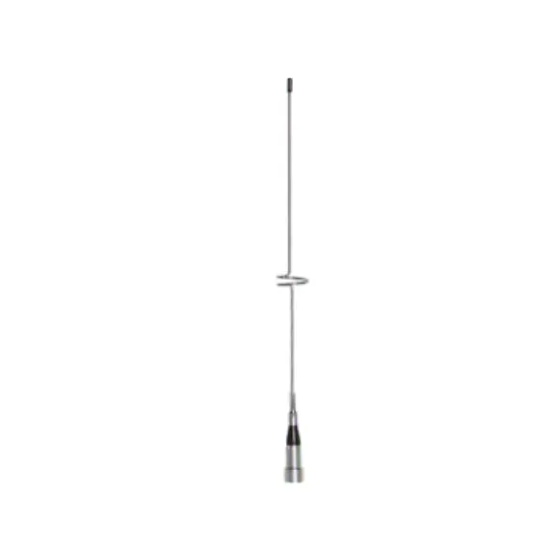
Amateur radio operators value antenna height above almost everything else. Elevation improves reach without increasing transmitter power.
Common mounting locations include:
Rooftops
Purpose-built towers
Portable masts and tripods
In rural environments, height delivers dramatic gains. Flat land and fewer buildings allow VHF signals to travel cleanly. Urban areas present different challenges. Buildings create reflections, interference, and multipath distortion. Extra height helps signals clear nearby obstacles. It also reduces interference from street-level noise sources. Portable setups still benefit from elevation.
Raising a VHF antenna on a temporary mast improves performance quickly. Even a short lift makes a difference. The same applies to a handheld walkie-talkie antenna when used from higher ground. In land-based systems, height remains a simple and effective upgrade. It improves range, clarity, and overall reliability.
VHF and UHF behave differently.
| Feature | VHF | UHF |
|---|---|---|
| Frequency | 30–300 MHz | 300 MHz–3 GHz |
| Typical Range | Longer | Shorter |
| Obstacle Handling | Limited | Better |
| Height Dependence | High | Moderate |
UHF works better indoors. VHF excels outdoors, open spaces. Height remains critical for VHF success.
Antenna gain and antenna height serve different purposes. They work together but solve separate problems. Gain controls how radio energy spreads. Higher gain compresses the vertical radiation angle. This creates a flatter signal pattern. More energy travels outward, not upward or downward.
Height determines what the antenna can “see.” It clears obstacles and extends line-of-sight. A high-gain antenna mounted low still struggles. Buildings, terrain, and vegetation block the signal. Raising a standard VHF antenna often delivers better results. Height improves coverage before gain becomes useful.
For best performance:
Use height to clear obstructions
Use gain to shape the coverage area
Balance both based on terrain
In most VHF systems, height provides the biggest improvement first. Gain fine-tunes what height makes possible.
Correct placement greatly improves VHF communication. Poor placement can waste even the best antenna. Height should be maximized safely. Clear surroundings matter just as much.
Follow these placement principles:
Mount the antenna as high as practical
Keep it vertical for proper polarization
Avoid nearby metal surfaces
Separate it from other electronics
Orientation affects signal matching. VHF systems expect vertical polarization. A tilted antenna reduces signal strength. Range drops quickly as alignment worsens. Portable setups also need attention. A handheld walkie-talkie antenna performs better when held upright. Standing on elevated ground helps too. Small changes often deliver noticeable improvements.
Coaxial cables transfer energy from radio to antenna. Poor cables waste power before it ever radiates. Long cable runs increase loss. Low-quality cable compounds the problem.
Better performance comes from:
Short cable lengths
Low-loss coaxial cable types
Properly sealed connectors
Weather exposure degrades cables slowly. Sun, moisture, and temperature cycles cause damage. Salt air accelerates corrosion. Marine installations need frequent inspection. Loose or corroded connectors reduce efficiency. Signal loss increases quietly over time. Regular checks prevent hidden performance drops. Cable quality protects the benefits gained from antenna height.
Environmental conditions influence VHF signal behavior. They change how easily signals travel through space. Heavy rain absorbs some radio energy. Dense fog causes mild scattering at VHF frequencies. Vegetation blocks line-of-sight paths. Trees and wet leaves weaken signals quickly. Rough sea states create reflections. Wave movement causes signal fading and fluctuation.
Common environmental challenges include:
Heavy rainfall reducing clarity
Forested terrain blocking direct paths
Urban clutter creating multipath interference
Open water reflections causing fading
A higher VHF antenna reduces these effects. Elevation clears vegetation and surface interference. Clear signal paths always perform better. Height gives signals cleaner space to travel.
Antenna height depends on use case. Different applications require different elevations.
General planning guidelines help:
| Application | Typical Height |
|---|---|
| Handheld radio | 3–7 ft |
| Small boat | 10–20 ft |
| Large vessel | 30–60 ft |
| Shore station | 50+ ft |
A handheld walkie-talkie antenna benefits from body height. Holding it higher improves line-of-sight. Boats gain more range as mast height increases. Shore stations rely on towers or elevated terrain. Local regulations may limit installations. Always follow safety and zoning rules.
Extremely tall antennas introduce new challenges. More height increases mechanical stress. Wind loading becomes significant. Gusts apply force to tall structures. Structural stability matters. Poor mounts risk failure and equipment damage.
Other limitations include:
Installation complexity
Maintenance difficulty
Permit and zoning restrictions
Height must remain practical. Balance performance with safety and durability.
Optimizing height does not require extreme measures. Smart placement delivers strong results.
Follow these practical steps:
Select the highest safe mounting point
Keep the antenna clear of nearby obstructions
Maintain strict vertical alignment
Use corrosion-resistant mounting hardware
Adjustable masts add flexibility. They adapt to changing environments. Temporary setups still gain advantages. Even short elevation improves communication. Height remains one of the simplest upgrades. It improves range, clarity, and reliability.
A: Height improves line-of-sight, allowing VHF signals to travel farther with fewer obstructions.
A: Yes, more height extends visibility and range without increasing transmitter output.
A: Even a few feet can add several miles of range in open or flat environments.
A: Yes, height affects performance on both ends of the communication link.
A: In most cases, height delivers greater performance gains than gain alone.
Antenna height remains one of the simplest ways to improve VHF performance. It extends range, stabilizes signals, and boosts reliability in daily use and emergencies. From boats and aircraft to land stations and portable radios, added height clears obstacles and improves line-of-sight. Other factors matter, but height sets the foundation.
Whether using a fixed VHF antenna or a handheld walkie-talkie antenna, smart elevation delivers immediate gains. With proper mounting and alignment, those benefits last. For reliable VHF communication equipment and technical support, Zhengzhou LEHENG Electronic Technology Co., Ltd. offers solutions built for real-world performance.


